
By Charles Tan
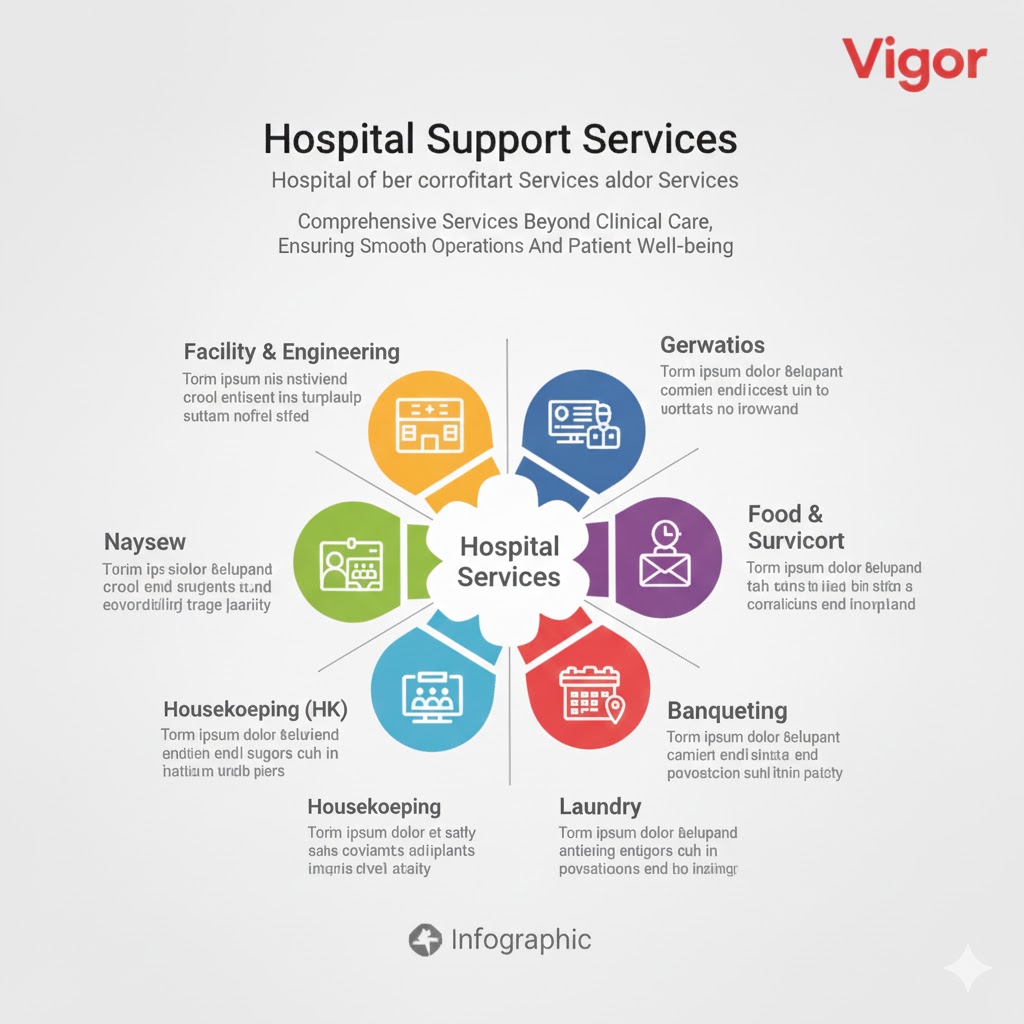
While the spotlight often shines on clinical staff—the doctors and nurses who deliver direct care—the true operational backbone of any thriving hospital lies in its Hospital Support Services (HSS). These services are the essential, yet often invisible, components that ensure a safe, efficient, and dignified environment for patients and staff alike.
HSS is the comprehensive suite of non-clinical functions critical for the smooth daily operation of a medical facility.
What Constitutes Hospital Support Services (HSS)?
HSS encompasses a diverse array of functions, typically categorized by the core needs they fulfill within the hospital environment:
- Environmental & Infection Control Services
- Housekeeping (HK) / Environmental Services: The diligent cleaning and sanitization of all areas (patient rooms, operating theaters, public spaces) to rigorously control and prevent Hospital-Acquired Infections (HAIs).
- Laundry Services: The processing, sterilizing, and timely delivery of medical-grade linens, scrubs, and patient gowns, ensuring impeccable hygiene standards.
- Waste Management: The secure, legal, and environmentally responsible handling of all waste, especially clinical and hazardous medical waste.
- Food, Catering & Hospitality
- Food Services (IPD/OPD): Preparing and delivering nutritionally appropriate meals tailored to the dietary restrictions and clinical needs of Inpatients (IPD) and Outpatients (OPD).
- Canteen & Retail: Managing staff and visitor dining facilities and ancillary retail operations.
- Banqueting: Providing catering support for hospital events, conferences, and internal meetings.
- Technical, Engineering & Maintenance Support
- Engineering Support: Conducting comprehensive Preventive and Corrective Maintenance on the hospital’s infrastructure, including utilities (HVAC, electrical, plumbing) and the physical structure.
- Biomedical Equipment Maintenance: Calibration, repair, and upkeep of non-specialized and complex medical equipment, ensuring patient safety and regulatory compliance.
- Security Services: Protecting patients, staff, and assets through physical presence, access control, and advanced surveillance systems.
- Administrative & Logistics Support
- Lab Support: Logistical management of samples, basic maintenance of non-specialized lab equipment, and supply chain management for lab consumables.
- IT Services: Maintaining the Hospital Information System (HIS), network infrastructure, and providing technical support crucial for patient record management.
- CSR (Corporate Social Responsibility): Organizing and executing community engagement activities that enhance the hospital’s reputation and commitment to public well-being.
The Strengths of Robust HSS
|
Key Benefit |
Description |
|
Optimized Clinical Focus |
Allows doctors and nurses to dedicate their time entirely to patient care, free from logistical and maintenance concerns. |
|
Superior Patient Safety |
High-standard HK and Waste Management drastically lower the incidence of dangerous hospital-acquired infections. |
|
Operational Reliability |
Proactive maintenance (Engineering Support) ensures critical systems and medical equipment are operational 24/7, preventing costly downtime. |
|
Compliance & Accreditation |
Robust HSS is fundamental to meeting rigorous international healthcare quality standards (e.g., JCI, HA). |
|
Enhanced Patient Experience |
A clean, well-maintained, and orderly environment contributes significantly to patient comfort, recovery, and overall satisfaction. |
⚠️ Challenges and Weaknesses
|
Major Challenge |
Description |
|
Undervalued Perception |
Often viewed as a “Cost Center,” HSS can struggle to secure necessary investment compared to high-profile clinical departments. |
|
Staffing Volatility |
High turnover rates in roles like Housekeeping and Food Services can lead to inconsistent quality and training burdens. |
|
High-Stakes Failure |
Errors in HK, infection control, or engineering support can have immediate and severe consequences for patient safety. |
|
Regulatory Complexity |
Service providers must constantly navigate stringent health, safety, and waste disposal regulations. |
💡 Recommendations for Achieving HSS Excellence
- Elevate the HSS Status: Recognize and treat HSS staff as integral members of the Patient Safety team, not just facility workers.
- Invest in Technology: Implement modern solutions, such as Computerized Maintenance Management Systems (CMMS) and specialized logistics software, to centralize control and optimize workflows.
- Mandatory Clinical Training: Ensure HSS personnel receive training that highlights the direct impact of their work on infection control and patient well-being.
- Data-Driven Measurement: Utilize specific KPIs, such as maintenance response times, HAI rates (linked to HK performance), and patient satisfaction scores for food services.
- Strategic Outsourcing: Consider partnering with specialized external firms for highly technical areas (e.g., complex biomedical engineering, large-scale laundry) to guarantee expert service and compliance.
Hospital Support Services are the quiet heroes of the healthcare ecosystem. They are the essential link that translates medical knowledge into successful patient outcomes by providing the foundation of safety, comfort, and operational readiness.