By Charles Tan,
The integration of Artificial Intelligence is no longer a speculative future concept; it is actively restructuring the cost dynamics of global hotel operations. To remain competitive, executives must objectively identify which service tiers are highly susceptible to automation. These are the operational segments where AI and automated algorithms consistently outperform humans in speed, accuracy, and bottom-line efficiency.
Front-of-House Automation and Basic Guest Relations
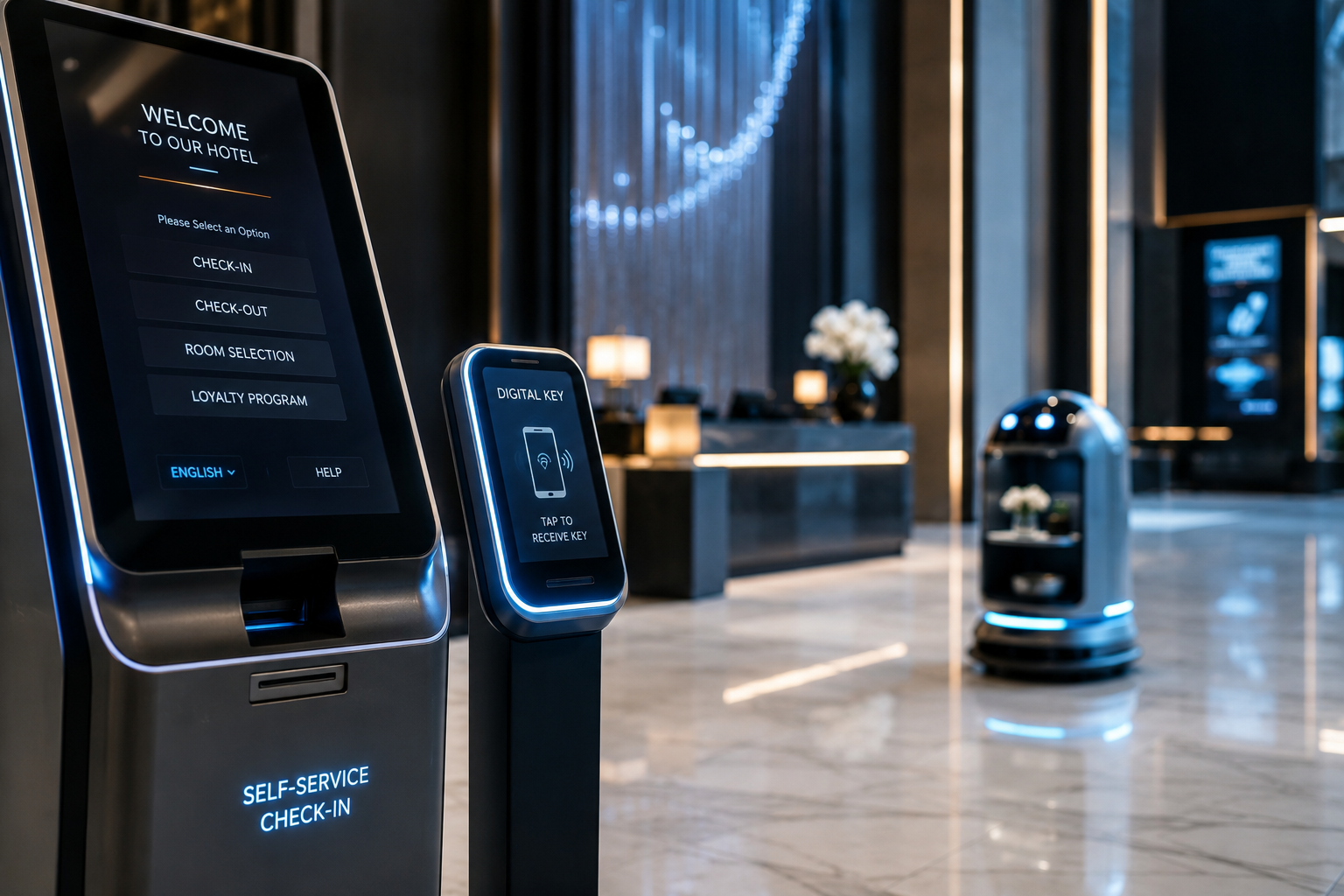
Traditional front-desk administrative duties are rapidly becoming obsolete. The deployment of smart self-service kiosks, mobile check-in platforms, and integrated digital room keys allows properties to handle arrival and departure paperwork with near-zero human intervention. Furthermore, routine guest inquiries—ranging from Wi-Fi passwords to breakfast hours—are now seamlessly absorbed by conversational AI chatbots capable of providing instant, multilingual support 24/7.
Back-Office Data Processing and Revenue Management
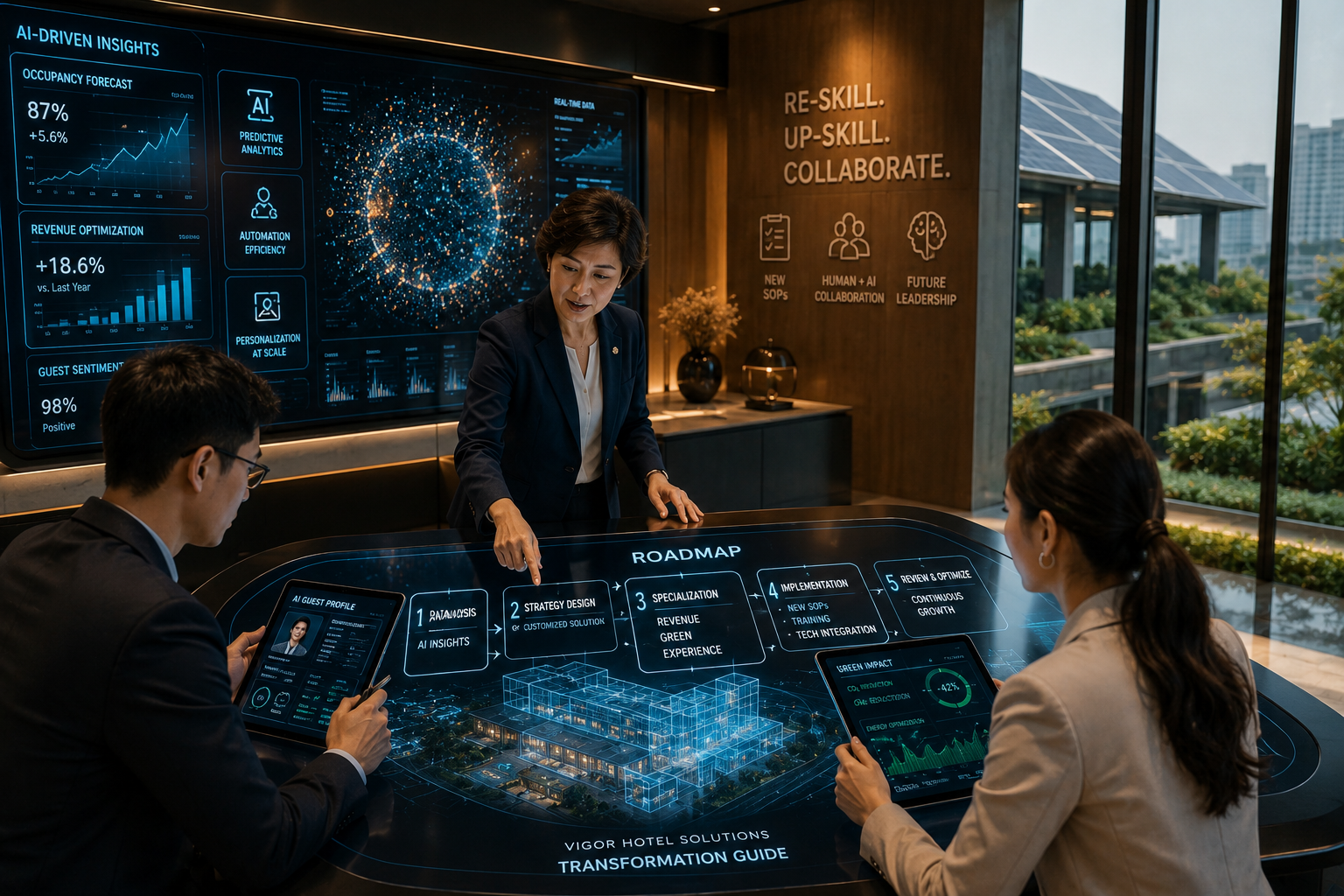
Predictive analytics and machine learning have completely revolutionized revenue management. Traditional, intuition-based pricing is being replaced by sophisticated AI platforms capable of analyzing massive datasets in real-time. These systems evaluate competitor rates, local market demand, seasonal shifts, and historical booking patterns to execute dynamic pricing models and flawless occupancy forecasting, directly maximizing RevPAR and GOPPAR.
Repetitive Operations in F&B and Housekeeping
Physical automation is addressing acute labor shortages in core operational departments. Autonomous delivery robots are now standard for executing room service deliveries and internal linen transportation. Similarly, commercial-grade robotic vacuuming and floor-care systems efficiently maintain large public spaces, allowing properties to reallocate human labor away from grueling, repetitive physical tasks.