By Charles Tan
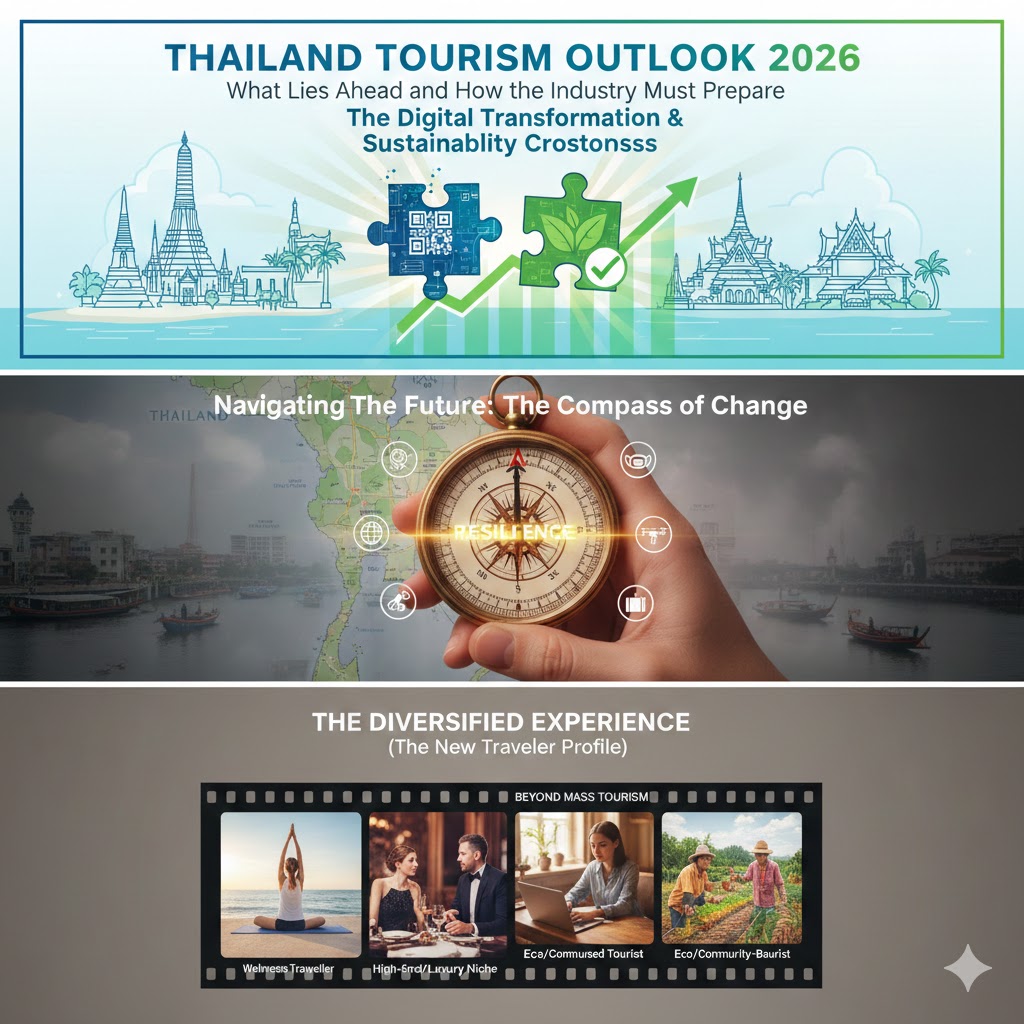
As Thailand approaches 2026, the tourism industry stands at a pivotal crossroads. While the sector continues its steady recovery from the global disruptions of recent years, new uncertainties—economic, geopolitical, and environmental—are reshaping how travelers choose destinations and how businesses must adapt.
To remain competitive, Thailand’s hotels, restaurants, attractions, and tourism operators must understand the forces driving demand in 2026 and reposition themselves for resilience, value creation, and sustainable growth.
- Macro Environment: A Year of Recovery, but With Uneven Momentum
A Moderating Global and Domestic Economy
Thailand’s economy is projected to expand at a slower pace in 2026. A softer global economy, coupled with currency fluctuations and inflation concerns, may affect overall spending capacity from both international and domestic travelers. A strong Thai baht—if it persists—may also dampen travel interest among price-sensitive markets.
The Slow but Continuing Return of Chinese Tourists
China remains a critical market, yet its recovery is gradual rather than explosive. Operators must avoid over-dependency on China and develop a more diversified market base to stabilize revenue flows.
Climate-Related Disruptions
Increasingly severe weather events—floods, storms, heatwaves—pose direct operational risks to hotels, resorts, restaurants, and transport systems. Businesses must adopt stronger risk-management frameworks to prevent service disruptions.
- Key Tourism Trends Shaping 2026
A Shift Toward “Quality Tourism”
Thailand is transitioning from a volume-driven strategy to one centered on higher-value, experience-rich tourism. Travelers now seek authenticity, meaningful cultural encounters, wellness, and curated itineraries—rather than simply sightseeing.
Long-Haul Markets Become Strategic Growth Drivers
Europe, the Middle East, Australia, and North America are delivering higher spending per traveler. This compensates for the slower recovery in some Asian short-haul markets.
Sustainability Becomes a Decisive Purchasing Factor
Eco-conscious travelers expect hotels and operators to demonstrate genuine environmental responsibility—energy efficiency, waste reduction, and community integration are now essential, not optional.
Rising Competition from Regional Destinations
Vietnam, Japan, Indonesia, Malaysia, and South Korea are aggressively increasing their visibility, improving air connectivity, and offering competitive incentives. Thailand must differentiate through unmatched service, hospitality DNA, and deeper cultural value.
- Implications for Hotels, Resorts, Restaurants, and Tourism Operators
Volatile ADR, RevPAR, and Guest Spending
Demand will fluctuate across seasons, requiring stronger revenue management and more dynamic pricing strategies.
Domestic Tourism Remains a Stabilizer
Although Thai spending power is uneven, domestic travelers remain a crucial base—especially for secondary destinations, restaurants, cafés, and lifestyle experiences.
Labor Shortages and Service Gaps Continue
Operators must invest in staff training, service culture, and employee retention to maintain quality and consistency.
- Strategic Recommendations: How Tourism Businesses Should Prepare for 2026
1) Diversify Market Sources
- Expand focus beyond China to India, the Middle East, Europe, and high-spending long-haul markets.
- Develop niche products: wellness retreats, culinary experiences, adventure travel, senior-friendly tourism, and SME-level MICE retreats.
2) Elevate Value Creation (Not Just Prices)
- Create “experience-driven” packages that combine F&B, wellness, culture, and local community immersion.
- Introduce premium add-ons such as chef-led dining, private tours, or exclusive activities.
3) Strengthen Pricing Agility and Distribution
- Implement professional revenue management systems.
- Enhance direct-booking channels with loyalty perks and personalized offers.
- Reduce heavy reliance on OTAs and commission-heavy platforms.
4) Adopt Sustainability as a Business Pillar
- Reduce plastic use, manage waste responsibly, and optimize energy consumption.
- Communicate sustainability achievements clearly as part of the brand story.
- Achieve recognized certification where feasible.
5) Build Robust Risk and Climate Resilience Plans
- Update emergency SOPs for floods, storms, power outages, and health incidents.
- Reassess insurance coverage, especially business interruption and property damage.
- Prepare communication protocols to reassure guests during emergencies.
6) Invest in People and Service Culture
- Train staff in multi-skill service delivery, experience curation, languages, and digital tools.
- Design retention programs and clear career pathways to reduce turnover.
7) Leverage Digital Marketing and Data
- Utilize CRM and guest data to personalize offers.
- Use automation (email flows, retargeting, upsell tools) to increase guest spending.
- Encourage user-generated content and manage online reputation actively.
8) Strengthen Local Partnerships
- Collaborate with community groups, local artisans, and cultural practitioners.
- Offer authentic experiences that reflect the identity of Thailand’s regions.
- Promote inclusive tourism by integrating community-based tourism products.
9) Mitigate Currency Risk Through Smart Pricing
- Offer value-added bundles (airport transfers, dining credits, activities) to offset the effect of a strong baht.
- Consider forward-buying or hedging strategies where applicable.
- What Each Sector Should Focus On in 2026
Hotels & Resorts
- Adopt dynamic pricing and revenue management.
- Curate “experience packages” tailored to market segments.
- Enhance wellness, spa, and local culture touchpoints.
Restaurants & F&B Operators
- Optimize menu engineering to increase profitability.
- Offer curated dining journeys (chef’s tables, tasting menus, wine pairings).
- Build strong digital presence and reservation systems.
Travel Agencies & Tour Operators
- Develop storytelling-driven packages that highlight culture, lifestyle, and sustainability.
- Target growth segments: digital nomads, luxury travelers, senior travelers, and wellness groups.
- Key Risks and How to Mitigate Them
- Climate disruptions → Create preparedness plans and invest in resilient infrastructure.
- Regional competition → Strengthen Thailand’s unique value proposition and hospitality excellence.
- Economic uncertainty → Diversify markets and create flexible pricing strategies.
- Labor shortages → Invest in people, training, and career development pathways.
- The Road Ahead: A Call to Action
2026 will reward businesses that are agile, experience-driven, and deeply connected to both community and sustainability. Thailand’s competitive advantage remains its unmatched hospitality, rich cultural heritage, and diverse destinations—from urban luxury to island retreats and community-based culture.
However, businesses that cling to pre-pandemic models will struggle.
The winners will be operators who:
- Understand shifting traveler expectations
- Elevate their service DNA
- Invest in technology and people
- Deliver authentic, high-value experiences
- Build resilience against economic and environmental volatility
Thailand is entering a new tourism era—one defined by quality, meaning, and sustainability. The time to prepare is now.