By Charles Tan
In today’s hospitality landscape, Closed-Circuit Television (CCTV) is no longer an optional feature. For hotels and restaurants, it has become an indispensable tool that safeguards guests, protects assets, and ensures smooth daily operations. A well-designed CCTV system is not merely a security device; it is a core component of professional management and risk mitigation.
- Enhancing Guest Safety and Confidence
Guest safety is the foundation of every successful hospitality business. CCTV plays a critical role by:
- Deterring crime and misconduct — The presence of cameras reduces incidents of theft, harassment, or physical altercations.
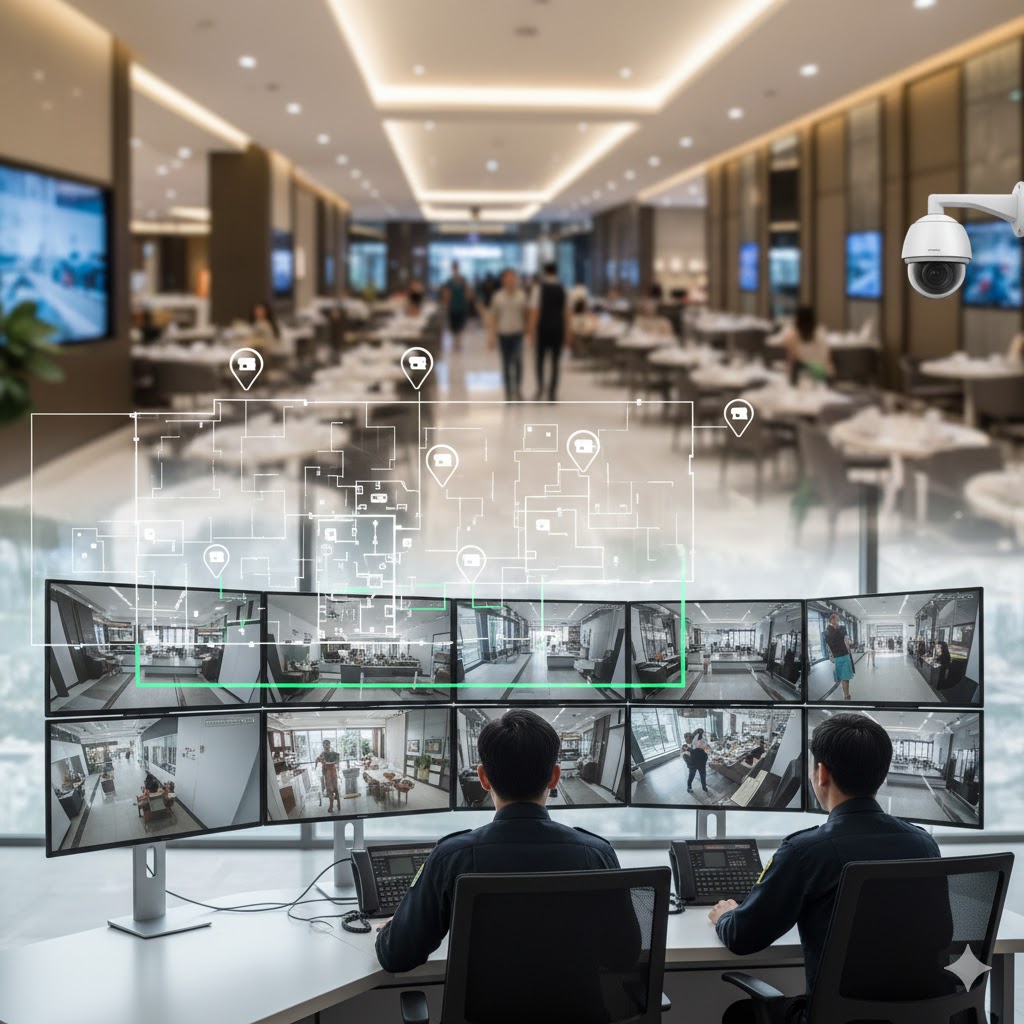
- Providing real-time monitoring — Security teams can quickly respond to unusual activities.
- Assisting investigations — Clear footage helps resolve disputes or identify offenders quickly and accurately.
When guests feel safe, they stay longer, spend more, and return with confidence.
- Protecting Hotel & Restaurant Assets
Hotels and restaurants operate with high-value assets and cashflow. CCTV helps protect these resources by:
- Monitoring cash-handling areas, point-of-sale counters, and back offices.
- Ensuring accountability within storerooms, receiving bays, and inventory zones.
- Watching over high-risk areas, such as parking lots and employee-only corridors.
By reducing internal and external loss, CCTV directly supports cost control and profitability.
- Strengthening Operational Efficiency
Beyond security, CCTV enhances overall operational standards:
- Ensures proper service delivery and compliance with SOPs.
- Helps managers monitor guest flow and adjust staffing levels.
- Identifies bottlenecks in the kitchen, bar, and housekeeping.
- Supports training by showing real examples of workflow and service patterns.
In short, CCTV allows management to make informed, real-time decisions that improve efficiency and guest satisfaction.
- Supporting Legal Protection and Dispute Resolution
Accidents, misunderstandings, or claims are inevitable in the hospitality business. High-quality CCTV footage:
- Provides factual evidence during disputes with guests or vendors.
- Helps verify slip-and-fall incidents, property damage, or misconduct.
- Protects the business from false claims and unnecessary financial liabilities.
This protection is crucial for maintaining the hotel or restaurant’s professional integrity.
Who Is Responsible for CCTV?
A well-functioning CCTV system requires clear ownership. The responsibilities are typically divided as follows:
- General Manager / Hotel Manager
- Oversees the entire CCTV strategy and ensures it aligns with operational and legal requirements.
- Approves installation, placement, and upgrades.
- Security Manager / Loss Prevention Manager
- Primary custodian of CCTV operations.
- Monitors live feeds, archives footage, and responds to incidents.
- Ensures cameras are functional and positioned correctly.
- Coordinates with law enforcement when necessary.
- IT Department
- Manages the technical backbone: servers, storage, network connectivity, and cybersecurity.
- Ensures the system is updated, encrypted, and compliant with data protection laws.
- Department Heads (F&B, Housekeeping, Front Office, Kitchen, Engineering)
- Support security by ensuring staff follow policies.
- Review footage when operational issues arise.
- Report blind spots or malfunctioning units that affect their work areas.
Conclusion
For hotels and restaurants, CCTV is far more than a surveillance tool. It is a comprehensive system that enhances guest safety, protects assets, improves efficiency, and supports legal compliance. When managed responsibly—through collaboration between Security, IT, and operational leaders—it becomes a cornerstone of professional hotel and restaurant management.