1️⃣ Business Models
Revenue Streams
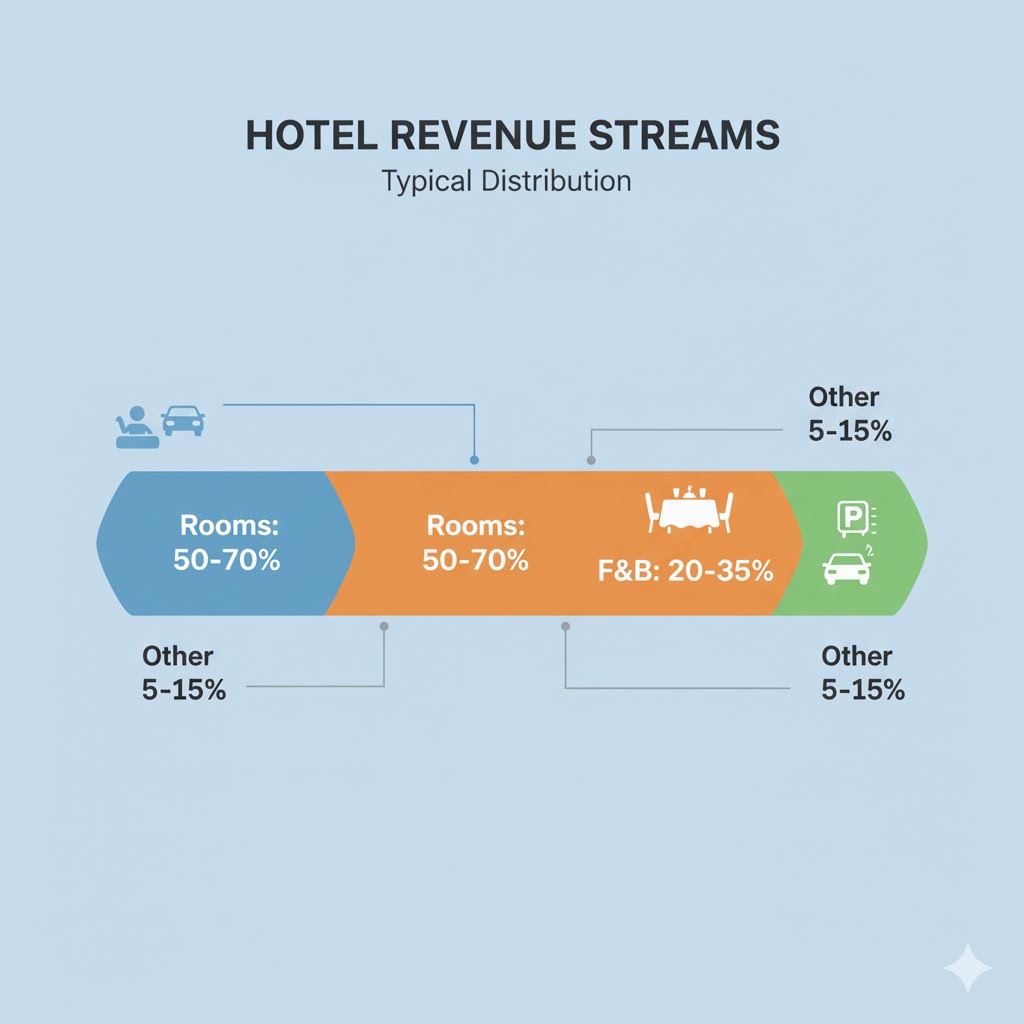
Hotel Revenue (Typical Distribution):
- Rooms: 50-70% – Transient, groups, contracts
- F&B: 20-35% – Restaurants, bars, banquets, room service
- Other: 5-15% – Spa, parking, laundry, business center
Restaurant Revenue:
- Dine-in: 60-80%
- Delivery/Takeout: 15-30%
- Catering: 5-15%
Cost Structure
Hotels:
- Department costs: 40-50% of revenue
- Undistributed costs: 20-30%
- Fixed charges: 15-25%
Key Cost Items:
- Labor: 25-35% of revenue
- F&B cost: 28-35% (food), 18-25% (beverage)
- Energy: 4-7%
- Marketing: 4-8%
Profit Margins
| Type | GOP | Net Profit |
| Full-Service | 30-40% | 10-20% |
| Limited-Service | 45-55% | 20-30% |
| Luxury | 25-35% | 10-15% |
| Budget | 40-50% | 15-25% |
2️⃣ Industry Trends
Major Trends
Technology:
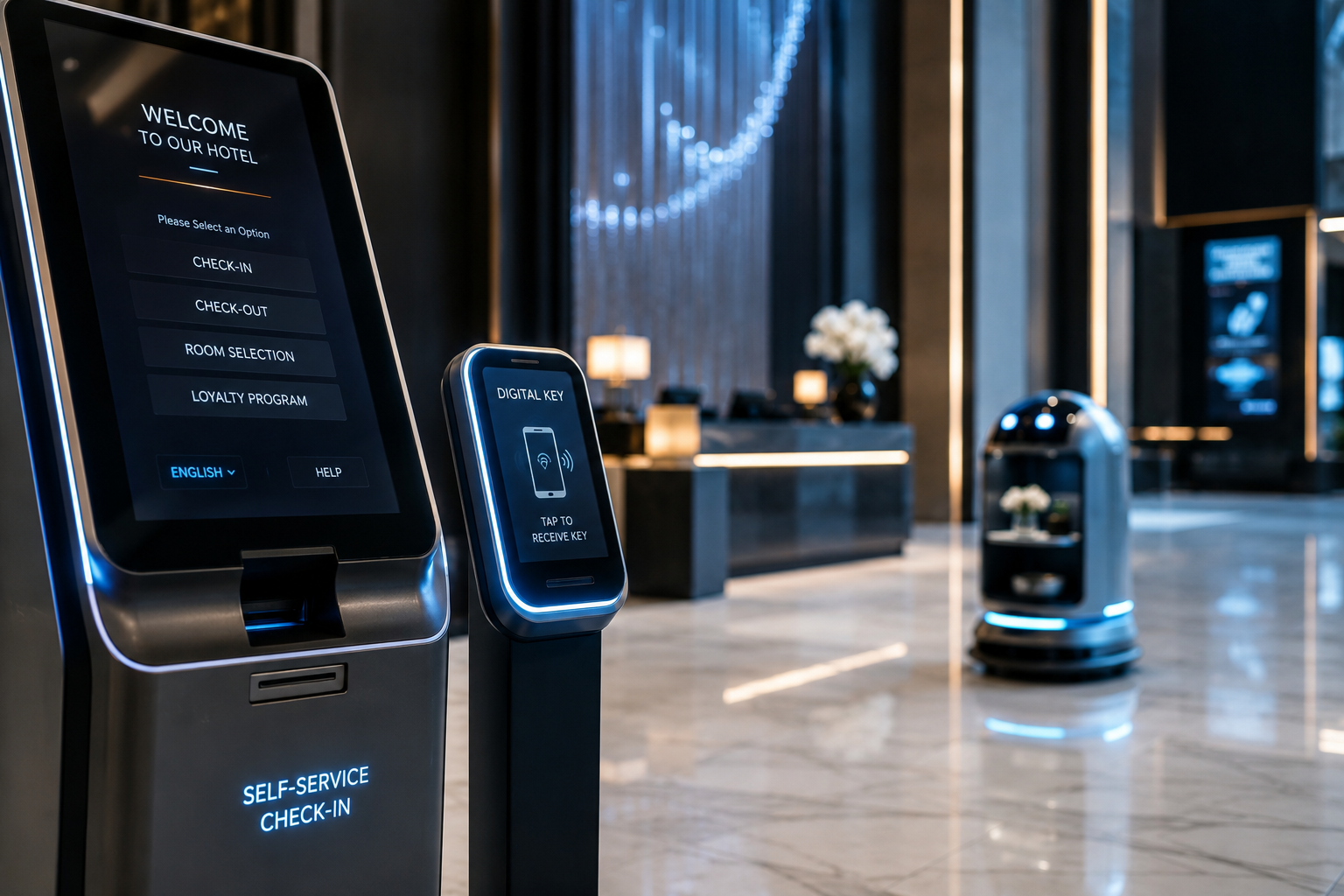
- Mobile check-in/digital keys
- Smart rooms (voice control, automated)
- AI chatbots
- Contactless everything
Sustainability:
- Plastic-free initiatives
- Energy management
- Carbon neutral goals
- 70% of travelers will pay more for sustainable hotels
Wellness Tourism:
- Fitness centers, yoga classes
- Healthy dining options
- Sleep programs
- $639B industry, growing 7.5% annually
Experiential Travel:
- Local authentic experiences
- Instagram-worthy moments
- Personalized activities
Bleisure (Business + Leisure):
- Remote work while traveling
- Need: High-speed WiFi, co-working spaces
- Extended stay packages
Consumer Behavior:
- 95% research online before booking
- 60%+ book via mobile
- 93% read reviews before deciding
- Want instant everything
3️⃣ Competitive Analysis
Process
Step 1: Identify Competitors
- Direct: Same class, price, location
- Define Comp Set: 4-8 similar properties
Step 2: Gather Data
- Pricing: Daily rate shopping (use OTA Insight, Rate Gain)
- Reviews: TripAdvisor, Google, Booking.com scores
- Facilities: Room size, amenities, features
- Service: Check-in times, policies
Step 3: Benchmarking
Compare:
Your Hotel Comp Average Target
ADR $120 $118 $125
Occupancy 72% 73% 75%
RevPAR $86.40 $86.14 $93.75
Guest Score 8.6 8.5 9.0+
GOP % 35% 38% 40%
Action: Identify gaps and opportunities
4️⃣ Target Market Segments
By Age
Gen Z (12-27):
- Digital natives, Instagram-focused
- Want: Fast WiFi, Instagrammable spaces, affordable luxury
- Marketing: TikTok, Instagram Reels
Millennials (28-43):
- Experience seekers, wellness-oriented
- Want: Unique experiences, work-life balance amenities
- Marketing: Facebook, Instagram, email
Gen X (44-59):
- Family-oriented, brand loyal
- Want: Reliable quality, family amenities
- Marketing: Facebook, email
Baby Boomers (60-78):
- Highest income, luxury travel
- Want: Comfort, personalized service
- Marketing: Email, travel agents
By Travel Purpose
Business Travelers:
- Needs: Fast check-in, WiFi, workspace, gym
- Booking: Last minute, weekdays
- Revenue: High frequency, loyalty program
Leisure Travelers:
- Needs: Pool, spa, local experiences
- Booking: Advance (1-6 months)
- Revenue: Longer stays, all meals
MICE Groups:
- Needs: Meeting space, group rates, F&B
- Booking: 6-18 months advance
- Revenue: Large room blocks, events
Guest Personas (Examples)
“Corporate Chris” – 35, Business Traveler
- Travels 2-3 times/month
- Pain points: Slow check-in, weak WiFi
- Wants: Express service, workspace, gym
- Package: Business Traveler Special
“Family Frank” – 42, With Kids
- Travels 3-4 times/year
- Pain points: Not family-friendly
- Wants: Kids club, family suite, activities
- Package: Family Fun Package
5️⃣ USP (Unique Selling Proposition)
What is USP?
What makes you clearly different and better than competitors
Good USP Criteria:
✅ Unique or done best ✅ Customers care about it ✅ Specific and clear ✅ Provable ✅ Memorable
USP Types & Examples
Location: ✅ “Only hotel with 1-minute covered walk to Metro – never get wet” ❌ “Great location near attractions”
Service: ✅ “Check-in within 60 seconds or first night free” ❌ “Excellent service”
Facility: ✅ “Rooftop pool on 52nd floor – highest in city with 360° views” ✅ “Every room is a suite minimum 60 sqm – largest in district”
Experience: ✅ “Every morning: Sunrise yoga on private beach + chef-prepared breakfast”
Value: ✅ “3-star price, 4-star quality – possible because no OTA commissions”
Sustainability: ✅ “First carbon-neutral hotel in Southeast Asia – 100% solar-powered”
Create Your USP
Ask:
- What are we best at?
- What do only we have?
- Why do customers choose us?
- What can’t competitors copy?
- Which pain point do we solve best?
Formula: [Target Audience] + [Benefit] + [Differentiator] + [Proof]
6️⃣ Brand Standards
Core Components
Visual Identity:
- Logo usage rules
- Color palette (specific codes)
- Typography standards
- Photography style
- Consistent application
Service Standards:
10/5 Rule:
- 10 feet: Eye contact + smile
- 5 feet: Verbal greeting
Response Times:
- In-person: Acknowledge within 10 seconds
- Phone: Answer within 3 rings
- Email: Respond within 24 hours
- Chat/Social: Within 5-15 minutes
Service Recovery (LEARN):
- Listen actively
- Empathize genuinely
- Apologize sincerely
- React/resolve immediately
- Notify relevant parties
Physical Standards:
Room Setup:
- Bed: Tight corners, no wrinkles
- Bathroom: Spotless mirrors, 2 of each amenity
- Temperature: 22°C
- All lights working
- Dust-free everywhere
Cleaning Times:
- Checkout room: 30-45 minutes
- Stay-over: 20-30 minutes
- Turndown: 5-10 minutes
Public Areas:
- Lobby: Clean every 2 hours
- Restrooms: Check every 30-60 minutes
- Pool: Test chemistry 3x daily
Communication Standards:
Email Structure:
- Clear subject line
- Personalized greeting
- Bullet points for clarity
- Call to action
- Professional sign-off
Social Media:
- Post frequency: Daily (Instagram), 5-7x/week (Facebook)
- Response time: 1-4 hours
- 60% valuable content, 30% shared, 10% promotional
- Always respond to complaints immediately
7️⃣ Franchise Requirements
Types of Relationships
Independent:
- ✅ Complete freedom, no fees
- ❌ No brand recognition, higher costs
Franchised:
- ✅ Brand power, distribution, support
- ❌ Fees: 7-10% of revenue, strict standards
Management Contract:
- ✅ Professional operation, brand reputation
- ❌ Fees: 3-5% + limited control
Soft Brand:
- ✅ Keep identity + brand systems
- ❌ Fees: 3-5% (lower than hard brand)
Franchise Costs
Initial Fees (Example: 150 rooms):
- Application: $75,000
- Franchise: $75,000 ($500/room)
- Training: $30,000
- Technology: $150,000
- Total: ~$430,000
Annual Ongoing (Example: $4.5M room revenue):
- Royalty (5%): $227,000
- Marketing (2%): $90,000
- Reservation fees: $24,000
- Loyalty program: $82,000
- Technology: $18,000
- Total: ~$441,000/year (9.8% of room revenue)
Plus:
- PIP (Property Improvement): $10-30k/room every 5-7 years
- = $1.5M – $4.5M for 150-room hotel
Requirements
Standards:
- Design approval required
- Specific FF&E from approved vendors
- Minimum room sizes
- Required amenities
- Mandatory renovations (PIPs)
Operations:
- Must use approved PMS/systems
- Follow brand SOPs exactly
- Staffing minimums
- Training requirements
- Quality score minimums (typically 85%+)
Marketing:
- Cannot bid on brand name (SEM)
- Must participate in brand promotions
- Rate parity required
- Use brand materials only
Performance:
- Minimum guest satisfaction: 85%+
- Annual inspections
- Monthly reporting to brand
- Failure = warnings → probation → termination
Contract Terms
Duration:
- Initial: 15-20 years typical
- Renewal: Often 2x 5-year options
Early Exit (Very Expensive): Years 1-5: Pay 100% of remaining fees Years 6-10: Pay 75% Years 11-15: Pay 50%
Example: Exit in Year 7 = $225k annual fees × 13 years × 75% = $2.2M penalty
When Franchise Makes Sense
✅ YES if:
- New property needing recognition
- Competitive market
- Targeting business/loyalty travelers
- Need operational support
- Limited marketing budget
❌ NO if:
- Strong existing brand
- Unique boutique property
- Specific niche market
- Want operational flexibility
- Can’t justify 8-12% of revenue
📊 Essential Tools
Data & Analytics:
- STR Reports: $500-2k/month (competitive benchmarking)
- OTA Insight: $300-1k/month (rate shopping)
- ReviewPro: $200-800/month (reputation management)
- Google Analytics: Free (website tracking)
Resources:
- Hospitality Net: Industry news
- Hotel News Now: Daily updates
- STR Global: Market data
- Cornell Research: Academic insights
Apps GMs Need:
- Communication: Teams/Slack, WhatsApp
- Operations: PMS mobile, HotSOS (maintenance)
- Financial: QuickBooks, Excel mobile
- Marketing: Instagram, Google My Business, Canva
- Productivity: Asana/Trello, Notion
🎯 Quick Implementation Plan
Week 1-2: Assess
- Pull 12-month financials
- Define comp set (4-8 properties)
- Analyze guest data
- Review competitor reviews
Week 3-4: Plan
- SWOT analysis workshop
- Develop USP
- Create 90-day action plan with KPIs
Week 5-8: Quick Wins
- Optimize pricing
- Fix top guest complaints
- Launch targeted marketing
- Train staff on USP
Week 9-12: Long-term
- Launch major initiatives
- Implement new systems
- Build brand
- Track results
Ongoing:
- Daily: Monitor metrics, property walk
- Weekly: Review financials, team meetings
- Monthly: Comprehensive business review
- Quarterly: Strategic deep dive
📚 Key Takeaways
A GM who understands Business & Industry Overview can:
✅ Make data-driven decisions (not guesses) ✅ Anticipate trends and prepare ✅ Create winning strategies ✅ Increase revenue and profit ✅ Deliver excellent guest experiences ✅ Lead teams effectively ✅ Adapt to change quickly ✅ Drive organizational success
Bottom Line: Understanding your business model, industry trends, competitors, customers, USP, standards, and franchise requirements is the foundation for everything else a GM does.
Best GMs know their business