by Charles Tan
TabBle of Contents
- Hotel/Restaurant Business Models
- Industry Trends
- Competitive Analysis
- Target Market Segments
- Unique Selling Proposition (USP)
- Brand Standards
- Franchise/Chain Requirements
1️⃣ Hotel/Restaurant Business Models {#business-models}
📊 A. Revenue Streams
Hotel Revenue Streams
- Rooms Revenue (50-70% of total revenue)
- Transient Rooms (Individual bookings):
- Walk-in guests – Direct arrivals without reservation
- OTA bookings – Via Booking.com, Agoda, Expedia
- Direct bookings – Through hotel website directly
- Corporate negotiated rates – Companies with contracted rates
- Membership rates – Loyalty program members
- Group Rooms (Group bookings):
- Tour groups – Tourist packages
- Corporate groups – Business conferences
- Wedding blocks – Wedding party accommodations
- Convention attendees – Conference participants
- Contract Rooms (Contracted accommodations):
- Airline crew – Flight crew layovers
- Long-term stays – Extended stays (monthly rates)
- Government rates – Special government pricing
- Food & Beverage Revenue (20-35%)
- Restaurant Revenue:
- Breakfast – Buffet or à la carte
- Lunch – Midday service
- Dinner – Evening service
- All-day dining – Continuous service restaurant
- Specialty restaurant – Japanese, Italian, etc.
- Bar & Lounge:
- Lobby bar
- Rooftop bar
- Pool bar
- In-room minibar
- Banquet & Catering:
- Wedding receptions
- Corporate events
- Conference catering
- Private parties
- In-room dining (Room Service)
- Other Operating Departments (5-15%)
- Spa & Wellness:
- Massage treatments
- Facial treatments
- Body treatments
- Salon services
- Fitness classes
- Recreation:
- Golf course fees
- Water sports
- Kids club
- Activities and excursions
- Retail:
- Gift shop
- Convenience store
- Branded merchandise
- Parking:
- Valet parking
- Self-parking
- EV charging stations
- Business Center:
- Printing services
- Copying services
- High-speed internet
- Small meeting room rental
- Laundry:
- Dry cleaning
- Pressing services
- Same-day service
- Ancillary Revenue
- Resort Fees – Destination fees (common in US)
- Damage Waivers – Insurance coverage
- Pet Fees – Pet accommodation charges
- Early Check-in/Late Check-out – Premium timing fees
- WiFi Upgrade – Premium internet (some hotels)
- Tourism/City Tax – Government taxes (collected on behalf)
Restaurant Revenue Streams
- Dine-in Revenue (60-80%)
- Breakfast service
- Lunch service
- Dinner service
- Weekend brunch
- Happy hour
- Takeout/Delivery (15-30%)
- Phone orders
- Online orders (website)
- Food delivery platforms (UberEats, DoorDash, GrubHub)
- Catering (5-15%)
- Corporate catering
- Private events
- Drop-off catering
- Beverage Sales (20-35%)
- Alcoholic beverages
- Non-alcoholic beverages
- Specialty drinks
- Merchandise
- Branded items
- Gift cards
- Packaged food products
💰 B. Cost Structures
Hotel Operating Expenses
- Operating Expenses (60-75% of revenue)
- Department Operating Expenses:
Rooms Department (15-25% of room revenue)
- Labor Costs:
- Front desk staff salaries
- Housekeeping wages
- Concierge team
- Bellmen/valets
- Reservations team
- Benefits (health insurance, retirement)
- Overtime pay
- Operating Supplies:
- Guest amenities (shampoo, soap, lotion)
- Room supplies (tissues, glassware)
- Cleaning supplies (detergent, chemicals)
- Linen replacement (sheets, towels)
- Uniforms
- Other Expenses:
- Laundry costs (if outsourced)
- Guest transportation
- OTA commissions (10-25%)
- Credit card fees (2-3%)
F&B Department (65-75% of F&B revenue)
- Labor Costs (30-40%):
- Chefs and cooks
- Kitchen staff
- Servers and bartenders
- Bussers and runners
- Stewarding team
- F&B management
- Cost of Sales (25-35%):
- Food cost – Target: 28-35%
- Beverage cost – Target: 18-25%
- Wine cost – Target: 30-40%
- Operating Supplies:
- Plates, glassware, silverware
- Kitchen equipment small wares
- Cleaning supplies
- Paper products (napkins, takeout containers)
- Uniforms
- Menus and promotional materials
Other Operating Departments:
- Spa (40-50% operating costs)
- Recreation (30-40%)
- Retail (50-60% COGS)
- Undistributed Operating Expenses (20-30%)
Administrative & General (5-8% of total revenue)
- GM and management salaries
- Accounting department
- HR department
- IT department
- Office supplies
- Professional fees (legal, audit)
- Insurance (property, liability)
- Bank charges
Sales & Marketing (4-8%)
- Sales team salaries
- Marketing campaigns
- Website maintenance
- Photography/videography
- Trade shows and events
- Collateral materials
- PR agency fees
- Social media management
Property Operations & Maintenance (4-6%)
- Engineering staff
- Maintenance supplies
- Preventive maintenance
- Building repairs
- Grounds keeping
- Pool maintenance
Energy Costs (4-7%)
- Electricity
- Water
- Gas
- Waste disposal
- Fixed Charges (15-25%)
- Rent/Mortgage – Building lease or loan payments
- Property Tax – Real estate taxes
- Insurance – Building, liability insurance
- Depreciation – Asset depreciation
- Franchise Fees – Franchise royalties (3-6% of revenue)
- Loan Interest – Debt service
Restaurant Cost Structures
Prime Cost (Target: 55-65%)
- Food Cost – 28-35%
- Beverage Cost – 18-25%
- Labor Cost – 25-35%
Other Operating Expenses (20-25%)
- Rent (8-15%)
- Utilities (3-5%)
- Marketing (2-4%)
- Maintenance (1-2%)
- Supplies (2-3%)
- Administrative (3-5%)
📈 C. Profit Margins
Hotel Profit Margins
Full-Service Hotel:
- Gross Profit Margin – 60-70%
- GOP (Gross Operating Profit) – 30-40% of total revenue
- EBITDA – 25-35%
- Net Profit – 10-20%
Example: 100-room hotel, ADR $100, Occupancy 70%:
Annual Room Revenue: 100 rooms × $100 × 365 days × 70% = $2,555,000
F&B Revenue: $1,000,000
Other Revenue: $200,000
Total Revenue: $3,755,000
Department Costs: $1,500,000 (40%)
Undistributed Costs: $1,000,000 (27%)
GOP: $1,255,000 (33%)
Fixed Charges: $700,000 (19%)
Net Profit: $555,000 (15%)
**Limited-Service Hotel (No F&B):**
– **GOP** – 45-55%
– **EBITDA** – 35-45%
– **Net Profit** – 20-30%
**Luxury Hotels:**
– **GOP** – 25-35% (higher costs)
– **EBITDA** – 20-30%
– **Net Profit** – 10-15%
**Budget Hotels:**
– **GOP** – 40-50%
– **EBITDA** – 30-40%
– **Net Profit** – 15-25%
#### **Restaurant Profit Margins**
**Fine Dining:**
– **Gross Profit** – 60-70%
– **Operating Profit (EBITDA)** – 10-15%
– **Net Profit** – 5-10%
**Casual Dining:**
– **Gross Profit** – 65-75%
– **Operating Profit** – 15-20%
– **Net Profit** – 8-12%
**Quick Service/Fast Casual:**
– **Gross Profit** – 70-75%
– **Operating Profit** – 20-25%
– **Net Profit** – 10-15%
**Bar/Nightclub:**
– **Gross Profit** – 75-85% (high beverage margins)
– **Operating Profit** – 20-30%
– **Net Profit** – 10-20%
## 2️⃣ Industry Trends {#industry-trends}
### 🌐 A. Major Hotel Trends
**1. Technology Transformation**
**Contactless Everything:**
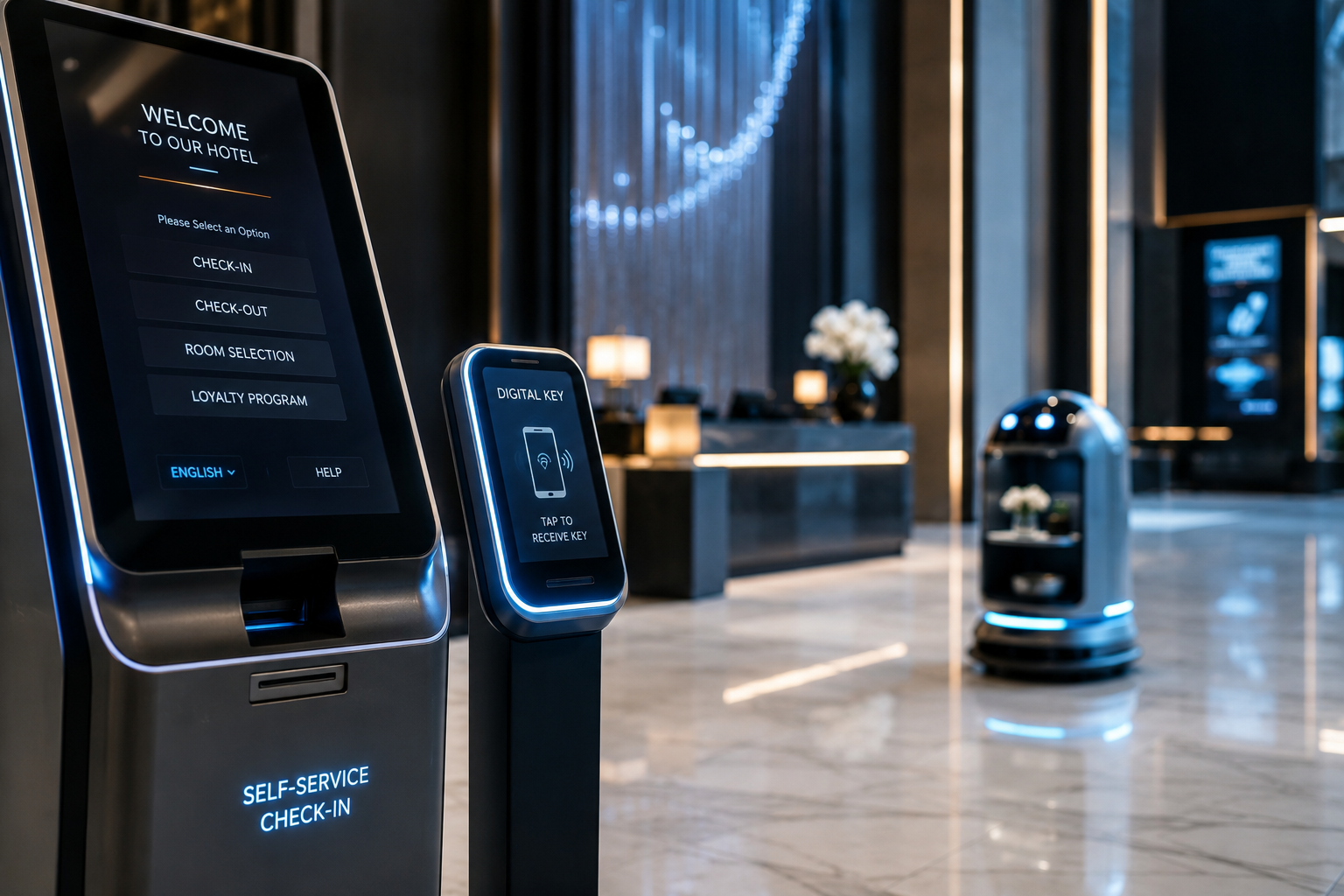
– **Mobile Check-in/Check-out** – Complete process before arrival
– **Digital Room Keys** – Via Apple Wallet, Google Pay
– **QR Code Menus** – Scan to view menu
– **Contactless Payment** – Tap and pay
– **Voice-Activated Controls** – Alexa, Google Home integration
**Smart Rooms:**
– Adjust lighting, temperature via mobile
– TVs connected to personal Netflix, Spotify
– Mirror TV technology
– Smart curtains (automated)
– Occupancy sensors for energy efficiency
**AI & Automation:**
– **Chatbots** – 24/7 guest inquiry responses
– **Dynamic Pricing** – Automated rate adjustments based on demand
– **Predictive Maintenance** – Anticipate equipment failures
– **Facial Recognition** – Guest identification (in some countries)
– **Robotic Assistants** – Delivery robots, cleaning robots
**Data Analytics:**
– Guest behavior analysis
– Personalization engines
– Revenue optimization
– Operational efficiency improvements
**2. Sustainability & Eco-Consciousness**
**Green Practices:**
– **Plastic-Free Initiatives** – Eliminate single-use plastics
– **Refillable Amenities** – Large bottles instead of individual
– **Energy Management** – Smart systems, LED lighting
– **Solar Panels** – Renewable energy sources
– **Water Conservation** – Greywater recycling, low-flow fixtures
– **Organic F&B** – Farm-to-table concepts
– **Carbon Neutral Goals** – Net-zero carbon footprint targets
– **Green Certifications** – LEED, Green Key, EarthCheck
**Consumer Impact:**
– 70% of travelers willing to pay more for sustainable hotels
– Millennials and Gen Z prioritize sustainability
– Hotels must communicate efforts transparently
**3. Wellness Tourism**
**Wellness Offerings:**
– **Fitness Centers** – State-of-the-art equipment, Peloton bikes
– **Yoga & Meditation** – Daily classes, programs
– **Healthy F&B** – Superfood menus, nutritionist consultations
– **Sleep Programs** – Premium pillows, sleep technology
– **Mental Health** – Quiet zones, digital detox programs
– **Spa Integration** – Comprehensive wellness experiences
– **Biophilic Design** – Nature-inspired architecture
**Market Growth:**
– Wellness tourism industry valued at $639 billion
– Growing 7.5% annually
– Hotels without wellness components will fall behind
**4. Experiential Travel**
**Guest Expectations:**
– **Local Experiences** – Authentic, immersive activities
– **Cultural Immersion** – Deep dive into local culture
– **Unique Activities** – One-of-a-kind experiences
– **Personalization** – Tailored to preferences
– **Instagram-worthy Moments** – Shareable experiences
**Hotel Response:**
– Curate local tours
– Partner with community artisans
– Create Instagrammable spaces
– Tell compelling brand stories
– Focus on experiences, not just accommodation
**5. Bleisure Travel (Business + Leisure)**
**Work From Anywhere Trend:**
– Remote workers traveling while working
– Digital nomads increasing
– Corporate travelers extending stays
**Hotel Requirements:**
– **High-Speed WiFi** – Fast, reliable everywhere
– **Co-working Spaces** – Shared work areas
– **Meeting Pods** – Private call booths
– **Extended Stay Packages** – Weekly/monthly rates
– **Business Amenities** – Printing, scanning, shipping
– **Flexible Check-in/out** – Accommodate work schedules
**6. Personalization at Scale**
**Using Data to Create Experiences:**
– Remember preferences from previous stays
– Auto-adjust room temperature to preference
– Recommend restaurants based on taste
– Send targeted offers
– Celebrate birthdays, anniversaries
**Technology Enablers:**
– CRM systems
– AI-powered recommendations
– Guest preference tracking
– Automated personalization
**7. Alternative Accommodations**
**The Competition:**
– **Airbnb** – Home-sharing platform
– **Vacation Rentals** – VRBO, HomeAway
– **Hostels 2.0** – Modern, upscale hostels
– **Glamping** – Luxury camping
– **Capsule Hotels** – Compact, efficient accommodations
**Hotel Response:**
– Create value Airbnb can’t match
– Emphasize safety and standards
– Consistent service
– Loyalty programs
– Professional hospitality
### 🍽️ B. Restaurant Trends
**1. Ghost Kitchens & Delivery-Only**
– No dining room, delivery-only
– Lower overhead costs
– Multiple brands from one kitchen
– Rapid growth post-COVID
**2. Plant-Based & Alternative Proteins**
– Vegetarian/vegan menu expansion
– Beyond Meat, Impossible Foods
– Lab-grown meat emerging
– Health and environmental consciousness
**3. Hyper-Local & Farm-to-Table**
– Ingredients from nearby farms
– Seasonal menu changes
– Storytelling about food origins
– Supporting local communities
**4. Technology Integration**
– **Tablet Ordering** – Order from table
– **Kitchen Display Systems** – Digital instead of paper tickets
– **AI Ordering** – Artificial intelligence recommendations
– **Robotics** – Cooking robots, delivery robots
**5. Experience Dining**
– Chef’s Table – Watch chef prepare
– Omakase – Chef’s selection
– Immersive Dining – Multi-sensory 4D experiences
– Storytelling – Narrative with each dish
**6. Fast Casual & QSR Evolution**
– Higher quality ingredients
– Healthier options
– Fast but not junk food
– Customization options
### 📱 C. Changing Consumer Behavior
**1. Digital-First Mindset**
– **Research Online** – 95% research before booking
– **Mobile Booking** – 60%+ book via mobile
– **Social Media Influence** – Instagram, TikTok drive decisions
– **Review Dependency** – 93% read reviews before deciding
**2. Value over Price**
– Willing to pay more for value
– Look at total experience
– Not just cheapest option
– Transparent pricing appreciated
**3. Instant Gratification**
– Want everything immediately
– Slow response = lost customer
– Fast check-in/out expected
– Quick service demanded
**4. Social & Shareable**
– Want Instagram-worthy photos
– Leave reviews everywhere
– Influencer culture impact
– User-generated content influential
**5. Health & Safety Consciousness**
– Cleanliness critically important
– Visible sanitization
– Social distancing considerations
– Safety standard expectations
**6. Loyalty Fatigue**
– Too many loyalty programs
– Want simple, instant rewards
– Simplicity is key
– Immediate gratification preferred
## 3️⃣ Competitive Analysis {#competitive-analysis}
### 🎯 A. Competitive Analysis Process
**Step 1: Identify Competitors**
**1. Direct Competitors:**
– Same hotel class/star rating
– Similar price range
– Same location/area
– Same target guests
**Example:** 4-star hotel in downtown, $100-150 ADR
Competitors: Other 4-star hotels within 2 km radius
**2. Indirect Competitors:**
– Alternative accommodations (Airbnb, serviced apartments)
– Slightly different class but nearby
– Similar location
**3. Future Competitors:**
– New hotels under construction
– Brands entering the market
**Step 2: Create Competitive Set (Comp Set)**
**Comp Set Should Include:**
– 4-8 competitors
– Similar in multiple dimensions
– Used for performance comparison
**Example Comp Set:**
Our Hotel: ABC Hotel (4-star, 150 rooms, $120 ADR)
Comp Set:
- Hotel X – 4-star, 180 rooms, $110 ADR, 0.3 miles away
- Hotel Y – 4-star, 140 rooms, $130 ADR, 0.5 miles away
- Hotel Z – 4-star, 160 rooms, $115 ADR, 0.6 miles away
- Hotel W – 4-star, 200 rooms, $125 ADR, 0.7 miles away
- Hotel V – 4.5-star, 120 rooms, $145 ADR, 0.4 miles away
**Step 3: Gather Competitive Intelligence**
**Data to Collect:**
**A. Pricing Data**
– **Rate Shopping** – Check rates daily
– Tools: OTA Insight, Rate Gain, STR
– Monitor on Booking.com, Expedia, Google Hotel Ads
– Track by: weekday/weekend, season, lead time
– **Promotion Analysis**
– Flash sales
– Early bird discounts
– Package deals
– Added values
**Example Comparison:**
Date: November 15 (booking for December 1)
ABC Hotel (us): $115 (10% discount promo)
Hotel X: $105 (includes breakfast)
Hotel Y: $125 (no promotion)
Hotel Z: $112 (includes $50 spa credit)
“`
**B. Occupancy & Performance**
– Estimate from availability in booking systems
– STR (Smith Travel Research) data
– RevPAR Index vs. market
**C. Guest Reviews**
Sources:
– **TripAdvisor** – Overall score, review count, awards
– **Google Reviews** – Rating, review frequency
– **Booking.com** – Category scores (cleanliness, service, location)
– **Expedia** – Detailed ratings
**Analysis:**
Sentiment Analysis:
Hotel X:
✅ Strengths: Excellent location, friendly staff, great breakfast
❌ Weaknesses: Dated rooms, slow WiFi, parking inconvenient
How we can win:
– Our WiFi is faster → Emphasize in marketing
– Our rooms newly renovated → Highlight modern amenities
– We offer valet service → Free valet parking advantage
“`
**D. Facilities & Amenities**
Survey:
– Room types and sizes
– Swimming pool (yes/no, size, floor)
– Fitness center (equipment, 24-hour access?)
– Restaurants (how many, cuisine types)
– Meeting space (size, number of rooms)
– Public areas
– Technology (free WiFi?, Smart TV?, Mobile key?)
**E. Service Standards**
– Check-in time (2 PM? 3 PM? Flexible?)
– Check-out time (11 AM? 12 PM?)
– Age policy (children free until what age?)
– Cancellation policy (free cancellation how many days before?)
– Pet policy (pet-friendly?)
**F. Marketing & Positioning**
Review:
– Website design and UX
– Social media presence (followers, engagement rate)
– Content marketing (posting frequency, content type)
– Influencer collaborations
– Advertising (where advertised)
– Brand messaging (core message)
**Step 4: Analyze Each Competitor’s SWOT**
**Example:**
Hotel X:
Strengths:
– Best location in the area
– Global brand recognition
– Strong loyalty program
Weaknesses:
– 15-year-old building
– No pool bar
– Outdated meeting rooms
Opportunities:
– Planning renovation
– May increase rates post-renovation
Threats:
– If closed for renovation = we gain their guests
### 📍 B. Market Positioning
**What is Market Positioning?**
= **The place your brand occupies in customers’ minds relative to competitors**
**Positioning Strategy Types:**
**1. Price-Based Positioning**
**A. Luxury/Premium Positioning**
Position: “The most luxurious hotel in the city”
Strategy:
– Highest rates in the area
– Personalized service (Butler service)
– Highest quality materials (Egyptian cotton, Hermès amenities)
– Exclusive experiences
– Distinctive design
Examples: Mandarin Oriental, Four Seasons, The Peninsula
**B. Mid-Scale/Value Positioning**
Position: “Quality service at reasonable prices”
Strategy:
– Mid-range pricing but high quality
– Focus on value for money
– Full amenities
– Not overly luxurious but not basic
Examples: Marriott, Hilton Garden Inn, Novotel
**C. Budget/Economy Positioning**
Position: “Best price, essentials covered”
Strategy:
– Lowest rates
– Focus on cleanliness and safety
– Basic amenities
– No frills
Examples: Ibis, Holiday Inn Express, Super 8
**2. Attribute-Based Positioning**
**A. Location-Based**
“Closest hotel to…”
– Airport (Airport Hotel)
– Metro/Subway station (Transit-Connected)
– Business district (CBD Location)
– Beach (Beachfront Resort)
– Shopping area
Example: “Only 2 minutes walk to Metro station”
**B. Design-Based**
“Hotel with unique design”
– Boutique design
– Art hotel
– Minimalist
– Industrial chic
– Contemporary local style
Examples: Hotel Muse Bangkok (Art Deco), SO/ Bangkok (Modern art)
**C. Service-Based**
“Service beyond expectations”
– 24-hour butler
– Personalized concierge
– Female-friendly floors
– Kids club & activities
Example: The Peninsula (Service excellence reputation)
**D. Facility-Based**
“Most comprehensive facilities”
– Largest pool
– Best gym
– Rooftop bar
– Multiple restaurants
– Biggest meeting space
Example: “Longest swimming pool in the city”
**3. Benefit-Based Positioning**
**A. Wellness & Relaxation**
Position: “Sanctuary for body and mind restoration”
Strategy:
– World-class spa
– Yoga & meditation programs
– Healthy dining options
– Sleep programs
– Fitness focus
Examples: Chiva-Som, Kamalaya, SHA Wellness Clinic
**B. Business & Productivity**
Position: “Best hotel for business travelers”
Strategy:
– High-speed WiFi everywhere
– Co-working spaces
– Meeting rooms
– 24/7 business center
– Express check-in/out
– Late check-out for frequent guests
Examples: Marriott Executive Apartments, Oakwood
**C. Family-Friendly**
Position: “Best hotel for families”
Strategy:
– Kids club
– Family rooms/suites
– Children’s pool
– Babysitting service
– Kids menu
– Family activities
Examples: Anantara Resorts (kids club), Dusit Thani (family-focused)
**4. User-Based Positioning**
**A. Millennial/Gen Z**
Position: “Hotel for the new generation”
Strategy:
– Instagram-worthy design
– Tech-forward
– Social spaces
– Affordable luxury
– Sustainability focus
– Local experiences
Examples: Moxy Hotels, Aloft, The Standard
**B. LGBTQ+ Friendly**
Position: “Welcome & inclusive for all”
Strategy:
– Rainbow marketing
– Trained staff
– Privacy respect
– Community partnerships
Examples: W Hotels, Axel Hotels
**C. Pet-Friendly**
Position: “Where pets are family too”
Strategy:
– Pet amenities (beds, bowls, treats)
– Pet sitting services
– Dog walking areas
– No extra fees
Examples: Kimpton Hotels (pets stay free), Fairmont
**5. Competition-Based Positioning**
**A. Alternative to Luxury**
Position: “Luxury quality at better prices”
– Compare to 5-star hotels
– Similar service level
– 30% lower rates
Example: Pullman (alternative to Sofitel)
**B. Better than Budget**
Position: “Budget prices, premium quality”
– Same price range as economy
– Better quality
– More amenities
Examples: Hampton by Hilton, Holiday Inn Express
### 📊 C. Benchmarking
**What is Benchmarking?**
= **The process of comparing your performance against competitors or industry standards**
**Types of Benchmarking:**
**1. Competitive Benchmarking**
**KPIs to Compare:**
**A. Revenue Metrics**
Our Hotel Hotel X Hotel Y Market Average
ADR $120 $110 $130 $118
Occupancy 72% 78% 68% 73%
RevPAR $86.40 $85.80 $88.40 $86.14
Index vs Market 100.3 99.6 102.6 100.0
Interpretation:
– Our ADR above market = good positioning
– Occupancy below Hotel X = need to increase demand
– RevPAR Index 100.3 = competitive
– Goal: Increase Index to 105+
**B. Guest Satisfaction**
Us Hotel X Hotel Y Target
TripAdvisor 4.3 4.5 4.1 4.5+
Booking.com 8.6 8.4 8.8 8.8+
Google 4.4 4.2 4.6 4.6+
NPS Score 45 52 38 55+
Improvements Needed:
– TripAdvisor low → Improve review response and issue resolution
– Booking.com good → Maintain level
– NPS needs increase → Focus on service recovery
**C. Operational Efficiency**
Us Hotel X Best Practice
GOP % 35% 38% 40%
Labor Cost % 32% 28% 25-30%
Food Cost % 33% 30% 28-32%
Energy Cost/Room $8.50 $7.50 $7.00/room/day
Improvement Plan:
– Labor cost high → Optimize scheduling
– Food cost high → Review menu engineering
– Energy cost → Invest in LED, smart systems
**D. Sales & Marketing Efficiency**
Us Competitors Industry
Marketing Cost % 6% 5% 4-6%
Cost per Booking $45 $38 $40
Direct Booking % 35% 42% 40%+
OTA Commission % 18% 15% 15%
Strategy:
– Increase direct bookings → Improve website, loyalty program
– Reduce OTA dependency → Increase brand awareness
**2. Functional Benchmarking**
**A. Housekeeping**
Us Best in Class
Minutes per Room 28 25 minutes
Rooms per Housekeeper 14 16 rooms/day
Linen Cost per Room $2.50 $2.00/room
Guest Satisfaction 8.5 9.0
Improvement Actions:
– Train on efficient cleaning techniques
– Refine cleaning checklist
– Invest in better equipment
**B. F&B Operations**
“`
Us Benchmark
Covers per Server 15 18
Kitchen Staff per Cover 0.15 0.12
Food Waste % 8% 5%
Average Check $85 $90
Actions:
– Train staff on upselling
– Review portion sizes
– Implement waste tracking
**3. Best Practice Benchmarking**
**Learn from Industry Leaders:**
**Example: Four Seasons Service Standards**
What we can learn:
✅ 24-hour rule: Respond to inquiries within 24 hours
✅ Guest preference tracking: Note everything
✅ Pre-arrival contact: Contact 3 days before arrival
✅ Welcome amenity: Greet every guest with gift
✅ Handwritten notes: Personal thank-you cards
Adapt and implement:
– Create 24-hour response SOP
– Use CRM to track preferences
– Automated email 3 days before arrival
– Allocate budget for welcome amenities
**Example: Ritz-Carlton Employee Empowerment**
Their Policy:
– Every employee has $2,000/guest/incident to solve problems immediately
– No manager approval needed
– Empowerment = Fast service recovery
We can do:
– Start with $300/guest/incident
– Train staff on using discretion
– Track outcomes
– Celebrate great recovery stories
## 4️⃣ Target Market Segments {#target-segments}
### 👥 A. Demographics
**1. Age Segments**
**Gen Z (1997-2012, ages 12-27)**
Characteristics:
– Digital natives
– Value experiences > possessions
– Sustainability-conscious
– Price-sensitive
– Social media-driven
What they want:
– Instagram-worthy spaces
– Fast WiFi
– Tech integration
– Authentic local experiences
– Affordable luxury
Marketing approach:
– TikTok, Instagram Reels
– Influencer partnerships
– User-generated content (UGC)
– Flash sales, limited offers
**Millennials (1981-1996, ages 28-43)**
Characteristics:
– Career-focused
– Experience seekers
– Wellness-oriented
– Loyal when value is right
– Reviews very important
What they want:
– Work-life balance amenities
– Unique experiences
– Wellness offerings
– Convenience (mobile everything)
– Sustainable practices
Marketing:
– Facebook, Instagram
– Email marketing
– Content marketing
– Loyalty programs
**Gen X (1965-1980, ages 44-59)**
Characteristics:
– Higher income
– Family-oriented
– Brand loyal
– Value quality & service
– Less tech-dependent than younger generations
What they want:
– Reliable quality
– Family amenities
– Good value
– Excellent service
– Comfort & convenience
Marketing:
– Facebook, Email
– Direct mail
– Traditional media
– Membership programs
**Baby Boomers (1946-1964, ages 60-78)**
Characteristics:
– Highest disposable income
– Luxury travel preferences
– Longer stays
– Less price-sensitive
– Expect excellent service
What they want:
– Comfort & luxury
– Personalized service
– Accessible facilities
– Health/wellness focus
– Cultural experiences
Marketing:
– Travel agents
– Print media
– Loyalty rewards
**2. Income Segments**
**Budget Travelers (Lower-middle income)**
Profile:
– Income: < $3,000/month
– Travel budget: $50-150/night
Behavior:
– Book far in advance for deals
– Compare prices extensively
– Sacrifice amenities for location
– Likely to use OTAs
What to offer:
– Basic clean rooms
– Essential amenities
– Good location
– Free WiFi & breakfast
Mid-Market (Middle income)
Profile:
– Income: $3,000-$8,000/month
– Travel budget: $100-250/night
Behavior:
– Value for money important
– Want comfort + experiences
– Book 1-3 months ahead
– Mix of OTA and direct bookings
What to offer:
Retry
Claude does not have the ability to run the code it generates yet.
B
- Comfortable rooms
- Pool, gym
- Restaurant options
- Some unique experiences
- Reliable service
**Affluent (Upper-middle income)**
Profile:
– Income: $8,000-$20,000/month
– Travel budget: $250-600/night
Behavior:
– Quality & service matter most
– Willing to pay for experience
– Often direct bookings
– Loyalty program members
– Longer stays when traveling
What to offer:
– Premium rooms/suites
– Personalized service
– Exclusive amenities
– Unique experiences
– Priority treatment
**Luxury (High net worth)**
Profile:
– Income: > $20,000/month
– Travel budget: > $600/night
Behavior:
– Expect perfection
– Brand loyal
– Book through concierge/direct
– Extended stays
– High expectations
What to offer:
– Ultra-luxury suites
– Butler service
– Michelin-star dining
– Bespoke experiences
– Privacy & exclusivity
– White-glove service
### 🎭 B. Psychographics
**1. Travel Purpose**
**Business Travelers**
Characteristics:
– Frequent travelers (10-50+ nights/year)
– Time-sensitive
– Expense account
– Loyalty program important
– Routine-oriented
Needs:
– Location near business district
– Fast check-in/out
– Business center
– Meeting rooms
– Reliable WiFi
– Late check-out flexibility
– Healthy F&B options
– Gym access
Booking Pattern:
– Last minute (1-7 days advance)
– Weekdays
– Repeat bookings
– Corporate rates
Revenue Opportunity:
– High frequency
– Room upgrades
– F&B spend
– Laundry, business services
– Potential for corporate contracts
**Leisure Travelers**
Characteristics:
– Vacation mindset
– Price-conscious
– Experience-seeking
– Longer stays (3-7 nights average)
– Research extensively
Needs:
– Location near attractions
– Pool, spa
– Tours & activities
– Photo opportunities
– Local dining options
– Family amenities
Booking Pattern:
– Advance booking (1-6 months)
– Weekends, holidays
– Seasonal peaks
Revenue Opportunity:
– Packages
– F&B (all meals)
– Spa services
– Activities & excursions
– Retail purchases
**Bleisure (Business + Leisure)**
Characteristics:
– Business trip extended for leisure
– Higher spend per stay
– Willing to upgrade
– Sometimes bring family/partner
– Flexible schedule
Needs:
– Both business & leisure amenities
– Flexible check-out
– Family-friendly options (if applicable)
– Local experiences
– Extended stay discounts
Revenue Opportunity:
– Extended stays
– Suite upgrades
– Multiple guests (if family joins)
– Higher F&B spend
– Activities & experiences
**MICE (Meetings, Incentives, Conferences, Events)**
Characteristics:
– Group bookings (10-500+ rooms)
– Advance planning (6-18 months)
– Budget-driven
– Multiple decision makers
– Repeat business potential
Needs:
– Meeting spaces (various sizes)
– A/V equipment
– F&B for groups
– Team building activities
– Room blocks
– Competitive group rates
Revenue Opportunity:
– Large room blocks
– F&B minimum guarantees
– Meeting room rental
– Activities & team building
– AV equipment rental
– Potential for annual contracts
**2. Lifestyle Segments**
**Wellness Seekers**
Motivation: Health & well-being
What they want:
– Spa & fitness facilities
– Healthy dining options
– Yoga/meditation classes
– Sleep programs
– Clean air/water
– Toxin-free environment
– Mindfulness activities
Marketing message:
“Rejuvenate your mind, body & spirit”
Package ideas:
– Detox retreats
– Fitness bootcamps
– Spa packages
– Mindfulness programs
– Healthy eating programs
**Adventure Enthusiasts**
Motivation: Excitement & exploration
What they want:
– Activity-packed itineraries
– Outdoor adventures
– Adrenaline activities
– Local guides
– Equipment rental
– Group activities
Marketing message:
“Your basecamp for adventure”
Package ideas:
– Diving packages
– Hiking expeditions
– Water sports bundles
– Rock climbing adventures
– Multi-sport packages
**Culture & Heritage Lovers**
Motivation: Learning & immersion
What they want:
– Historical tours
– Local artisan workshops
– Cultural performances
– Authentic cuisine
– Museum partnerships
– Educational experiences
Marketing message:
“Discover authentic [destination]”
Package ideas:
– Cultural immersion experiences
– Culinary tours
– Heritage walks
– Art workshops
– Cooking classes
**Luxury Seekers**
Motivation: Status & exclusivity
What they want:
– Impeccable service
– Privacy
– Exclusive access
– Personalization
– Instagram-worthy moments
– VIP treatment
Marketing message:
“Experience unparalleled luxury”
Offerings:
– Butler service
– Private dining experiences
– Helicopter transfers
– Yacht excursions
– Private tours
– Customized itineraries
### 🎯 C. Guest Personas (Detailed Examples)
**Guest Persona คือ fictional characters representing target customer segments**
**Persona 1: “Corporate Chris”**
📊 Demographics:
– Age: 35 years old
– Occupation: Marketing Manager
– Income: $80,000/year
– Status: Single
– Location: New York City
🎭 Psychographics:
– Travels for business 2-3 times/month
– Values efficiency
– Cares about work-life balance
– Active on LinkedIn, Instagram
– Collects airline miles
– Tech-savvy
💭 Pain Points:
– Slow check-in after long flights
– Weak WiFi preventing work
– No time for breakfast
– Needs workspace in room
– Wants to maintain fitness routine
✨ What he wants:
– Express check-in (< 2 minutes)
– High-speed WiFi (reliable)
– In-room workspace
– Grab-and-go breakfast
– Late check-out option
– 24-hour gym access
– Mobile key
– Easy expense reporting
📱 How to reach him:
– LinkedIn ads
– Email marketing
– Corporate partnerships
– Business travel forums
– Loyalty program benefits
💰 Revenue Potential:
– Frequency: High (24-36 nights/year)
– Spend: Moderate per night
– Loyalty: High (if satisfied)
– Referral: Corporate recommendations
🎁 Package for him:
“Business Traveler Package”
- Express check-in/out
- Late check-out until 2 PM
- Complimentary laundry (2 pieces)
- High-speed WiFi upgrade
- Breakfast box to-go
- 500 bonus loyalty points
- Guaranteed quiet room
📧 Communication Style:
– Professional, concise
– Email preferred
– Mobile app notifications
– SMS for urgent matters
– Bullet points, not paragraphs
**Persona 2: “Family Frank”**
📊 Demographics:
– Age: 42 years old
– Occupation: Business Owner
– Income: $150,000/year
– Status: Married, 2 children (ages 6 and 9)
– Location: Singapore
🎭 Psychographics:
– Travels 3-4 times/year with family
– Family time is priority
– Looking for memories, not just things
– Active on Facebook
– Reads reviews extensively before booking
– Values safety and convenience
💭 Pain Points:
– Rooms not suitable for families
– Children get bored quickly
– No kids’ menu options
– Slow check-in frustrating with tired kids
– Lack of privacy with only one room
– Difficulty finding family activities
✨ What he wants:
– Family suite/connecting rooms
– Kids club with supervision
– Children’s pool (separate from adults)
– Kids menu (healthy options)
– Babysitting service
– Family activities
– Safety features (pool gates, corner guards)
– Early dinner options
– Child-friendly entertainment
📱 How to reach him:
– Facebook ads (family travel groups)
– Family travel blogs
– TripAdvisor (family reviews)
– Email campaigns
– Google search (“family-friendly hotels”)
– School holiday promotions
💰 Revenue Potential:
– Frequency: Moderate (3-4 stays/year)
– Spend: High (multiple rooms, F&B, activities)
– Loyalty: Very high (happy kids = repeat bookings)
– Referral: Excellent (recommends to other families)
🎁 Package for him:
“Family Fun Package”
- Family suite upgrade (subject to availability)
- Kids eat free (under 12)
- Welcome gift for children
- Kids club access (4 hours/day)
- Family photo session
- 20% off spa for parents
- Late check-out (upon request)
- Complimentary board games/activities kit
📧 Communication Style:
– Friendly, warm tone
– Include information about kids’ amenities
– Photos of families enjoying facilities
– Highlight safety features
– Provide itinerary suggestions
– Address both parents in communications
**Persona 3: “Influencer Isabella”**
📊 Demographics:
– Age: 27 years old
– Occupation: Travel Influencer/Content Creator
– Income: $60,000/year (variable)
– Status: In relationship
– Location: Los Angeles
– Followers: 150K Instagram, 80K TikTok
🎭 Psychographics:
– Travels 2 times/month
– Life revolves around content creation
– Aesthetic-obsessed
– Always on phone/camera
– Early adopter of technology
– Influences purchasing decisions of followers
💭 Pain Points:
– No “wow” factor for photos
– Poor lighting for photography
– Slow WiFi preventing content upload
– Generic rooms lacking character
– No designated photo spots
– Restricted posting policies
✨ What she wants:
– Instagram-worthy spaces
– Natural lighting
– Unique design elements
– Rooftop/infinity pool
– Trendy F&B concepts
– Fast WiFi for uploading (essential)
– Content creation-friendly policies
– Permission to photograph
– Potential collaboration opportunities
📱 How to reach her:
– Instagram DM collaboration offers
– TikTok partnerships
– Influencer marketing platforms
– UGC campaigns
– Hashtag campaigns
– Influencer networks
– Content creator events
💰 Revenue Potential:
– Direct spend: Moderate (often comped)
– Indirect value: Very High (exposure to 150K+ followers)
– Frequency: High (if collaboration continues)
– ROI: Difficult to measure but potentially massive reach
🎁 Collaboration Package:
“Content Creator Stay”
- Complimentary 2-night stay (mid-week)
- Room upgrade to most photogenic suite
- Sunset/golden hour photo session with photographer
- Featured dish from each restaurant
- Spa treatment experience
- Drone footage (if available)
- Welcome gift for content
In Exchange:
- 3 Instagram feed posts (with hotel tag)
- 5+ Instagram stories
- 2 TikTok videos
- Use specific hashtags
- Minimum 50K total reach
- Content approval process
📧 Communication Style:
– Casual, trendy language
– Visual-heavy communication
– Instagram/TikTok DM acceptable
– Collaborative, partnership tone
– Quick responses expected
– Include visual examples
**Persona 4: “Romantic Rebecca”**
📊 Demographics:
– Age: 29 years old
– Occupation: Graphic Designer
– Income: $50,000/year
– Status: Celebrating anniversary with partner
– Location: Chicago
🎭 Psychographics:
– Travels 2-3 times/year for special occasions
– Romantic, detail-oriented
– Uses Pinterest for inspiration
– Values experiences over things
– Sentimental about moments
– Willing to splurge for special occasions
💭 Pain Points:
– Hotels not romantic enough
– Lack of privacy
– No special touches for occasions
– Noise from neighboring rooms
– Staff unaware it’s special occasion
– Generic, impersonal experience
✨ What she wants:
– Privacy & intimacy
– Romantic ambiance
– Special touches (rose petals, candles)
– Couples’ spa treatments
– Private dining options
– Sunset/scenic views
– Photo-worthy moments for memories
– Thoughtful surprises
– Quiet, peaceful environment
📱 How to reach her:
– Instagram (romantic travel accounts)
– Pinterest ads (wedding/romance boards)
– Google searches (“romantic hotels in…”)
– Wedding/bridal magazines and blogs
– Couple influencers
– Anniversary reminder emails
💰 Revenue Potential:
– Spend: High (willing to splurge for special occasions)
– Frequency: Low-Moderate (special occasions only)
– Referral Potential: Very High (tells friends about experience)
– Social Sharing: High (posts beautiful moments)
🎁 Package for her:
“Romance Package”
- Suite with balcony/view upgrade
- Rose petals & candles arrangement in room
- Champagne & chocolate-covered strawberries
- Couples’ spa treatment (90 minutes)
- Private candlelit dinner (3-course menu)
- Late check-out (2 PM)
- Professional couple’s photo session (30 min)
- Personalized anniversary cake
- Handwritten welcome note
📧 Communication Style:
– Romantic, elegant language
– Attention to personal details
– Use couple’s names
– Emphasize special occasion
– Beautiful, curated imagery
– Surprise & delight opportunities
– Personal, heartfelt tone
**Persona 5: “Wellness Wendy”**
📊 Demographics:
– Age: 38 years old
– Occupation: Yoga Instructor / Wellness Coach
– Income: $70,000/year
– Status: Single
– Location: Hong Kong
🎭 Psychographics:
– Travels 4-5 times/year
– Health-conscious lifestyle
– Spiritual, mindful approach to life
– Eco-conscious consumer
– Plant-based diet
– Active in wellness communities online
– Values authenticity and natural products
💭 Pain Points:
– No healthy F&B options
– Limited gym equipment
– No yoga classes offered
– Chemical cleaning products (smell)
– Air quality concerns
– No vegan/plant-based menu options
– Noisy environment preventing relaxation
– Lack of wellness amenities
✨ What she wants:
– Clean, toxin-free environment
– Yoga/meditation spaces
– Plant-based menu options
– Spa with natural/organic products
– Fitness classes (yoga, pilates)
– Quiet zones for reflection
– Air purification systems
– Eco-friendly amenities
– Wellness consultations
– Nature connection (gardens, plants)
📱 How to reach her:
– Wellness blogs/magazines
– Yoga studio partnerships
– Instagram wellness community
– Health & wellness expos
– Retreat booking platforms (BookRetreats, Retreat Finder)
– Wellness podcasts (sponsorship)
– Holistic health forums
💰 Revenue Potential:
– Spend: High (spa, healthy F&B, classes, activities)
– Frequency: Moderate-High (wellness retreats 4-5x/year)
– Loyalty: Very High (aligned values = strong loyalty)
– Advocacy: High (recommends to wellness community)
– Length of Stay: Often longer stays for deep wellness
🎁 Package for her:
“Wellness Retreat Package”
- Room with yoga mat & aromatherapy diffuser
- Daily yoga class (group or private option)
- Guided meditation session (morning)
- Spa treatment with organic products (90 min)
- Plant-based meal plan (breakfast, lunch, dinner)
- Wellness consultation (30 min)
- Complimentary green juice daily
- Access to wellness library/resources
- Take-home wellness kit
📧 Communication Style:
– Calm, mindful tone
– Emphasize natural, organic, clean
– Share wellness tips and insights
– Inspirational messaging
– Avoid aggressive sales language
– Focus on transformation and healing
– Use holistic terminology
**Persona 6: “Budget Backpacker Ben”**
📊 Demographics:
– Age: 24 years old
– Occupation: Recent Graduate / Working Holiday
– Income: $25,000/year (limited budget)
– Status: Single, traveling with friends
– Location: Australia
– Travel Style: Long-term, budget-conscious
🎭 Psychographics:
– Traveling for several months
– Budget-conscious (watching every dollar)
– Social, outgoing personality
– Values experiences over comfort
– Active on Hostelworld, Reddit travel forums
– Seeks authentic local experiences
– Flexible, adaptable
💭 Pain Points:
– Expensive accommodation eating into travel budget
– No social atmosphere to meet other travelers
– Location far from city center/attractions
– No kitchen facilities (eating out expensive)
– Expensive food options
– Lack of communal spaces
– Inflexible policies
✨ What he wants:
– Affordable rates (biggest priority)
– Social common areas to meet people
– Location near public transport
– Organized tours & activities (affordable)
– Kitchen access to cook meals
– Fast WiFi (work remotely, stay connected)
– Laundry facilities
– Lockers for security
– Travel information/assistance
– Relaxed, friendly atmosphere
📱 How to reach him:
– Hostelworld, Booking.com (hostel section)
– Travel forums (Reddit r/travel, Lonely Planet Thorn Tree)
– Backpacker Facebook groups
– Word of mouth from other travelers
– Travel vlogs/blogs
– Hostel review sites
💰 Revenue Potential:
– Spend: Low per person per night
– Volume: Can be High (if facility is hostel/budget hotel)
– Frequency: Low (typically one-time visit to destination)
– F&B: Low (prefers to cook or eat out cheaply)
– Activities: Moderate (budget tours)
🎁 Offering for him:
“Backpacker Special”
- Dorm bed or budget private room
- Free WiFi (essential)
- Free basic breakfast (toast, cereal, coffee)
- Common area with games, books, TV
- Travel information desk
- Discounted tour bookings
- Free city map & local tips
- 24-hour access
- Luggage storage
📧 Communication Style:
– Casual, friendly tone
– Budget-focused messaging
– Highlight location & value
– Emphasize social aspects
– Adventure opportunities
– Use traveler slang/language
– Authentic, unpretentious
*Note: Luxury/upscale hotels typically don’t target this segment*
## 5️⃣ USP – Unique Selling Proposition {#usp}
### 🌟 A. What is a USP?
**Definition:**
USP = **What makes your hotel/restaurant clearly different and better than competitors**
**Components of a Strong USP:**
- **Unique** – Truly different or done best
- **Valuable** – Customers must care about it
- **Specific** – Clear and precise, not vague
- **Credible** – Believable and provable
- **Memorable** – Easy to remember and repeat
### 🎯 B. Types of USPs
**1. Location-Based USP**
**Examples:**
❌ Weak: “Great location near attractions”
(Every hotel says this)
✅ Strong: “The only hotel with direct 1-minute covered walkway to
Metro station – never get wet in rain or hot in sun”
(Specific, measurable, benefit-clear)
✅ Strong: “On private beach – no other guests to disturb you.
Only 50 meters from your room to the ocean”
✅ Strong: “The only hotel in the business district set in a
5-acre garden – peaceful retreat in the city center”
**2. Service-Based USP**
❌ Weak: “Excellent service”
(Generic, everyone claims this)
✅ Strong: “Every guest has a dedicated Personal Butler 24/7 –
who knows you and anticipates your needs before you ask”
(The Ritz-Carlton style)
✅ Strong: “We remember your preferences from your first stay –
your room is set up exactly how you like it every time you return”
✅ Strong: “Check-in within 60 seconds or your first night is free”
(Hampton Inn guarantee – measurable, bold promise)
**3. Product/Facility-Based USP**
✅ “Rooftop infinity pool on the 52nd floor – highest in the city
with 360-degree panoramic views while you swim”
✅ “The only kitchen in the country with a resident 3-Michelin-star
chef from France”
✅ “Every room is a suite minimum 60 sqm – largest room sizes
in the district”
✅ “The only hotel with a helipad – travel from airport by
helicopter in just 15 minutes”
**4. Experience-Based USP**
✅ “Stay with us = Live like a local, not a tourist.
Every activity designed by local residents, not tour operators”
✅ “Every morning includes Sunrise Yoga on private beach
followed by healthy breakfast prepared by chef in front of you”
✅ “Our spa features floating treatment rooms –
relax in the middle of a private lake”
✅ “Every room has its own private plunge pool –
never share with anyone”
**5. Price/Value-Based USP**
❌ Weak: “Cheap prices, good quality”
(Not credible, everyone claims this)
✅ Strong: “3-star prices, 4-star standards –
possible because we don’t pay OTA commissions”
✅ Strong: “Best Value in Town – includes 3 meals daily,
unlimited drinks, AND $200 spa credit
for the price competitors charge for room only”
✅ Strong: “Same price as competitors but 40% more space –
because we design fewer but larger rooms”
**6. Sustainability-Based USP**
✅ “First carbon-neutral hotel in Southeast Asia –
100% solar-powered operations”
✅ “Zero Plastic Property – not a single piece of plastic anywhere.
Everything is biodegradable”
✅ “For every dollar you spend, we plant one tree –
we’ve planted over 50,000 trees together with our guests”
✅ “90% of food from our own organic farm just 3 miles away –
fresh on your plate within 2 hours of harvest”
**7. Technology-Based USP**
✅ “Mobile check-in from home –
walk straight to your room, no front desk required”
✅ “Voice-controlled Smart Room –
control lights, temperature, curtains, TV, order service
all by speaking”
✅ “Fastest WiFi in the city – guaranteed 1 Gbps in every room.
Not fast enough? Money back.”
✅ “Virtual Concierge answers questions 24/7 with AI in
Thai, English, Chinese, Japanese, Korean”
**8. Heritage/Story-Based USP**
✅ “Converted from 100-year-old heritage mansion –
preserving original Thai architecture and craftsmanship”
✅ “The hotel where royalty once stayed –
the Royal Suite remains preserved and closed to general public”
✅ “Former French Embassy –
European elegance in the heart of Bangkok”
✅ “Family-owned for 4 generations –
hospitality passed from grandparents to grandchildren”
### 📝 C. How to Create Your USP
**Step 1: Ask Yourself 7 Questions**
- What are we best at?
(What do we do better than anyone else?)
- What do only we have?
(Truly unique features?)
- Why do customers choose us?
(Look at reviews, feedback, repeat guests)
- What can’t competitors easily copy?
(Barriers to entry?)
- Which customer pain point do we solve best?
(Problem-solving advantage?)
- What will customers pay premium for?
(Value proposition?)
- How do we want customers to remember us?
(Desired perception?)
**Step 2: Analyze Competitors’ USPs**
Hotel X USP: “City center, walking to metro”
Hotel Y USP: “Rooftop bar with views”
Hotel Z USP: “Great value pricing”
→ Gap: No one emphasizes personalized service
→ Our Opportunity: Focus on “We remember you every time,
personalized service for every guest”
**Step 3: Create Your USP Statement**
**Formula:**
[Target Audience] + [Benefit] + [Differentiator] + [Proof]
Example:
“For business travelers who demand maximum efficiency (Target)
we’re the only hotel with 60-second check-in guarantee (Benefit + Differentiator)
powered by award-winning Express Check-in technology (Proof)”
**Step 4: Test Your USP**
**Checklist:**
– [ ] Understandable within 10 seconds
– [ ] Clearly different from competitors
– [ ] Provable and deliverable
– [ ] Customers actually care about it
– [ ] Usable in marketing materials
– [ ] Staff can explain it confidently
– [ ] Makes customer want to choose you
### 💡 D. USP Examples from Famous Brands
**1. Ritz-Carlton**
USP: “Ladies and Gentlemen serving Ladies and Gentlemen”
Meaning:
– Every employee treated like VIP
– So they can serve guests like VIPs
– Service excellence culture
Proof:
– $2,000/guest employee empowerment
– Intensive training programs
– High employee satisfaction = great service
– Consistent service worldwide
**2. W Hotels**
USP: “Whatever/Whenever®”
Meaning:
– Fulfill any request, anytime
– Modern luxury for new generation
– Design-forward, trendy
– No request too unusual
Proof:
– 24/7 Whatever/Whenever service team
– Unique design in every property
– Cutting-edge amenities
– Documented examples of fulfilled requests
**3. Ace Hotel**
USP: “For Creative Travelers”
Meaning:
– Hotels for creative minds
– Local culture integration
– Art & music focus
– Community gathering space
Proof:
– Curated local art in rooms
– Record players in every room
– Lobby doubles as co-working/social space
– Regular local artist collaborations
– Live music events
**4. Six Senses**
USP: “Sustainability meets Luxury”
Meaning:
– Luxurious but sustainable
– Wellness-focused experiences
– Eco-conscious in every dimension
– No compromise on luxury or environment
Proof:
– Carbon neutral operations
– Organic gardens on property
– Zero waste programs
– EarthCheck certified
– Plastic-free properties
– Transparent sustainability reporting
**5. Mama Shelter**
USP: “Serious Fun”
Meaning:
– Playful yet professional
– Affordable design hotel
– Social atmosphere
– Fun without compromising quality
Proof:
– Quirky design by Philippe Starck
– Interactive public spaces
– Affordable pricing
– Community events and activities
– Consistent fun brand personality
## 6️⃣ Brand Standards {#brand-standards}
### 🎨 A. What Are Brand Standards?
**Definition:**
Brand Standards = **A set of rules and guidelines that define how a brand must present itself to ensure consistency everywhere, every time**
**Components:**
- Visual Identity (Design elements)
- Service Standards (How to serve)
- Physical Standards (Property requirements)
- Communication Standards (How to communicate)
### 🎨 B. Visual Identity Standards
**1. Logo Usage**
Defines:
– Logo versions (full color, black, white, grayscale)
– Minimum sizes (e.g., 1 inch width minimum)
– Clear space requirements (usually 10-20% of logo size around it)
– What NOT to do (stretch, recolor, rotate, add effects)
– Placement guidelines (top left, centered, etc.)
– Acceptable backgrounds
Example:
“Logo must have clear space of at least 2x the height of the ‘H’ letter
Do not use on busy patterned backgrounds
Do not stretch or distort proportions”
**2. Color Palette**
Primary Colors:
– Brand Blue: Pantone 286 C / RGB 0,51,160 / CMYK 100,68,0,37 / HEX #0033A0
– Brand Gold: Pantone 871 C / RGB 182,155,107 / CMYK 0,15,41,29 / HEX #B69B6B
Secondary Colors:
– Supporting palette for accents
Usage Guidelines:
– Primary colors: 70% of design
– Secondary colors: 20%
– Neutrals: 10%
Never use these combinations:
– Brand Blue on black (poor contrast)
– Avoid neon versions of brand colors
**3. Typography**
Primary Font Family:
– Headlines: Helvetica Neue Bold
– Subheads: Helvetica Neue Medium
– Body Text: Helvetica Neue Regular
– Captions: Helvetica Neue Light
Secondary Font:
– Scripts/Special Uses: Optima
Hierarchy:
– H1: 36pt, Bold, Brand Blue
– H2: 24pt, Medium
– H3: 18pt, Medium
– Body: 12pt, Regular
– Caption: 10pt, Light
Line spacing: 1.5x for body text
Letter spacing: Standard (tracking: 0)
Never use ALL CAPS for body text
**4. Photography Style**
Guidelines:
– Natural lighting preferred (avoid harsh flash)
– Warm tones, not oversaturated colors
– Show people enjoying experiences (candid, not posed)
– Diverse representation (age, ethnicity, family types)
– Professional quality only (minimum 300 DPI)
– Horizontal orientation preferred for hero images
Subject Matter:
– Focus on experiences, not just products
– Include people 70% of the time
– Showcase unique features
– Capture authentic moments
Avoid:
– Generic stock photos
– Over-edited/filtered images
– Dark, moody shots (unless brand personality matches)
– Staged, fake-looking scenarios
– Cluttered compositions
**5. Graphic Elements**
Approved Elements:
– Patterns (specific brand patterns only)
– Icon style (line icons, 2px stroke)
– Textures (subtle, not overwhelming)
– Frames/borders (gold accent, 1px)
– Decorative elements (specific to brand)
Consistency:
– All visual elements must feel cohesive
– Follow established visual language
– Get approval before creating new elements
### 🛎️ C. Service Standards
**1. Guest Interaction Standards**
**The 10/5 Rule:**
Implementation:
– At 10 feet distance: Make eye contact and smile
– At 5 feet distance: Verbal greeting
– Never walk past a guest without acknowledgment
Standard Greeting:
“Good morning/afternoon/evening, how are you today?”
Cultural Adaptations:
– Adjust formality based on culture
– Use appropriate titles (Mr., Mrs., Ms.)
– Respect personal space preferences
**Greeting Standards by Department:**
Front Desk:
“Good morning Mr./Ms. [Name], welcome to [Hotel Name].
How was your journey?”
Doorman:
“Welcome to [Hotel Name]” + door opening gesture
Restaurant Host:
“Good evening Mr./Ms. [Name], your table is ready.
This way, please.”
Housekeeping (in corridor):
“Good morning/afternoon” + smile + step aside to let guest pass
Telephone Standard:
“Good morning/afternoon, [Hotel Name], [Your Name] speaking.
How may I assist you today?”
– Answer within 3 rings
– Smile while speaking (guest can hear it)
**2. Response Time Standards**
In-Person Requests:
- Acknowledge: Immediately (within 10 seconds) “Certainly, I’ll take care of that right away”
- Fulfill or Update: Within 15 minutes
- Standard requests: Complete within 30 minutes
- Complex requests: Provide timeframe, follow up every 30 minutes
Phone Calls:
- Answer: Within 3 rings
- Voicemail Return: Within 2 hours during business hours
Retry
Claude does not have the ability to run the code it generates yet.
B
- Call Transfers: Explain before transferring, never blind transfer
- Hold Time: Maximum 2 minutes, check back every 30 seconds
Email:
- Acknowledgment: Within 2 hours (business hours)
- Full Response: Within 24 hours
- Complex Issues: Send holding response with expected resolution time
Chat/Social Media:
- Response: Within 5-15 minutes (business hours)
- Immediate response for complaints
- 24 hours maximum for after-hours inquiries
Guest App Requests:
- Acknowledge: Within 5 minutes
- Fulfill: Based on request type
- Update guest on progress
**3. Service Recovery Standards**
**LEARN Model Implementation:**
L – Listen Actively
Steps:
– Stop what you’re doing
– Give full attention
– Don’t interrupt
– Take notes
– Maintain eye contact
– Nod to show understanding
– Let guest finish completely
E – Empathize
Phrases to use:
– “I completely understand how frustrating that must be”
– “I would feel the same way if that happened to me”
– “I sincerely apologize that you experienced this”
– Show genuine concern in tone and body language
A – Apologize Sincerely
Do’s:
– “I sincerely apologize for…”
– Take ownership on behalf of hotel
– Be genuine and specific
– Look guest in the eye
Don’ts:
– Don’t make excuses
– Don’t blame others
– Don’t say “but”
– Don’t minimize the issue
R – React / Resolve
Steps:
– Offer immediate solution
– If multiple options, present choices
– Use empowerment budget if needed
– Take action immediately
– Don’t make guest wait
– Verify solution is acceptable
Standard Phrases:
– “Here’s what I can do for you right now…”
– “Would this be acceptable to you?”
– “Let me take care of this immediately”
N – Notify
Actions:
– Inform manager/relevant department
– Document in system (PMS notes)
– Follow up with guest within 24 hours
– Learn from incident
– Prevent recurrence through training
– Share learnings with team
**Compensation Guidelines:**
Minor Issues (Slow WiFi, AC noise, minor room issues):
Compensation:
– Sincere apology
– Immediate fix
– Complimentary drink/snack ($10-20 value)
– Small F&B credit ($30-50)
Moderate Issues (Room not ready, wrong food order, amenity missing):
Compensation:
– Apology + room/menu upgrade
– 10-20% discount on affected service
– Complimentary amenity (spa, breakfast, parking)
– $50-100 credit
– Bonus loyalty points
Major Issues (Dirty room, rude staff, significant inconvenience):
Compensation:
– Senior management personal apology
– Room upgrade + complimentary night (if multi-night stay)
– 50% discount on current stay
– Full refund of problematic service
– $200-500 compensation
– Future stay discount certificate
Critical Issues (Safety concern, harassment, health hazard):
Compensation:
– GM personal apology and involvement
– Full refund of entire stay
– Complimentary future stay
– Additional compensation as appropriate
– Report to authorities if legal matter
– Comprehensive follow-up
Empowerment Limits:
– Front-line staff: Up to $50 without approval
– Supervisors: Up to $200
– Managers: Up to $500
– GM: Unlimited discretion
**4. Telephone Standards**
Answering Protocol:
Opening: “Good morning/afternoon, [Hotel Name],
[Your Name] speaking. How may I help you?”
Tone:
– Smile while speaking (changes voice quality)
– Speak clearly and at moderate pace
– Use guest’s name at least twice
– Sound enthusiastic and helpful
Taking Messages:
Must Record:
– Caller’s full name
– Callback number (repeat for confirmation)
– Date and time of call
– Message details
– Urgency level
– Your name as message-taker
Read Back:
“Let me confirm: Mr. Smith called at 2:30 PM requesting
callback at 555-1234 regarding tomorrow’s reservation.
Is that correct?”
Transferring Calls:
Process:
- “Mr. [Name] in [Department] can help you with that.
May I transfer you?”
- Get permission to transfer
- Brief receiving party on situation
- “Mr. Johnson, I have Mrs. Smith on the line
regarding her spa appointment”
- Don’t abandon until answered
Holding:
Initial: “May I place you on hold for a moment while
I check that information?”
Returning: “Thank you for holding, Mr./Ms. [Name]”
If Delayed: Return every 30 seconds
“I appreciate your patience. I’m still
checking on that for you.”
Maximum Hold: 2 minutes; offer callback if longer
Taking Reservations:
Information to Collect:
– Guest name (spelling confirmed)
– Arrival date and time
– Departure date
– Room type preference
– Number of guests
– Special requests
– Contact information
– Payment information
– Repeat all details for confirmation
Ending Calls:
– “Is there anything else I can help you with?”
– “Thank you for calling [Hotel Name]”
– “We look forward to seeing you soon”
– Let caller hang up first
– Smile until call ends
**5. Dress Code & Grooming Standards**
All Staff – Universal Standards:
Uniform:
– Clean and pressed daily
– No visible stains or damage
– Proper fit (not too tight or loose)
– Name badge on left chest (3-4 inches below shoulder)
– Badge must show: Name, Department, Property name
Footwear:
– Polished closed-toe shoes
– Professional style (black or dark brown)
– Non-slip soles (for safety)
– Maximum 2-inch heel height
– No sneakers, sandals, or casual shoes
Jewelry & Accessories:
– Wedding/engagement ring allowed
– One watch (conservative style)
– Small stud earrings only (1 per ear for women)
– No visible body piercings except earrings
– No bracelets or dangling jewelry
Hair:
– Clean, well-groomed
– Long hair tied back or in bun (food service, housekeeping)
– Natural hair colors only
– Conservative styles
– Men: Clean-shaven or neatly trimmed beard/mustache
Nails:
– Short, clean, well-maintained
– Clear polish or French manicure only
– No bright colors or nail art
– No artificial nails in food service
Makeup (Women):
– Natural, professional appearance
– Subtle colors
– Not excessive
Fragrance:
– Light cologne/perfume or none
– Must not be overpowering
– Consider guest sensitivities
Prohibited:
– Visible tattoos (must be covered)
– Facial piercings except earrings
– Extreme hairstyles or colors
– Chewing gum on duty
– Strong perfume/cologne
Department-Specific Standards:
Front Office:
– Full uniform with tie/scarf/neckerchief
– Blazer/jacket during AM/PM peak times
– Formal dress shoes (polished)
– Professional hairstyle (conservative)
– Minimal makeup (women)
Housekeeping:
– Practical uniform (allows movement)
– Comfortable closed-toe shoes (non-slip)
– Hair completely covered or tied back
– Minimal jewelry (safety concern)
– Clean uniform changed if soiled
Food & Beverage Service:
– Black pants/skirt, white shirt (or uniform)
– Black vest or apron (depending on venue)
– Non-slip professional shoes
– Minimal jewelry (hygiene)
– Hair tied back if long
Kitchen Staff:
– Chef whites/jacket
– Chef hat/cap (mandatory)
– Checkered pants
– Safety shoes (steel toe)
– NO jewelry (except plain wedding band)
– Clean shaven or beard net required
– Short nails, no polish
Engineering/Maintenance:
– Uniform shirt/polo
– Work pants (not jeans unless branded)
– Safety shoes (steel toe)
– Tool belt if needed
– Clean appearance despite physical work
Spa/Wellness:
– Spa uniform (usually provided)
– Clean, comfortable closed-toe shoes
– Minimal jewelry
– Natural makeup
– Hair tied back neatly
– Short nails, clear polish only
### 🏛️ D. Physical Standards
**1. Guest Room Standards**
**Detailed Room Setup:**
Bed Making – Step by Step:
- Mattress:
– Rotate quarterly
– No stains or damage
– Mattress pad secure
- Fitted Sheet:
– Tight corners (hospital corners)
– Smooth, no wrinkles
– White or brand-approved color
- Top Sheet:
– 12-inch fold at top
– Even overhang on sides
– Tucked at bottom (loose for feet)
- Blanket/Duvet:
– Centered on bed
– Even overhang
– Insert corners aligned in duvet
- Bed Runner/Scarf:
– Centered horizontally
– 1/3 from headboard
– Perfectly straight
- Pillows:
– Sleeping pillows: 2 per guest (standard placement)
– Decorative pillows: Brand-specific arrangement
– Cases: No stains, properly fitted
– Arrangement: From back to front (largest to smallest)
Turndown Service:
– Fold back top sheet and blanket on entry side
– Angle fold: 45 degrees
– Place slippers bedside
– Nightstand: Place water bottle, glass
– Close curtains fully
– Dim lights to 30%
– Turn on bedside lamp
– Place chocolate/amenity on pillow
– Remove any used items
Bathroom Standards:
Mirror and Glass:
– Squeegee dry, no water spots
– No fingerprints
– Streak-free polish
Amenities Setup:
– 2 of each per guest: shampoo, conditioner, body wash, lotion
– Arranged by size on vanity or shelf
– Labels facing forward
– Brand-specific arrangement
– Wrapped soaps replaced daily
Towels – Specific Quantities:
– Bath towels: 2 per guest
– Hand towels: 2 per guest
– Face towels: 2 per guest
– Bath mat: 1 per bathroom
– Folded in thirds, hanging evenly on rack
Toilet Paper:
– Full roll on holder
– Backup roll accessible
– End folded in triangle point
– Holder polished
Shower/Bath:
– Completely dry (no water droplets)
– Grout clean, no mildew
– Drain hair-free
– Curtain/door closed position
– Bath products accessible
– No soap residue
Floor:
– Swept and mopped
– Completely dry
– No hair or debris
– Grout lines clean
Desk/Workspace Standards:
Surface:
– Dust-free
– No fingerprints
– Polished if wood/glass
Setup:
– Chair positioned squarely
– Writing pad centered (brand-specific)
– 2 pens placed diagonally
– Hotel compendium/directory centered-right
– Phone positioned left or right (consistent)
– Lamp working, positioned properly
– All outlets tested, functional
Technology:
– All charging ports working
– Power adapters provided (if applicable)
– Cables organized, not tangled
Mini Bar Standards:
Temperature:
– Set at 4-6°C (39-43°F)
– Temperature checked daily
Setup:
– Products arranged per planogram
– All items face-forward
– Fully stocked to par levels
– Price list visible and current
– Glassware: 2 water glasses, spotless
– Ice bucket clean (liner if applicable)
– Bottle opener provided
Inventory:
– Check daily against consumption
– Replace sold items
– Rotate stock (FIFO)
– Check expiration dates
General Room Standards:
Air Conditioning:
– Set to 22°C (72°F) before arrival
– Working properly
– Filter clean
– No unusual noises
Curtains/Blinds:
– Close properly
– No stains or damage
– Blackout curtains fully block light
Television:
– Turn on to welcome/hotel channel
– Remote has batteries
– All channels working
– Clean screen
Lighting:
– Every bulb working
– Shades/fixtures clean, dust-free
– No flickering
– Appropriate wattage
Closet:
– 4-6 hangers per guest
– Mix of types (suit, skirt, clip)
– Laundry bag provided
– Safe working (batteries fresh)
– Shoe mitt/cloth provided
– Extra pillows/blankets available
Final Inspection Checklist:
□ Look under bed (nothing there)
□ Check under furniture (dust-free)
□ Look in all drawers (empty, clean)
□ Check behind doors (no dust)
□ Smell test (fresh, no odors)
□ Touch test (surfaces dust-free)
□ Light test (all working)
□ Sound test (no unusual noises)
□ Temperature test (comfortable)
□ Water pressure test (adequate)
**Cleaning Time Standards:**
Room Types & Times:
Checkout Room (Departure Cleaning):
– Standard Room: 30-45 minutes
– Suite: 45-60 minutes
– VIP Suite: 60-90 minutes
Tasks include:
– Strip bed completely
– Full bathroom deep clean
– Vacuum/mop all floors
– Dust all surfaces
– Restock all amenities
– Check all equipment
– Reset room completely
Stay-Over Room (Occupied):
– Standard Room: 20-30 minutes
– Suite: 30-40 minutes
Tasks include:
– Make bed
– Clean bathroom
– Replace towels if needed
– Empty trash
– Vacuum traffic areas
– Tidy room
– Restock amenities used
Evening Turndown Service:
– Time: 5-10 minutes per room
– Done between 6:00 PM – 9:00 PM
Deep Cleaning:
– Frequency: Quarterly or as needed
– Standard Room: 2-3 hours
– Include: Move furniture, clean behind/under everything,
shampoo carpets, clean walls, detailed bathroom
Quality Control:
– Supervisor inspects: 10% of rooms daily (random)
– Manager inspects: 5% of rooms daily
– GM surprise inspections: Weekly
– Pre-arrival VIP rooms: 100% manager inspection
**2. Public Area Standards**
**Lobby Standards:**
Cleaning Frequency:
– Entrance/high traffic: Every hour
– Seating areas: Every 2 hours
– Floors: Vacuum/mop every 2 hours
– Restrooms: Check every 30-60 minutes
Setup Standards:
Seating:
– All furniture straight, properly positioned
– Cushions fluffed, no impressions
– No items left behind
– Coffee tables clean, organized
Decor:
– Fresh flowers (changed every 3-4 days)
– Plants healthy, no brown leaves
– Decorative items dust-free, positioned correctly
Ambiance:
– Background music: 65-70 dB (conversational level)
– Temperature: 22-24°C (72-75°F)
– Lighting: Bright during day, dimmer in evening
– Scent: Subtle, signature fragrance (if applicable)
Front Desk Area:
– Counter spotless, organized
– No clutter visible to guests
– Pens working (test daily)
– Brochures/materials neat
– Staff professional appearance
Welcome Amenities (if offered):
– Refreshment station stocked
– Glasses/cups clean
– Ice cold water
– Hot coffee/tea fresh
– Snacks presented attractively
– Served with smile
Reading Materials:
– Current newspapers (today’s date)
– Magazines current (past 2 months)
– Arranged neatly
– Replaced when worn
Signage:
– All signs clean
– Directional signs accurate
– Promotional materials current
– No handwritten signs (unless brand-approved emergency)
**Corridors & Hallways:**
Daily Maintenance:
– Vacuum carpet daily (morning)
– Spot clean stains immediately
– Walls: Check for marks, clean weekly
– Baseboards: Dust weekly
Standards:
– No room service trays left over 30 minutes
(Check every 30 minutes, collect immediately)
– Ice/vending area: Clean twice daily
– Fire extinguishers: Visible, inspected monthly
– Exit signs: All illuminated, working
– Lighting: All bulbs working (check daily)
– Air quality: Fresh, no musty odors
– Noise control: Quiet zone after 10 PM
Housekeeping Carts:
– Neat, organized appearance
– Never left unattended
– Positioned to not block corridor
– Fully stocked
– Clean towels covered
– Dirty linen not visible
**Elevators:**
Daily Cleaning:
– Morning: Full cleaning
– Throughout day: Touch-ups every 2 hours
Standards:
– Mirrors: Spotless, no fingerprints, streaks
– Walls: Clean, no marks
– Floor: Vacuumed/mopped, no debris
– Ceiling: Dust-free, lights working
– Buttons: Clean, sanitized regularly
– Handrails: Polished, sanitized
– No odors
– Music/lighting appropriate
– Maximum capacity sign visible
– Safety inspection current (certificate displayed)
Elevator Etiquette (Staff):
– Allow guests to enter first
– Hold door if guest approaching
– Press floor button for guests
– Stand back, don’t crowd
– Don’t have conversations on phone
– Greet guests who enter
**Public Restrooms:**
Inspection Frequency:
Peak times: Every 30 minutes
Regular times: Every 60 minutes
Cleaning Checklist:
□ All stalls clean
□ Toilets flushed, clean
□ Toilet paper stocked
□ Sinks clean, no water spots
□ Soap dispensers filled
□ Paper towels stocked (or dryers working)
□ Floors dry, mopped
□ Mirrors streak-free
□ Counters dry and clean
□ Trash not over 2/3 full
□ No odors (air freshener if needed)
□ All lights working
□ No graffiti
Attendant (Luxury Properties):
– Present during peak hours
– Amenities provided: Mints, lotion, cologne,
mouthwash, hair products
– Immaculate presentation
– Tips jar discreet (if allowed)
Out of Order:
– Clear signage if facility unavailable
– Direct to nearest alternative
– Fix issues within 2 hours (emergency)
**Pool Area:**
Water Quality:
– Test chemistry: 3 times daily (morning, afternoon, evening)
– pH: 7.2-7.8
– Chlorine: 1-3 ppm
– Temperature: 27-29°C (80-84°F)
– Crystal clear visibility to bottom
Daily Maintenance:
– Skim surface: Every hour
– Vacuum pool bottom: Daily (morning before opening)
– Backwash filter: As needed
– Clean waterline tile: Daily
– Check all equipment: Daily
Pool Deck:
– Hose down: Every morning
– Spot clean throughout day
– No standing water (slip hazard)
– Furniture arranged properly
– Cushions: Clean, dry, no mildew
Furniture & Equipment:
– Loungers: Clean, test functioning daily
– Cushions: Brush off, flip to dry side
– Umbrellas: Open, clean, stable
– Tables: Clean, stable
– Towels: Ample supply, stacked neatly
– Signage: Pool rules clearly posted
Pool Bar (if applicable):
– Fully stocked before opening
– Staff ready at opening time
– Glassware clean
– Service standards maintained
– Happy hour specials displayed
Safety:
– Lifeguard on duty (if required)
– Life ring accessible
– First aid kit available
– Pool depth markers visible
– No running signs posted
– Hours clearly posted
**Fitness Center:**
Daily Opening Procedures:
– Turn on all equipment (test functioning)
– Check TV channels
– Temperature: 20-22°C (68-72°F)
– Lights: All working, appropriate brightness
– Music: Motivating playlist, moderate volume
– Towels: Full stack, folded uniformly
– Water: Cold water dispenser filled
– Cleaning supplies: Spray bottles filled, paper towels stocked
Equipment Standards:
– All machines working properly
– No “out of order” machines (repair within 24 hours)
– Weights returned to racks (check every 2 hours)
– Mats: Clean, stacked neatly
– Bikes: Seats adjusted to middle position
– Treadmills: Emergency stop attached
Cleanliness:
– Equipment: Wipe down every 2 hours (more if busy)
– Mirrors: Clean, streak-free
– Floors: Vacuum/mop daily
– Lockers: Check daily, empty forgotten items
– Restroom/Shower: Full clean 2x daily
Amenities:
– Cleaning spray and paper towels available for guests
– Headphones available (some properties)
– Water bottles (complimentary or for purchase)
– Fruit available (luxury properties)
– Towel service
Staffing:
– Trainer available (luxury properties)
– Staff check-in every 2 hours
– Emergency contact information posted
Hours:
– Typically 24 hours (or clearly posted)
– After-hours access (key card)
– Safety considerations for late hours
**3. F&B Outlet Standards**
**Restaurant Setup – Pre-Service:**
Dining Room Preparation:
Furniture:
– Tables stable (check daily)
– Chairs stable, no wobbling
– All furniture clean, dust-free
– Proper spacing between tables (36-48 inches)
Table Setting Standards (Fine Dining Example):
- Tablecloth:
– Clean, pressed, no stains
– Overhang even on all sides (10-12 inches)
– Creases aligned (if applicable)
- Napkin:
– Folded according to brand standard
– Placed on plate or to left of forks
– Clean, pressed
- Silverware Placement (from plate, measured in inches):
– Forks (left side, 1 inch from edge):
- Dinner fork closest to plate
- Salad fork outside
– Knives & Spoons (right side, 1 inch from edge):
- Dinner knife closest to plate (blade facing in)
- Soup spoon outside
– Dessert fork/spoon: Above plate or brought with dessert
– All utensils aligned at bottom
- Glassware:
– Polished, spotless (no fingerprints, water spots)
– Water glass: Above knife (1 inch)
– Wine glass: To right of water glass
– Additional glasses as needed
– Check for chips/cracks
- Plates:
– Clean, no chips
– Placed 1-2 inches from table edge
– Logo/pattern facing guest (if applicable)
- Center of Table:
– Salt & pepper: Filled, clean, matched set
– Sugar caddy (if applicable): Filled, clean
– Condiments: Appropriate to cuisine, filled
– Centerpiece: Fresh flowers or approved decor
– Candle: Clean, ready to light
– All items centered, arranged attractively
Ambiance:
– Lighting: Lunch (300 lux), Dinner (100-200 lux)
– Music: Genre appropriate, volume 60-70 dB
– Temperature: 21-23°C (70-73°F)
– Air fresh, no cooking odors in dining room
Pre-Service Checklist:
□ Menus: Clean, no tears/stains, current
□ Wine list: Updated, prices correct
□ Special dietary menus available
□ All stations set up
□ Server stations stocked
□ POS system working
□ Reservation list confirmed
□ Specials briefed to staff
□ Kitchen ready
□ Bathrooms checked
**During Service Standards:**
Greeting:
– Seat within 2 minutes of arrival
– Greet within 1 minute of seating
“Good evening, welcome to [Restaurant Name].
My name is [Name] and I’ll be taking care of you this evening.”
Timing Standards:
– Drinks: Served within 5 minutes of order
– Appetizers: 10-15 minutes after order
– Entrees: 20-25 minutes after appetizer cleared
(or 20-25 minutes from order if no appetizer)
– Dessert: 10-15 minutes after order
– Check: Presented within 2 minutes of request
Table Maintenance:
– Water refilled when 1/3 empty (never let empty)
– Bread basket refilled promptly
– Crumb down between courses (fine dining)
– Remove finished plates within 2 minutes
– Never reach across guest
– Clear from right, serve from left (traditional)
– Remove items only when all guests finished
Service Style:
– Plates carried properly (never fingers on eating surface)
– Maximum 3 plates per trip (fine dining)
– Serve women first, then men
– Serve eldest first (if uncertain)
– Serve host last
– Present dishes: Announce name of dish
“Pan-seared sea bass with lemon butter sauce”
Table Visits:
– Check within 2 minutes of food delivery
“How is everything? Is there anything else I can get for you?”
– Return every 10 minutes (unobtrusively)
– Final check before presenting bill
Clearing:
– Ask permission: “May I clear this for you?”
– Never stack plates at table (bus to side station)
– Clear glassware separately from plates
– Crumb table before dessert (fine dining)
– Remove unnecessary items (salt/pepper before dessert)
**Bar Standards:**
Bar Top:
– Spotless, wiped every 15 minutes
– No water rings
– Dry between guests
– Edges wiped clean
Glassware:
– Polished to perfection
– No water marks, fingerprints, lipstick stains
– Stored upside down (dust-free)
– Organized by type
– Checked for chips before use
Bottles & Presentation:
– All bottles clean, labels visible
– Dusted daily
– Speed rail organized (most used spirits)
– Top shelf visible, attractive display
– Labels facing forward
– Organized by spirit type
Preparation Area:
– Garnishes fresh daily:
- Citrus: Cut fresh, covered, refrigerated
- Olives, cherries: Containers clean
- Herbs: Fresh, in water
- Fruit: No brown spots
– Ice bins: Full, clean ice
– Bar tools: Clean, organized
– Cutting board: Sanitized
– Drains clear, no fruit buildup
– Speed rail stocked
– Jiggers, shakers clean
Mise en Place:
– All garnishes prepped before service
– Glassware stocked
– Ice bins filled
– Napkins, straws, picks stocked
– Cleaning supplies ready
– Check liquor pars
Service Standards:
– Acknowledge guest within 30 seconds
– Serve drink within 5 minutes
– Coasters provided
– Napkin with every drink
– Never pour glass more than 3/4 full
– Use jigger for all measurements (consistency)
– Taste test new cocktails before serving
Cleanliness During Service:
– Wipe bar after each guest leaves
– Clean spills immediately
– Replace dirty ashtrays (covered method)
– Empty trash regularly
– Keep area behind bar clean
**Kitchen Standards:**
Cleanliness Protocols:
Floors:
– Non-slip surface always
– No grease buildup
– Swept after each service
– Mopped daily
– Drains clean, clear
Stations:
– Sanitized after each shift
– Equipment cleaned immediately after use
– Cutting boards: Color-coded (prevent cross-contamination)
- Red: Raw meat
- Blue: Raw fish
- Green: Vegetables
- Yellow: Cooked meat
- White: Dairy/bread
Equipment:
– Cleaned daily (minimum)
– Deep clean weekly
– Ovens: Cleaned daily
– Grills: Scraped and cleaned after each shift
– Fryers: Oil changed regularly, filtered daily
– Refrigerators: Organized, dated, temp checked
Walk-in Refrigerator/Freezer:
– Temperature checked 3x daily
– Refrigerator: 0-4°C (32-40°F)
– Freezer: -18°C (0°F) or below
– Organized by category
– All items labeled with date
– FIFO strictly followed
– Spills cleaned immediately
– Floors dry, non-slip
Waste Management:
– Trash removed regularly (never overflow)
– Separate bins: General waste, compost, recycling
– Bins cleaned daily
– Lids always closed
– Area around bins clean
Food Safety (HACCP):
Temperature Logs:
– Check temperatures at receiving
– Record cold storage temperatures 3x daily
– Hot holding: Minimum 60°C (140°F)
– Cold holding: Maximum 5°C (41°F)
– Danger zone awareness: 5-60°C (41-140°F)
Hand Washing:
– Wash hands every time:
- Before starting work
- After breaks
- After touching face/hair
- After handling raw food
- After cleaning
- After using restroom
– Minimum 20 seconds with soap
– Hand sanitizer after washing
Cross-Contamination Prevention:
– Separate cutting boards
– Separate utensils for raw/cooked
– Never reuse marinades
– Color-coded equipment
– Top to bottom refrigerator storage:
- Ready-to-eat foods top
- Raw foods bottom
Pest Control:
– Monthly professional service
– Daily inspection for signs
– Food covered at all times
– No standing water
– Trash removed promptly
– Seal all cracks/entry points
Organization & Efficiency:
Mise en Place:
– Everything in place before service
– Prep completed
– Stations stocked
– Equipment functioning
– Staff briefed
Inventory:
– FIFO rotation strictly enforced
– Labels clear: Item name, date received, use-by date
– Nothing expired
– Organized by category
– Daily count of critical items
– Weekly full inventory
Equipment Maintenance:
– Daily operational checks
– Cleaning schedule followed
– Report issues immediately
– Preventive maintenance scheduled
– Service records maintained
Standards:
– Chef whites clean daily
– Hats/hairnets mandatory
– Aprons clean
– No jewelry except plain wedding band
– Short nails, no polish
– Covered cuts with blue bandage (visible if falls off)
– Closed-toe, non-slip shoes
– Professional behavior (no shouting, profanity in moderation)
### 💬 E. Communication Standards
**1. Brand Voice & Tone**
**Luxury Brand Example:**
Brand Voice Characteristics:
– Refined
– Professional
– Warm but never casual
– Knowledgeable
– Sophisticated
Tone by Medium:
Written (Email, website, print):
– Elegant, carefully chosen words
– Complete sentences
– Proper grammar always
– Sophisticated vocabulary
– Never use slang or abbreviations
Spoken (In-person, phone):
– Gracious, attentive
– Formal but warm
– Well-modulated voice
– Never rushed
Digital (Social media):
– Professional yet approachable
– Can be slightly less formal
– Still maintains dignity
– Never uses excessive emojis (maximum 1 per post)
Language Examples:
❌ Don’t Say: “Hey! Thanks for booking!”
✅ Do Say: “Thank you for choosing [Hotel Name].
We look forward to welcoming you.”
❌ Don’t Say: “Your room is ready lol”
✅ Do Say: “Your suite is ready, and we’ve taken
the liberty of upgrading you to a higher floor
with enhanced views.”
❌ Don’t Say: “Hit us up if you need anything”
✅ Do Say: “Please don’t hesitate to contact us should
you require anything during your stay.”
Vocabulary Guidelines:
Use: Certainly, delighted, privilege, pleasure, honor
Avoid: Sure, yeah, no problem, cool, awesome
**Boutique/Hip Brand Example:**
Brand Voice Characteristics:
- Friendly
- Authentic
- Slightly playful
- Local
- Approachable
Tone:
- Conversational
- Warm
- Relatable
- Contemporary
Language Examples: ✅ “Hey there! Your room’s ready whenever you are 😊” ✅ “We’ve got your favorite pillow waiting!” ✅ “Rain tomorrow? No wor
Retry
Claude does not have the ability to run the code it generates yet.
B
ries, we’ve got umbrellas and awesome indoor activities.” ✅ “Thanks for staying with us! Come back soon (we’ll miss you!)”
Vocabulary Guidelines: Use: Awesome, cool, love, enjoy, happy, excited Avoid: Formal titles unless guest prefers, overly corporate language
Emoji Use:
- Acceptable in social media and chat
- 1-3 per message maximum
- Choose relevant, appropriate emojis
- Match brand personality
Examples: ✅ “Welcome back! 🎉” ✅ “Coffee’s ready in the lobby ☕” ✅ “Enjoy the sunset from our rooftop 🌅” ❌ Don’t overdo it: “Hi!!!!! 😀😃😄😁🤗🎉🎊”
**2. Email Communications**
**Structure & Format:**
Subject Line Guidelines:
– Clear and specific
– Personalized when possible (include guest name)
– Action-oriented if needed
– 50 characters or less
– Front-load important information
Good Examples:
✅ “Your Reservation Confirmed – John Smith – Dec 15-17”
✅ “Welcome Back, Sarah! Your Stay Details Inside”
✅ “Action Required: Please Confirm Your Arrival Time”
Poor Examples:
❌ “Hello”
❌ “Information”
❌ “FW: FW: RE: Your stay”
Opening Standards:
– Personalized greeting always
– Use guest’s preferred name/title
– Reference booking or previous interaction
– Set friendly, professional tone
Body Content:
– Short paragraphs (3-4 lines maximum)
– Use bullet points for multiple items
– Bold important information
– White space for readability
– One main topic per email
– Clear call-to-action
Closing:
– Warm, appropriate sign-off
– Full name and title
– Complete contact information
– Property logo and address
– Social media links
**Email Templates:**
**Booking Confirmation Template:**
Subject: Your [Hotel Name] Reservation is Confirmed – [Guest Name]
Dear Mr./Ms. [Guest Name],
Thank you for choosing [Hotel Name] for your upcoming visit to [Destination].
We are delighted to confirm your reservation.
━━━━━━━━━━━━━━━━━━━━━
RESERVATION DETAILS
━━━━━━━━━━━━━━━━━━━━━
Confirmation Number: [Number]
Guest Name: [Full Name]
Check-in: [Day, Date] after [Time]
Check-out: [Day, Date] before [Time]
Room Type: [Room Category]
Number of Guests: [Number]
Rate: [Amount] per night
Total Amount: [Total]
We have noted your preference for [specific preference mentioned].
Is there anything else we can prepare to make your arrival seamless?
Please find attached:
– Reservation confirmation
– Property information
– Area guide and recommendations
We look forward to welcoming you.
Warm regards,
[Full Name]
[Title]
[Hotel Name]
[Email] | [Phone]
[Website]
[Hotel Address]
[Social Media Icons/Links]
**Pre-Arrival Email Template:**
Subject: We’re Ready for Your Arrival – [X] Days to Go!
Dear [Guest Name],
Your stay at [Hotel Name] is just [number] days away, and we couldn’t
be more excited to welcome you!
TO ENSURE A SEAMLESS ARRIVAL:
📱 Mobile Check-in
Complete your check-in now via [link]
Fast-track your arrival – go straight to your room
🚗 Airport Transfer
Pre-book your transfer at [link]
Complimentary for stays of 3+ nights
🗺️ Destination Guide
Discover the best local spots with our guide [link]
Curated by our concierge team
🍽️ Dining Reservations
Our [Restaurant Name] is popular – reserve now [link]
SPECIAL OFFERS FOR YOUR STAY:
– 20% off spa treatments when booked in advance
– Complimentary room upgrade (subject to availability)
– Late check-out available upon request
Have special requests or questions? Simply reply to this email or
call us at [phone number].
See you soon!
Best regards,
[Name]
[Title]
[Contact Information]
P.S. Follow us on Instagram [@handle] for insider tips and special offers!
**Post-Departure Follow-up Template:**
Subject: Thank You for Staying With Us, [Guest Name]
Dear [Guest Name],
Thank you for choosing [Hotel Name] for your recent visit to [Destination].
It was our pleasure to host you from [dates].
We hope you enjoyed your stay and that we exceeded your expectations.
Your satisfaction is our highest priority, and we’d love to hear about
your experience.
━━━━━━━━━━━━━━━━━━━━━
SHARE YOUR FEEDBACK
━━━━━━━━━━━━━━━━━━━━━
Please take 2 minutes to complete our guest survey:
[Survey Link]
Your feedback helps us improve and serve you better.
Or leave a review on:
TripAdvisor [link] | Google [link]
━━━━━━━━━━━━━━━━━━━━━
COME BACK SOON
━━━━━━━━━━━━━━━━━━━━━
We’d love to welcome you back!
As our valued guest, enjoy:
– 15% discount on your next stay (use code: WELCOME15)
– Complimentary room upgrade (subject to availability)
– Valid until [date]
Book now: [Booking Link]
━━━━━━━━━━━━━━━━━━━━━
If you left any items behind, please contact us immediately at
[email] or [phone].
We look forward to seeing you again soon!
Warmest regards,
[Name]
[Title]
[Hotel Name]
[Contact Information]
**Service Recovery Email Template:**
Subject: Our Sincerest Apologies – [Guest Name]
Dear Mr./Ms. [Guest Name],
I am writing to personally apologize for [specific issue] during your
recent stay with us on [dates].
This is absolutely not the experience we strive to provide, and I am
deeply disappointed that we failed to meet our own high standards and,
more importantly, your expectations.
[Specifically address the issue and what went wrong]
WHAT WE’VE DONE:
– [Specific action taken to address the issue]
– [Training/process improvements implemented]
– [How we’re preventing this in the future]
MAKING IT RIGHT:
As a gesture of our sincere apology, we would like to offer:
– [Specific compensation – e.g., refund, credit, complimentary stay]
– [Additional gesture]
[Guest Name], we value your patronage and hope you’ll give us another
opportunity to demonstrate the level of service we’re known for.
Please contact me directly at [direct phone] or [email] if you’d like
to discuss this further or if there’s anything else I can do.
With sincere apologies,
[GM Name]
General Manager
[Hotel Name]
[Direct Contact Information]
**3. Social Media Standards**
**Posting Strategy:**
Frequency Guidelines:
Platform Frequency Best Times (General)
────────────────────────────────────────────────────────
Facebook 5-7 posts/week 1-3 PM weekdays
Instagram Feed Daily 11 AM – 1 PM
Instagram Stories Multiple/day Morning, lunch, evening
Twitter/X 3-5 posts/day 9 AM, 12 PM, 5 PM
LinkedIn 2-3 posts/week Tuesday-Thursday mornings
TikTok 3-5 posts/week 6-10 PM
Pinterest Daily 8-11 PM (weekend peak)
Content Mix (60-30-10 Rule):
━━━━━━━━━━━━━━━━━━━━━━━━━━━━━━━━━━━
60% VALUABLE CONTENT
━━━━━━━━━━━━━━━━━━━━━━━━━━━━━━━━━━━
– Travel tips
– Destination guides
– Behind-the-scenes content
– Property features
– Local recommendations
– Educational content
– Inspirational quotes/images
30% SHARED CONTENT
━━━━━━━━━━━━━━━━━━━━━━━━━━━━━━━━━━━
– User-generated content (UGC)
– Guest photos (with permission)
– Local business features
– Industry news
– Partner content
– Influencer collaborations
10% PROMOTIONAL
━━━━━━━━━━━━━━━━━━━━━━━━━━━━━━━━━━━
– Special offers
– Package deals
– Direct booking incentives
– Event announcements
– Flash sales
**Hashtag Strategy:**
Number of Hashtags:
– Instagram: 10-15 hashtags (optimal)
– Facebook: 2-3 hashtags
– Twitter: 1-2 hashtags
– LinkedIn: 3-5 hashtags
– TikTok: 3-5 hashtags
Hashtag Categories (mix of all):
Brand Hashtags:
#HotelName
#HotelNameExperience
#StayAtHotelName
Location Hashtags:
#NYCHotels
#VisitNewYork
#ManhattanStays
#TimesSquareHotel
Industry Hashtags:
#LuxuryTravel
#BoutiqueHotel
#HotelLife
#TravelGram
#Hospitality
Trending/Seasonal:
#SummerTravel
#WeekendGetaway
#TravelTuesday
#WanderlustWednesday
Example Caption with Hashtags:
“Start your day with sunrise yoga on our rooftop terrace 🧘♀️
Book your wellness escape today. Link in bio.
#HotelName #NYCHotels #WellnessTravel #RooftopYoga #LuxuryWellness
#ManhattanHotels #TravelWellness #HotelLife #YogaRetreat #CityEscape”
**Response Time Standards:**
Platform Response Time Priority Level
─────────────────────────────────────────────────────────
Comments 1-4 hours Medium
Direct Messages 1 hour High
Mentions 2-4 hours Medium
Reviews 24 hours High
Complaints Immediately CRITICAL
After-Hours:
– Monitor for crises even after hours
– Major complaints: Respond within 2 hours (even if evening)
– Regular inquiries: Response by next business morning
**Response Templates:**
**Positive Review Response:**
Instagram Comment (Guest posted photo):
“Thank you so much for sharing this beautiful moment, [Name]!
We’re thrilled you enjoyed our rooftop pool. Can’t wait to
welcome you back! 🌟 #HotelName”
Facebook Review (5 stars):
“Dear [Name], thank you for your wonderful review! We’re
delighted that [specific mention from review – e.g.,
“you enjoyed our breakfast buffet and the attentive service
from our team”]. Your kind words mean the world to us.
We look forward to welcoming you back to [Hotel Name] soon!
Warm regards, [Your Name], [Title]”
TripAdvisor Review (5 stars):
“Dear [Username],
Wow! Thank you for this fantastic review. We’re absolutely
thrilled that you had such a memorable stay with us.
We’re especially pleased to hear that [specific staff member]
took such good care of you – I’ll make sure to pass along
your kind words to them!
We can’t wait to welcome you back to [Hotel Name] for your
next visit to [City].
Best regards,
[Full Name]
[Title], [Hotel Name]”
**Negative Review Response:**
Structure:
- Apologize sincerely
- Take ownership
- Address specific issues
- Explain what happened (briefly, no excuses)
- State corrective actions
- Offer to make it right
- Invite offline conversation
Template:
“Dear [Name],
We sincerely apologize for your disappointing experience during
your recent stay. This is absolutely not the standard of service
we strive to provide.
[Specifically address each issue mentioned]:
– Regarding [issue 1]: [Brief explanation and what we’ve done]
– Regarding [issue 2]: [Brief explanation and what we’ve done]
We’ve taken immediate action:
– [Specific action 1]
– [Specific action 2]
We would very much like the opportunity to make this right and
restore your faith in [Hotel Name]. Please contact me directly
at [email] or [phone] so we can discuss how we can remedy this
situation.
Thank you for bringing this to our attention. Your feedback helps
us improve.
Sincerely,
[Name]
[Title], [Hotel Name]
[Direct contact]”
Key Points:
– Never defensive
– Never blame guest
– Never make excuses
– Always take high road
– Move detailed discussion offline
– Respond publicly but resolve privately
**Complaint/Crisis Response:**
Social Media Crisis (Public complaint):
Step 1: Acknowledge IMMEDIATELY (within 1 hour)
“We’re very sorry to hear about your experience.
This is unacceptable. Please DM us your details
so we can address this immediately.”
Step 2: Move to Private Channel
(Via DM): “Thank you for reaching out. I’m [Name],
[Title] at [Hotel]. I’m personally handling this.
Could you please provide your reservation details
and phone number so I can call you directly?”
Step 3: Resolve Offline
– Phone call to discuss
– Apologize thoroughly
– Offer solution/compensation
– Document everything
Step 4: Follow-up Publicly (if appropriate)
“We’ve connected with [Name] directly and are
working to resolve this situation. Thank you
for giving us the opportunity to make this right.”
Never:
❌ Argue publicly
❌ Share guest information publicly
❌ Ignore complaint
❌ Delete negative comments (unless profane/illegal)
❌ Get defensive
**4. Internal Communications**
**Daily Briefing Format:**
━━━━━━━━━━━━━━━━━━━━━━━━━━━━━━━━━━━━━━━
DAILY BRIEFING – [Hotel Name]
[Day, Date]
━━━━━━━━━━━━━━━━━━━━━━━━━━━━━━━━━━━━━━━
WEATHER: [Forecast + Temperature]
OCCUPANCY:
– Today: [XX]% | [Number] rooms
– Tonight: [XX]% | [Number] rooms
– Tomorrow: [XX]% | [Number] rooms
━━━━━━━━━━━━━━━━━━━━━━━━━━━━━━━━━━━━━━━
VIP ARRIVALS
━━━━━━━━━━━━━━━━━━━━━━━━━━━━━━━━━━━━━━━
- Mr. John Smith
- Room: 1205 (Suite – Upgraded)
- Arrival: 3:00 PM
- Special Requests: Extra pillows, high floor, quiet
- Notes: Repeat guest, celebrates anniversary
- Action: Welcome amenity, handwritten note from GM
- Ms. Sarah Johnson
- Room: 807
- Arrival: 2:00 PM
- Special Requests: Vegan meals
- Notes: First-time guest, found us on Instagram
- Action: Ensure F&B aware of dietary needs
━━━━━━━━━━━━━━━━━━━━━━━━━━━━━━━━━━━━━━━
IN-HOUSE VIPs
━━━━━━━━━━━━━━━━━━━━━━━━━━━━━━━━━━━━━━━
– Mr. David Lee – Room 1501 – Departing today 11 AM
Action: GM farewell, ensure smooth checkout
━━━━━━━━━━━━━━━━━━━━━━━━━━━━━━━━━━━━━━━
EVENTS TODAY
━━━━━━━━━━━━━━━━━━━━━━━━━━━━━━━━━━━━━━━
- Corporate Meeting – ABC Company
- Location: Grand Ballroom
- Time: 9:00 AM – 5:00 PM
- Attendees: 150 people
- Contact: Mr. Tom Wilson
- F&B: Continental breakfast, lunch buffet, PM break
- Notes: Annual meeting, may become repeat client
- Wedding Reception – Chen Wedding
- Location: Garden Terrace
- Time: 6:00 PM – 11:00 PM
- Attendees: 120 people
- Notes: High-profile local family
━━━━━━━━━━━━━━━━━━━━━━━━━━━━━━━━━━━━━━━
OPERATIONAL NOTES
━━━━━━━━━━━━━━━━━━━━━━━━━━━━━━━━━━━━━━
– Pool maintenance scheduled 6-8 AM (completed)
– Elevator 2 servicing 10 AM – 2 PM today
– Lobby renovations start Monday – signage ready
– Fire alarm test Wednesday 2 PM – guests notified
━━━━━━━━━━━━━━━━━━━━━━━━━━━━━━━━━━━━━━━
STAFF RECOGNITION
━━━━━━━━━━━━━━━━━━━━━━━━━━━━━━━━━━━━━━━
🌟 Maria Garcia (Housekeeping) – Guest mentioned her
exceptional attention to detail in yesterday’s review
🌟 James Park (Front Desk) – Handled difficult situation
with grace, guest complaint turned into compliment
━━━━━━━━━━━━━━━━━━━━━━━━━━━━━━━━━━━━━━
REMINDERS
━━━━━━━━━━━━━━━━━━━━━━━━━━━━━━━━━━━━━━━
– New PMS training for night audit – Friday 11 PM
– Monthly safety meeting – All HODs – Thursday 2 PM
– Inventory count this weekend – all departments
– Staff holiday party – December 15 – RSVP by Friday
━━━━━━━━━━━━━━━━━━━━━━━━━━━━━━━━━━━━━━
QUOTE OF THE DAY
━━━━━━━━━━━━━━━━━━━━━━━━━━━━━━━━━━━━━━
“Excellence is not a skill. It is an attitude.”
– Ralph Marston
Let’s make today excellent!
Questions? Contact:
Manager on Duty: [Name] – Ext. [XXX] | Cell: [XXX-XXXX]
**Shift Handover Template:**
━━━━━━━━━━━━━━━━━━━━━━━━━━━━━━━━━━━━━━━
SHIFT HANDOVER REPORT
[Department] | [Date] | [Shift]
━━━━━━━━━━━━━━━━━━━━━━━━━━━━━━━━━━━━━━
FROM: [Name, Shift]
TO: [Name, Shift]
OCCUPANCY STATUS:
– Current: [XX]% | [XX] occupied | [XX] vacant
– Departures remaining today: [XX]
– Arrivals expected: [XX]
– VIP rooms: [List room numbers]
ONGOING ISSUES:
□ Room 304 – AC repair in progress – ETA 6 PM
Guest moved to 405 temporarily
□ Mr. Smith (Room 1205) – Requested late checkout until 3 PM
Approved – next guest arrives 5 PM (time available)
□ Ms. Johnson (Room 807) – Vegan guest
Kitchen notified, special breakfast prepared tomorrow
PENDING TASKS:
□ Group check-in at 3 PM – 15 rooms blocked
Registration cards prepared, welcome packets ready
□ Birthday setup for Room 1108 – Deliver at 7 PM
Cake ordered, balloons inflated, card signed
□ Minibar restock – Floors 8-12 pending
GUEST REQUESTS IN PROGRESS:
– Room 605 – Extra towels delivered
– Room 920 – Iron requested – delivered
– Room 1401 – Restaurant reservation made for 8 PM
IMPORTANT FOLLOW-UPS:
– Call Room 1205 at 6 PM to confirm dinner reservation
– Check Room 304 after AC repair completion
– Welcome VIP in Room 1801 upon arrival (expected 4 PM)
NEXT SHIFT PRIORITIES:
- Complete 3 PM group check-in
- VIP arrival welcome
- Evening turndown service (floors 10-15 priority)
- Birthday setup Room 1108
NOTES:
– System running slow this afternoon – IT notified
– Extra staff scheduled for group arrival
– Weather forecast: Rain expected 6 PM – ensure
umbrellas stocked at entrance
STAFF ON DUTY NEXT SHIFT:
[List names and positions]
━━━━━━━━━━━━━━━━━━━━━━━━━━━━━━━━━━━━━━
Handover completed: [Time]
Signatures:
Outgoing: _________________ Date/Time: _________
Incoming: _________________ Date/Time: _________
## 7️⃣ Franchise/Chain Requirements {#franchise-requirements}
### 🏢 A. Types of Brand Relationships
**1. Independent Hotel**
Characteristics:
– Owner operates independently
– No brand affiliation
– Complete freedom in operations
– Full control over decisions
Advantages:
✅ 100% operational freedom
✅ No franchise fees (save 7-10% of revenue)
✅ Create unique brand identity
✅ Flexible operations and standards
✅ Keep all profits
✅ Quick decision-making
Disadvantages:
❌ No brand recognition
❌ No central reservation system
❌ Limited marketing budget
❌ Higher costs (no bulk purchasing power)
❌ Must build reputation from scratch
❌ Limited distribution channels
Best For:
– Unique, boutique properties
– Strong local market presence
– Properties with existing strong reputation
– Owners wanting complete control
**2. Franchised Hotel**
Characteristics:
– Owner pays to use brand name
– Must follow brand standards
– Access to brand systems
– Ongoing fees
Advantages:
✅ Instant brand recognition
✅ Central reservation system (CRS)
✅ Global distribution (OTAs, GDS)
✅ Marketing support and campaigns
✅ Training programs and SOPs
✅ Loyalty program access
✅ Bulk purchasing power
✅ Revenue management support
✅ Technology systems
Disadvantages:
❌ Initial franchise fee: $300-600/room
❌ Ongoing royalty fee: 3-6% of revenue
❌ Marketing fee: 1-3% of revenue
❌ Reservation system fees
❌ Loyalty program costs: 4-8% of qualified stays
❌ Must comply with strict standards
❌ Regular inspections and audits
❌ Limited operational freedom
❌ PIP (Property Improvement Plan) requirements
❌ Long-term commitment (15-20 years typical)
Total Annual Cost Example:
Property with $10M annual revenue:
– Royalty (5%): $500,000
– Marketing (2%): $200,000
– Reservation fees: $50,000
– Loyalty costs: $100,000
Total: $850,000/year (8.5% of revenue)
Best For:
– New properties needing brand recognition
– Properties in competitive markets
– Owners wanting operational support
– Properties targeting corporate/loyalty travelers
**3. Management Contract**
Characteristics:
– Owner hires brand to operate hotel
– Brand makes all operational decisions
– Brand receives management fee
– Owner retains ownership
Fee Structure:
– Base fee: 2-3% of gross revenue
– Incentive fee: 8-12% of GOP (if performance targets met)
– Total fees typically: 3-5% of revenue
Advantages:
✅ Professional management expertise
✅ Brand reputation and power
✅ Operational excellence
✅ Owner passive (doesn’t manage)
✅ Access to brand systems
✅ Experienced team in place
Disadvantages:
❌ Management fees (even if unprofitable)
❌ Long-term contracts (15-30 years)
❌ Owner has limited control
❌ Difficult to terminate
❌ Brand decisions may not align with owner goals
❌ Performance guarantees rare
Best For:
– Owners without hospitality experience
– Passive real estate investors
– Properties needing turnaround
– High-end luxury properties
**4. Soft Brand / Collection**
Examples:
– Autograph Collection (Marriott)
– Curio Collection by Hilton
– Tribute Portfolio (Marriott)
– Tapestry Collection by Hilton
– MGallery (Accor)
Characteristics:
– Retain independent character
– Access brand systems
– Maintain unique name and identity
– Lighter brand standards
Advantages:
✅ Keep property uniqueness
✅ Independent brand name
✅ Access to distribution systems
✅ Loyalty program benefits
✅ More operational freedom than hard brand
✅ Lower standards compliance burden
✅ Central reservation system
✅ Marketing support
Disadvantages:
❌ Fees (lower than hard brand, but still 3-5%)
❌ Must meet quality standards
❌ Some brand requirements
❌ Less brand recognition than flagship brands
Fees Typically:
– 3-5% of revenue (vs. 7-10% for hard brand)
– More flexible arrangements possible
Best For:
– Unique, characterful properties
– Boutique hotels wanting distribution
– Properties with existing identity
– Hotels in special locations
– Converting independent hotels
### 📋 B. Detailed Franchise Requirements
**1. Initial Fees**
Application Fee:
– Amount: $50,000-$100,000
– Non-refundable
– Paid to begin review process
– Covers brand’s due diligence
Initial Franchise Fee:
– Formula: $300-$600 per room
– Example calculations:
- 100-room hotel × $500 = $50,000
- 200-room hotel × $500 = $100,000
- 300-room luxury × $600 = $180,000
– One-time payment at signing
– Non-refundable
Initial Training Fee:
– Amount: $10,000-$50,000
– Covers initial team training
– Includes:
- GM training at brand university (2-4 weeks)
- Department head training (1-2 weeks)
- Online learning platform access
- Training materials
Technology Setup Fees:
– PMS installation: $30,000-$100,000
– CRS integration: $20,000-$50,000
– POS systems: $20,000-$50,000
– Network infrastructure: $10,000-$30,000
– Total technology: $80,000-$230,000
Pre-Opening Services:
– Brand assistance with opening
– $50,000-$150,000
– Includes:
- Opening team on-site
- Systems testing
- Soft opening support
- Initial marketing
Total Initial Investment (Example – 150-room hotel):
━━━━━━━━━━━━━━━━━━━━━━━━━━━━━━━━━━━━
Application Fee: $75,000
Franchise Fee: $75,000
Training: $30,000
Technology: $150,000
Pre-Opening: $100,000
━━━━━━━━━━━━━━━━━━━━━━━━━━━━━━━━━━━━
TOTAL: $430,000
━━━━━━━━━━━━━━━━━━━━━━━━━━━━━━━━━━━━
**2. Ongoing Fees**
Monthly/Annual Recurring Fees:
- Royalty Fee:
Structure: 3-6% of gross room revenue
Payment: Monthly
Basis: All room revenue (not net)
Example Calculation:
Month: 150 rooms × 70% occ × 30 days × $120 ADR
= $378,000 room revenue
Royalty (5%) = $18,900/month = $226,800/year
- Marketing/Advertising Fee:
Structure: 1-3% of gross revenue (not just rooms)
Payment: Monthly
Purpose: Brand marketing fund
Example:
Total Revenue: $500,000/month
Marketing Fee (2%): $10,000/month = $120,000/year
- Reservation System Fee:
Options:
- Per-booking: $5-$15 per reservation
- Percentage: 1-2% of room revenue
- Hybrid model
Example (per-booking):
200 bookings/month × $10 = $2,000/month = $24,000/year
- Loyalty Program Fee:
Structure: Variable based on usage
Typical: 4-8% of qualified loyalty member stays
Includes: Points costs, member benefits
Example:
30% of bookings from loyalty members
Room revenue from loyalty: $113,400
Loyalty cost (6%): $6,804/month = $81,648/year
- Technology Fees:
PMS/CRS maintenance: $500-$2,000/month
Software updates: Included or additional
IT support: $200-$500/month
Total Tech: $700-$2,500/month = $8,400-$30,000/year
- Brand Standards/QA Fee:
Some brands charge: $500-$1,000/month
Covers: Inspections, quality assurance programs
━━━━━━━━━━━━━━━━━━━━━━━━━━━━━━━━━━━━━━━
ANNUAL COST EXAMPLE – 150-room hotel, 70% occupancy, $120 ADR
━━━━━━━━━━━━━━━━━━━━━━━━━━━━━━━━━━━━━━━
Room Revenue/Year: $4,536,000
Total Revenue/Year (with F&B, etc.): $6,000,000
Royalty Fee (5%): $226,800
Marketing Fee (2%): $120,000
Reservation Fees: $24,000
Loyalty Program: $81,648
Technology Fees: $18,000
Brand Standards Fee: $9,000
━━━━━━━━━━━━━━━━━━━━━━━━━━━━━━━━━━━━━━━
TOTAL ANNUAL FEES: $479,448
As % of room revenue: 10.6%
As % of total revenue: 8.0%
━━━━━━━━━━━━━━━━━━━━━━━━━━━━━━━━━━━━━━━
This $479,448 is BEFORE operating expenses, representing purely
the cost of the franchise relationship.
**3. Brand Standards Compliance**
Physical Property Standards:
Design & Construction Requirements: ─────────────────────
Retry
Claude does not have the ability to run the code it generates yet.
B
──────────────────── Pre-Opening:
- Submit design plans for brand approval
- Use brand-approved architects/designers
- Meet minimum room size requirements
- Budget brand: 250-300 sq ft minimum
- Mid-scale: 300-350 sq ft
- Upscale: 350-450 sq ft
- Luxury: 450+ sq ft
- Specific FF&E (Furniture, Fixtures, Equipment):
- Must purchase from approved vendors
- Brand-specific furniture designs
- Artwork from approved collections
- Bathroom fixtures meeting standards
- Technology requirements (TV size, connectivity)
- Brand Identity Elements:
- Signage (size, placement, lighting specifications)
- Color schemes (exact Pantone colors)
- Lobby design elements
- Brand logo placement requirements
- Exterior appearance standards
Renovation Requirements (PIP – Property Improvement Plan): ━━━━━━━━━━━━━━━━━━━━━━━━━━━━━━━━━━━━━━━━━━━━━━━━━
Frequency: Every 5-7 years (brand-dependent)
Typical PIP Costs:
- Soft Renovation: $10,000-$15,000 per room (Carpet, paint, soft goods, case goods refinish)
- Hard Renovation: $25,000-$40,000 per room (Full gut, new bathroom, all FF&E replacement)
- Example – 150-room hotel: Soft PIP: $1.5M – $2.25M Hard PIP: $3.75M – $6M
PIP Process:
- Brand inspection identifies deficiencies
- Brand issues PIP requirements (non-negotiable)
- Owner must submit completion timeline
- Typical deadline: 12-18 months
- Progress inspections during work
- Final inspection for approval
- Failure to complete = breach of franchise agreement
Common PIP Requirements: □ Replace all carpet (every 5-7 years) □ Repaint all rooms □ Replace bedding (comforters, pillows, mattresses) □ Update case goods (furniture) □ Bathroom renovation (if dated) □ Update lighting fixtures □ Replace TVs with larger/newer models □ Technology upgrades (USB ports, smart features) □ Public area updates □ Exterior improvements □ Signage replacement/update
Quality Inspections: ━━━━━━━━━━━━━━━━━━━━━━━━━━━━━━
Annual Brand Inspection:
- Announced inspection (date provided 30 days advance)
- Brand inspector spends 1-3 days on property
- Inspects: Rooms, public areas, F&B, operations
- Scores against brand standards (typically 100-point scale)
Minimum Scores Required:
- Pass: 80+ points
- Watch List: 75-79 points (re-inspection in 6 months)
- Fail: Below 75 points (corrective action plan required)
- Multiple failures: Termination risk
Inspection Areas: □ Guest Rooms (cleanliness, maintenance, amenities) □ Public Areas (lobby, corridors, elevators) □ Food & Beverage (quality, presentation, standards) □ Service Standards (observed interactions) □ Safety & Security (compliance) □ Brand Compliance (logo usage, signage) □ Technology (systems working properly)
Mystery Shopping Programs:
- Unannounced evaluations (2-4 times per year)
- Anonymous guests evaluate experience
- Report on all touchpoints: • Reservation process • Arrival/check-in • Room quality • Service interactions • Dining experience • Departure/check-out
- Scores impact brand standing
Guest Satisfaction Benchmarks: Must maintain minimum scores:
- Brand Survey Score: 80%+ satisfaction
- NPS (Net Promoter Score): 50+ (brand dependent)
- Review Site Ratings: 4.0+ average (TripAdvisor, Google)
- Failure to meet: Corrective action plan, potential fees
**4. Operational Standards**
Staffing Requirements:
━━━━━━━━━━━━━━━━━━━━━━━━━━━━━━━━━━━━━━━
Required Positions (may vary by brand tier):
□ General Manager (full-time, on-property)
□ Front Office Manager
□ Housekeeping Manager
□ F&B Manager (if applicable)
□ Sales Manager (if property size requires)
□ Chief Engineer
□ Controller/Accountant
Minimum Staffing Ratios:
– Front Desk: 1 agent per 100 rooms (per shift)
– Housekeeping: 1 room attendant per 14-16 rooms
– Engineering: 1 technician per 150 rooms
– F&B: Varies by outlet size
Training Requirements:
━━━━━━━━━━━━━━━━━━━━━━━━━━━━━━━━━━━━━━━
Mandatory Training:
General Manager:
– Attend brand GM orientation (2-4 weeks)
– Annual brand conference (mandatory)
– Ongoing certification courses
– Leadership development programs
Department Heads:
– Department-specific training (1-2 weeks)
– Brand standards certification
– Annual refresher courses
– E-learning modules (ongoing)
Front-Line Staff:
– New hire orientation (brand-specific)
– Online training modules (must complete)
– Service standards training
– System training (PMS, POS)
– Safety and security training
Certifications:
– Brand certifications must be maintained
– Renewal every 1-2 years
– Continuing education requirements
– Skills assessments
Service Standards (Must Follow):
━━━━━━━━━━━━━━━━━━━━━━━━━━━━━━━━━━━━━━━
Check-in/Check-out:
– Standard times: 3 PM check-in, 11 AM check-out
(or brand-specific times)
– Early check-in policy
– Late check-out policy
– Express check-in/out procedures
Amenities (Required):
– Complimentary WiFi (all brands now require)
– Daily housekeeping (some brands went optional post-COVID)
– Breakfast (full-service brands)
– Fitness center (24-hour access often required)
– Business center (or business services)
– Pool (if property has one, maintenance standards)
– Brand-specific amenities (varies by tier)
Guest Policies (Brand-Specific):
– Pet policy (must align with brand)
– Smoking policy
– Age requirements
– Cancellation policy
– Deposit/prepayment policy
– No-show policy
Service Recovery:
– Employee empowerment guidelines
– Compensation authority limits
– Escalation procedures
– Recovery documentation
– Follow-up requirements
Brand Loyalty Program:
━━━━━━━━━━━━━━━━━━━━━━━━━━━━━━━━━━━━━━
Requirements:
□ Honor all member benefits
□ Provide guaranteed availability for elite members
□ Offer member rates (typically 5-10% discount)
□ Room upgrades (when available)
□ Bonus points for elite members
□ Late check-out (per member tier)
□ Welcome amenity for top-tier members
Recognition Requirements:
– Identify members at check-in
– Acknowledge status level
– Explain benefits automatically provided
– Thank for loyalty
– Ask about satisfaction with program
Points/Benefits Costs:
– Property typically pays 4-8% of revenue from member stays
– Brand covers points issuance
– Property covers benefit costs (upgrades, late check-out value)
**5. Technology & Systems**
Required Technology Infrastructure:
━━━━━━━━━━━━━━━━━━━━━━━━━━━━━━━━━━━━━━━
Property Management System (PMS):
Must use brand-approved system:
– Options: Opera, Protel, Mews, others (brand-specific)
– Cost: $30,000-$100,000 setup
– Monthly fees: $500-$2,000
– Must integrate with brand CRS
– Real-time inventory updates required
– Two-way communication with brand systems
Central Reservation System (CRS):
– Automatic connection to brand’s CRS
– Real-time availability updates
– Rate loading requirements
– Booking flow to PMS
– Confirmation delivery automated
Revenue Management System (RMS):
– Many brands require or strongly recommend
– Options: IDeaS, Duetto, brand proprietary
– Automated pricing recommendations
– Market data integration
– Forecasting tools
Point of Sale (POS):
– F&B outlets require approved POS
– Integration with PMS for room charges
– Reporting to brand systems
Guest-Facing Technology:
━━━━━━━━━━━━━━━━━━━━━━━━━━━━━━━━━━━━━━━
Mobile App:
– Property must support brand’s mobile app
– Mobile check-in/out functionality
– Digital key (many brands now require)
– Guest messaging through app
– Service requests via app
In-Room Technology:
– High-speed internet (minimum speeds specified)
– Smart TVs (minimum size by room type)
– Standard room: 43-49 inch
– Suite: 55+ inch
– Streaming capabilities (Netflix, Hulu, etc.)
– USB charging ports (multiple)
– Bluetooth connectivity
– Smart room controls (luxury brands)
WiFi Requirements:
– Complimentary throughout property
– Minimum speed: 25 Mbps download per room
– Bandwidth sufficient for streaming
– Seamless connectivity (no login pages for members)
– Coverage in all areas
Website:
━━━━━━━━━━━━━━━━━━━━━━━━━━━━━━━━━━━━━━━
Property Page on Brand Website:
– Automatic creation on brand.com
– Standard template (limited customization)
– Must provide content:
– Professional photos (brand-approved)
– Property description (approved by brand)
– Amenity list (accurate)
– Local area information
– Special offers
– Updates through brand portal
– Cannot create competing independent website
– Can have property-specific domain redirecting to brand page
Brand.com Features:
– Best Rate Guarantee
– Loyalty program integration
– Online booking engine
– Member benefits displayed
– Reviews integration
– Virtual tours (if provided)
Digital Marketing Restrictions:
━━━━━━━━━━━━━━━━━━━━━━━━━━━━━━━━━━━━━━━
Search Engine Marketing (SEM):
– CANNOT bid on brand trademarked terms
– CANNOT compete with brand on Google Ads
– Limited to property name + location
– Example allowed: “Hotel Name Times Square”
– Example forbidden: “Marriott Hotels New York”
Social Media:
– Must follow brand social media guidelines
– Logo usage rules apply
– Cannot contradict brand messaging
– Coordinate campaigns with brand
– Use brand hashtags
– Profile setup standards
SEO:
– Property website (if allowed) cannot compete on brand terms
– Focus on local/property-specific keywords
– Link to brand website required
Email Marketing:
– Must comply with brand templates/guidelines
– CAN email past guests
– Must honor brand unsubscribe lists
– Brand logo usage standards apply
**6. Marketing & Sales Requirements**
Brand Marketing Participation:
━━━━━━━━━━━━━━━━━━━━━━━━━━━━━━━━━━━━━━━
Mandatory Participation:
□ All brand global campaigns
□ Seasonal promotions
□ Flash sales (when initiated by brand)
□ Loyalty program promotions
□ Member exclusive offers
Cannot:
✗ Undercut brand rates
✗ Offer better deals outside brand channels
✗ Create competing promotions
✗ Violate rate parity
Rate Parity Requirements:
– Same rates across all channels:
– Brand.com
– Property direct (if allowed)
– OTAs (Booking.com, Expedia, etc.)
– GDS (Global Distribution Systems)
– Wholesalers
– Rate parity monitoring (brand actively checks)
– Violations result in warnings/penalties
– Exceptions: Loyalty member rates, qualified discounts
Sales Activities:
━━━━━━━━━━━━━━━━━━━━━━━━━━━━━━━━━━━━━━━
Brand Sales Integration:
– Participate in brand sales calls
– Accept leads from brand sales team
– Input opportunities into brand system
– Report won/lost business
– Provide availability for brand negotiations
Required Participation:
– Brand trade shows (may be required or encouraged)
– Sales missions (brand-organized)
– FAM trips (familiarization) hosting
– Sales training programs
– Regional sales meetings
Corporate Accounts:
– Honor brand negotiated rates
– Participate in brand RFP responses
– Provide contracted rate access
– Report corporate production
Marketing Materials:
━━━━━━━━━━━━━━━━━━━━━━━━━━━━━━━━━━━━━━━
Approved Materials Only:
– Cannot create own materials without approval
– Must use brand templates
– Logo usage must follow guidelines
– Photography must be approved
– All marketing requires brand review
Brand Provides:
– Template library
– Stock photography
– Brand guidelines
– Co-branded templates
– Digital assets
Property Can Create:
– Local area guides (with approval)
– Property-specific flyers (approved design)
– Internal signage (following brand standards)
– Social media posts (following guidelines)
Photography Standards:
– Professional quality required
– Must follow brand photography guidelines
– Submitted for approval before use
– Updated regularly (every 2-3 years)
– Specific shot list requirements
Packages & Promotions:
━━━━━━━━━━━━━━━━━━━━━━━━━━━━━━━━━━━━━━━
Creating Packages:
– Can create property-specific packages
– Must get approval for pricing/terms
– Cannot violate rate parity
– Must be bookable through brand channels
– Pricing formulas must be followed
Restrictions:
– Cannot offer rates below brand floor
– Cannot create packages that circumvent brand distribution
– Must participate in brand package programs
– Advance approval required (typically 30 days)
Revenue Management:
━━━━━━━━━━━━━━━━━━━━━━━━━━━━━━━━━━━━━━━
Brand Participation:
– Must follow brand revenue management guidelines
– Participate in brand pricing strategies
– Use brand RMS (if required)
– Report competitive data to brand
– Attend revenue management training
Reporting Requirements:
– Daily rate and availability updates
– Weekly forecast reports
– Monthly performance analysis
– Annual budget submission
– Competitive set reporting
**7. Reporting & Compliance**
Financial Reporting Requirements:
━━━━━━━━━━━━━━━━━━━━━━━━━━━━━━━━━━━━━━━
Monthly Reports (Due by 15th of following month):
□ Profit & Loss Statement (P&L)
– Must follow brand chart of accounts
– Department-level detail
– Comparison to budget/forecast/prior year
□ Balance Sheet
□ Daily Revenue Report
– Submitted daily (within 24 hours)
– Room revenue by segment
– Occupancy statistics
– ADR by segment
□ STAR Report Participation
– Submit to STR (Smith Travel Research)
– Monthly performance data
– Competitive set comparison
– Required for most brands
Quarterly Reports:
□ Detailed financial package
□ Forecast updates
□ Capital expenditure plans
□ Market analysis
Annual Requirements:
□ Annual budget submission (due 90 days before fiscal year)
□ Annual business plan
□ Capital expenditure plan
□ 3-5 year strategic plan
□ Audited financial statements (if required by brand)
Performance Metrics Reporting:
━━━━━━━━━━━━━━━━━━━━━━━━━━━━━━━━━━━━━
Daily Metrics:
– Occupancy %
– ADR (Average Daily Rate)
– RevPAR (Revenue per Available Room)
– Rooms sold by segment
– No-show rate
– Walk-in rate
Monthly Metrics:
– GOP (Gross Operating Profit)
– GOP %
– Labor cost %
– Department revenues and expenses
– Market share (if STR data available)
– Guest satisfaction scores
– Review site ratings
Quarterly Metrics:
– RevPAR Index (vs. competitive set)
– Brand penetration (% from brand channels)
– Loyalty member stays %
– Direct booking %
– OTA commission %
– Sales pipeline (group/corporate)
Performance Standards (Must Meet):
━━━━━━━━━━━━━━━━━━━━━━━━━━━━━━━━━━━━━━
Guest Satisfaction:
– Minimum overall score: 80% (brand-dependent)
– Response to negative reviews: Within 24 hours
– Service recovery: Documented and followed up
Financial Performance:
– Meet GOP budget: +/- 10% variance acceptable
– RevPAR Index: Target 100+ vs. competitive set
– Brand.com penetration: Minimum % required (typically 15-25%)
– Loyalty member stays: Minimum % required (typically 20-30%)
Operational Standards:
– Cleanliness score: 80%+ on inspections
– Maintenance: All equipment functional
– Safety: Zero violations on inspections
– Staff training: 100% completion of required programs
Consequences of Non-Compliance:
━━━━━━━━━━━━━━━━━━━━━━━━━━━━━━━━━━━━━━━
Progressive Actions:
Level 1 – Warning:
– Written notice of deficiency
– 30-day correction period
– Follow-up inspection scheduled
Level 2 – Probation:
– Formal probation status
– 60-90 day correction period
– Monthly inspections
– Possible additional fees
– Brand may withhold marketing funds
Level 3 – Default:
– Formal default notice
– Cure period (typically 90 days)
– Daily penalties may apply ($500-$5,000/day)
– Brand may:
– Remove from reservations system
– Cease marketing support
– Delist from brand.com
Level 4 – Termination:
– Franchise agreement terminated
– Must cease using brand name immediately
– Remove all signage within 30 days
– Return brand property (systems, manuals)
– May owe liquidated damages
– Lose all brand systems access
– Typical termination costs: $100,000-$1,000,000+
Common Violation Examples:
✗ Failure to maintain quality standards
✗ Multiple failed inspections
✗ Rate parity violations
✗ Unauthorized use of brand trademarks
✗ Failure to pay fees
✗ Not completing required PIPs
✗ Serious safety violations
✗ Misrepresentation to guests
✗ Failure to honor loyalty program
### ⚖️ C. Challenges vs. Benefits Analysis
━━━━━━━━━━━━━━━━━━━━━━━━━━━━━━━━━━━━━━━
FRANCHISE RELATIONSHIP: CHALLENGES
━━━━━━━━━━━━━━━━━━━━━━━━━━━━━━━━━━━━━━━
Financial Burden:
❌ 7-10% of revenue in ongoing fees
❌ Initial investment: $300,000-$500,000+
❌ PIP every 5-7 years: $1.5M-$6M (150-room hotel)
❌ Cannot negotiate fees easily
❌ Fees paid even when unprofitable
Loss of Flexibility:
❌ Must follow brand standards (even if doesn’t fit local market)
❌ Cannot quickly adapt to local preferences
❌ Must use approved vendors (often more expensive)
❌ Limited menu flexibility (F&B)
❌ Cannot implement unique ideas without approval
❌ Slow approval processes for changes
Brand Dependency:
❌ If brand reputation suffers, you suffer
❌ Brand decisions affect your property
❌ Negative publicity for brand impacts you
❌ Cannot distance from brand issues
❌ Brand strategy may not align with your goals
Long-term Commitment:
❌ Typical contract: 15-20 years
❌ Early termination very expensive
❌ Difficult to refinance or sell
❌ Locked into relationship even if regret
❌ Brand can change terms over time
Operational Constraints:
❌ Must maintain staffing levels (even if overstaffed)
❌ Technology requirements costly to maintain
❌ Cannot make quick cost-cutting decisions
❌ Inspection stress
❌ Constant brand monitoring
Hidden Costs:
❌ Loyalty program costs variable (can spike)
❌ Training expenses (travel, time)
❌ Technology upgrades required
❌ Photography updates
❌ Marketing material production
❌ Compliance costs (lawyers, consultants)
━━━━━━━━━━━━━━━━━━━━━━━━━━━━━━━━━━━━━━━
FRANCHISE RELATIONSHIP: BENEFITS
━━━━━━━━━━━━━━━━━━━━━━━━━━━━━━━━━━━━━━━
Brand Recognition:
✅ Instant credibility and trust
✅ Global brand awareness
✅ Consumer preference for known brands
✅ Easier to attract guests from day one
✅ Brand equity value
Distribution Power:
✅ Central Reservation System (millions of bookings)
✅ Brand.com (high traffic website)
✅ GDS access (corporate travel agents)
✅ OTA partnerships (negotiated better terms)
✅ Global sales force
✅ Wholesale distribution
Loyalty Program:
✅ Access to millions of members
✅ Repeat business from loyal members
✅ Higher ADR from loyalty bookings
✅ Corporate traveler attraction
✅ Member spend typically 20-30% higher
Marketing Support:
✅ National/global advertising campaigns
✅ Brand marketing expertise
✅ Social media presence
✅ PR and media relations
✅ Marketing materials provided
✅ Campaign co-funding
Operational Support:
✅ Proven SOPs and best practices
✅ Training programs (save development costs)
✅ Opening support team
✅ Ongoing operational guidance
✅ Purchasing power (negotiate better prices)
✅ Technology platforms
✅ Revenue management expertise
Systems & Technology:
✅ PMS, CRS, RMS provided/supported
✅ Mobile app capability
✅ Advanced booking engine
✅ Data analytics tools
✅ Cybersecurity support
Quality Assurance:
✅ Regular inspections maintain standards
✅ Mystery shopping provides feedback
✅ Benchmarking against other properties
✅ Continuous improvement focus
Financial Benefits:
✅ Higher occupancy (typically 10-15% higher than independent)
✅ Higher ADR (brand command premium)
✅ Better financing terms (lenders prefer branded)
✅ Higher property valuation
✅ Easier to sell property
Professional Development:
✅ Training for entire team
✅ Career development opportunities
✅ Networking with other GMs
✅ Industry conferences
✅ Best practice sharing
━━━━━━━━━━━━━━━━━━━━━━━━━━━━━━━━━━━━━━━
WHEN FRANCHISE MAKES SENSE
━━━━━━━━━━━━━━━━━━━━━━━━━━━━━━━━━━━━━━━
✅ New property without brand recognition
✅ Competitive market (need brand power)
✅ Target: Corporate and loyalty travelers
✅ Owner wants/needs operational support
✅ Need distribution and technology systems
✅ Location depends on drive-by traffic
✅ Lenders require brand affiliation
✅ Exit strategy includes selling (branded sells easier/higher)
━━━━━━━━━━━━━━━━━━━━━━━━━━━━━━━━━━━━━━━
WHEN INDEPENDENT MAKES SENSE
━━━━━━━━━━━━━━━━━━━━━━━━━━━━━━━━━━━━━━━
✅ Unique property that doesn’t fit brand mold
✅ Strong existing brand/reputation
✅ Destination property (guests seek you specifically)
✅ Boutique/design hotel with unique personality
✅ Owner wants complete control
✅ Can’t meet brand standards (building constraints)
✅ Target market is local/niche
✅ Save 7-10% in fees = significant profit increase
✅ Can create unique experiences not allowed by brand
━━━━━━━━━━━━━━━━━━━━━━━━━━━━━━━━━━━
ROI COMPARISON EXAMPLE
━━━━━━━━━━━━━━━━━━━━━━━━━━━━━━━━━━━━
150-room hotel, same physical property
SCENARIO A: INDEPENDENT
Annual Room Revenue: $4,000,000 (lower occupancy/ADR)
No franchise fees: $0
Marketing budget: $200,000 (self-funded)
Net Advantage: Save franchise fees
Challenge: Lower occupancy, must build brand
SCENARIO B: FRANCHISED
Annual Room Revenue: $4,500,000 (higher occ/ADR from brand)
Franchise fees: $450,000 (10%)
Marketing: Included in fees
Net Advantage: $50,000 more revenue, but pay $450,000 in fees
Result: $400,000 less to bottom line, BUT…
– Higher property value (+20-30%)
– Better financing terms
– Less marketing burden
– Operational support
FINANCIAL ANALYSIS:
Independent Net: $4,000,000 – $200,000 marketing = $3,800,000
Franchised Net: $4,500,000 – $450,000 fees = $4,050,000
Franchised comes out $250,000 ahead in this example,
PLUS intangible benefits of support and systems.
However, every property is different.
ROI depends on:
– Location and market
– Competition
– Property uniqueness
– Management capabilities
– Target market
– Long-term strategy
## 📚 Essential Tools & Resources for GMs
### GM’s Technology Stack
Operations Management:
□ PMS (Opera, Mews, Cloudbeds, etc.)
□ Work Order System (HotSOS, Quore)
□ Staff Scheduling (Deputy, 7shifts, When I Work)
□ Communication (Slack, Microsoft Teams, WhatsApp Business)
Revenue & Analytics:
□ RMS (IDeaS, Duetto, Atomize)
□ STR Reports (competitive data)
□ Rate Shopping (OTA Insight, Rate Gain)
□ BI Tools (Power BI, Tableau, Google Data Studio)
Guest Experience:
□ Review Management (ReviewPro, TrustYou)
□ Survey Tools (Medallia, Qualtrics)
□ Guest Messaging (Kipsu, Zingle)
□ CRM (Salesforce, HubSpot)
Marketing:
□ Social Media Management (Hootsuite, Sprout Social)
□ Email Marketing (Mailchimp, Constant Contact)
□ Design Tools (Canva)
□ Analytics (Google Analytics, Facebook Insights)
Financial:
□ Accounting Software (QuickBooks, Sage, SAP)
□ Expense Management (Expensify)
□ Budgeting Tools (Excel, specialized hospitality tools)
Productivity:
□ Project Management (Asana, Trello, Monday.com)
□ Note-taking (Notion, Evernote, OneNote)
□ Document Storage (Google Drive, Dropbox, SharePoint)
□ Calendar Management (Google Calendar, Outlook)
### Professional Development Resources
Industry Associations:
- AHLA (American Hotel & Lodging Association)
- HSMAI (Hospitality Sales & Marketing Association International)
- HFTP (Hospitality Financial & Technology Professionals)
- NEWH (Network of Executive Women in Hospitality)
- Local hotel associations
Certifications Worth Pursuing:
- CHA (Certified Hotel Administrator) – AHLEI
- CRME (Certified Revenue Management Executive) – HSMAI
- CHAE (Certified Hospitality Accountant Executive) – HFTP
- CHE (Certified Hospitality Educator) – AHLEI
Conferences to Attend:
- ALIS (Americas Lodging Investment Summit)
- IHIF (International Hotel Investment Forum)
- ITB Berlin / ATM Dubai (trade shows)
- Brand annual conferences
- Local/regional hospitality conferences
Online Learning:
- eCornell Hotel Management Certificates
- Coursera Hospitality Courses
- LinkedIn Learning
- AHLEI Educational Institute
- Brand-specific training portals
Books Every GM Should Read:
- “Setting the Table” – Danny Meyer
- “Unreasonable Hospitality” – Will Guidara
- “Good to Great” – Jim Collins
- “The Ritz-Carlton Way” – Joseph Michelli
- “Leaders Eat Last” – Simon Sinek
- “Revenue Management” – Kimes & Singh
Podcasts:
- No Vacancy Podcast
- Hotel Moment
- Hospitality Daily
- Revenue Management Unplugged
## 🎯 Summary: Mastering Business & Industry Overview
**A GM who fully understands Business & Industry Overview can:**
✅ **Make Data-Driven Decisions** – Not based on gut feeling alone
✅ **Anticipate Trends** – See the future and prepare accordingly
✅ **Develop Strong Strategies** – Win against competitors through understanding
✅ **Increase Revenue & Profitability** – Know where money comes from and how to grow it
✅ **Create Exceptional Guest Experiences** – Understand what guests truly want
✅ **Lead Teams Effectively** – Everyone understands the big picture
✅ **Adapt to Change** – Agile and responsive to market shifts
✅ **Navigate Franchise Relationships** – Maximize benefits, minimize constraints
✅ **Position Property Successfully** – Clear differentiation in market
✅ **Drive Organizational Success** – Clear direction and vision
**In Conclusion:**
Knowledge of **Business & Industry Overview** is the **foundation** of everything a GM does. It’s like a **map and compass** guiding the business to its destination.
Without this knowledge, a GM is like driving in the dark without headlights – you might arrive, but the journey will be much more dangerous and take much longer. 🚗💡
**The best GMs are those who know their business, industry, and market inside and out, and use that knowledge to create competitive advantages.** 🏆