A Two-Part Expert Series
EP.1: Foundations and Strategic Planning for Sustainability**
By Charles Tan, Vigor Hotel Solutions
**Introduction: Why Sustainability is a Strategic Imperative**
In an era of environmentally and socially conscious consumers, sustainability has shifted from a “nice-to-have” to a “must-have” strategic priority for hospitality businesses. Research from Booking.com indicates that 81% of global travelers consider sustainable travel important. Sustainable management not only reduces environmental impact but also builds brand value, lowers long-term operational costs, and fosters meaningful relationships with local communities.
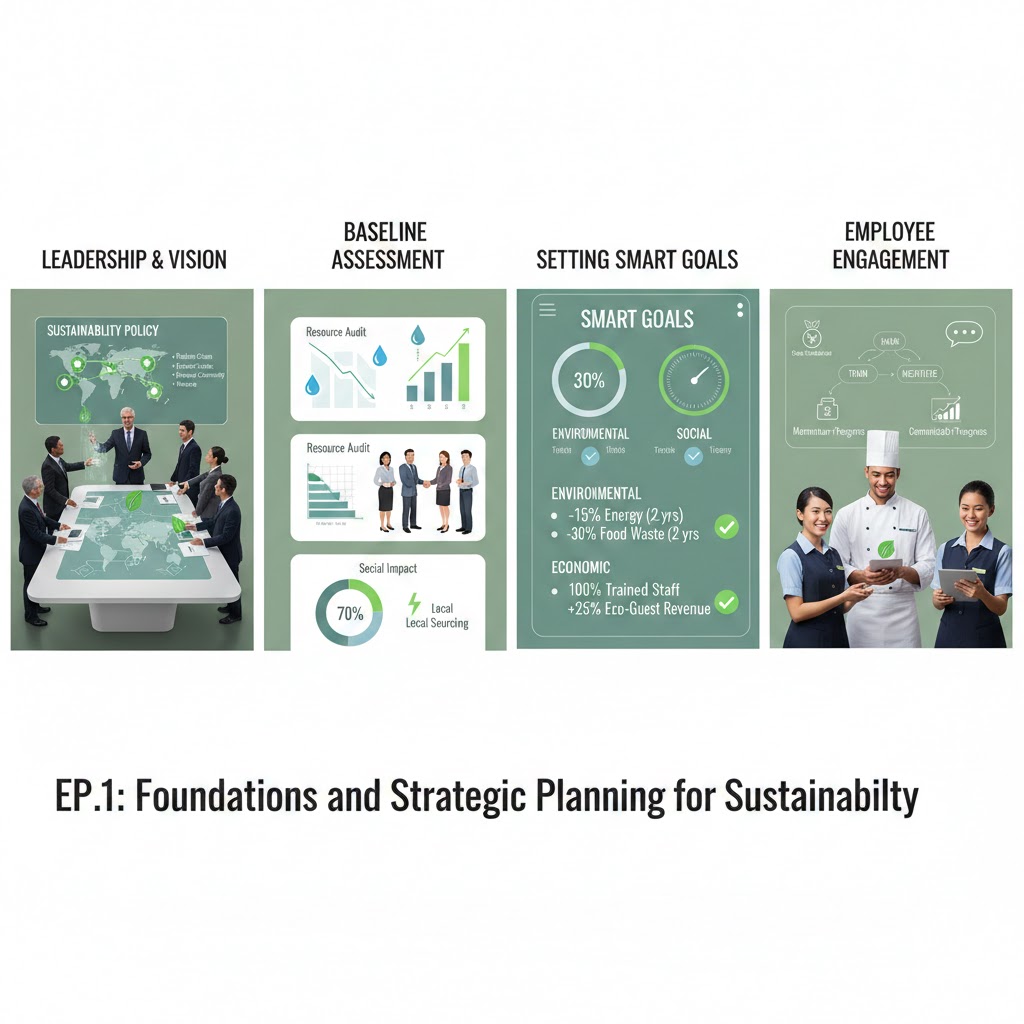
**Step 1: Leadership Commitment and Vision**
- **Define a Clear Vision:** Senior management must establish a formal sustainability policy and communicate it effectively across all levels.
- **Appoint a Dedicated Team or Officer,** such as a Sustainability Manager or Green Team.
- **Allocate Budget and Resources** to support initiatives from the outset.
**Step 2: Baseline Assessment**
- **Resource and Energy Audit:**
– Analyze historical data on water, electricity, and gas consumption.
– Measure waste volume and composition.
– Assess the use of single-use packaging and disposables.
- **Social Impact Evaluation:**
– Employee satisfaction, well-being, and fair labor practices.
– Relationships with local communities.
– Percentage of goods and services sourced locally.
- **Supply Chain Analysis:** Map the origins of key products and ingredients.
**Step 3: Setting SMART Goals and KPIs**
- **Environmental Targets:**
– Reduce energy consumption by 15% within three years.
– Decrease food waste by 30% within two years.
– Achieve a 60% waste recycling rate within one year.
- **Social Targets:**
– Source at least 70% of staff from the local community.
– Provide sustainability training to 100% of employees.
- **Economic Targets:**
– Reduce waste management costs by 20%.
– Increase revenue from eco-conscious guest segments by 25%.
**Step 4: Employee Engagement and Cultural Integration**
- **Train employees at all levels** on sustainable practices relevant to their roles.
- **Create incentive and recognition programs,** such as awards for the most energy-efficient department.
- **Communicate progress consistently** through internal channels to maintain momentum and transparency.