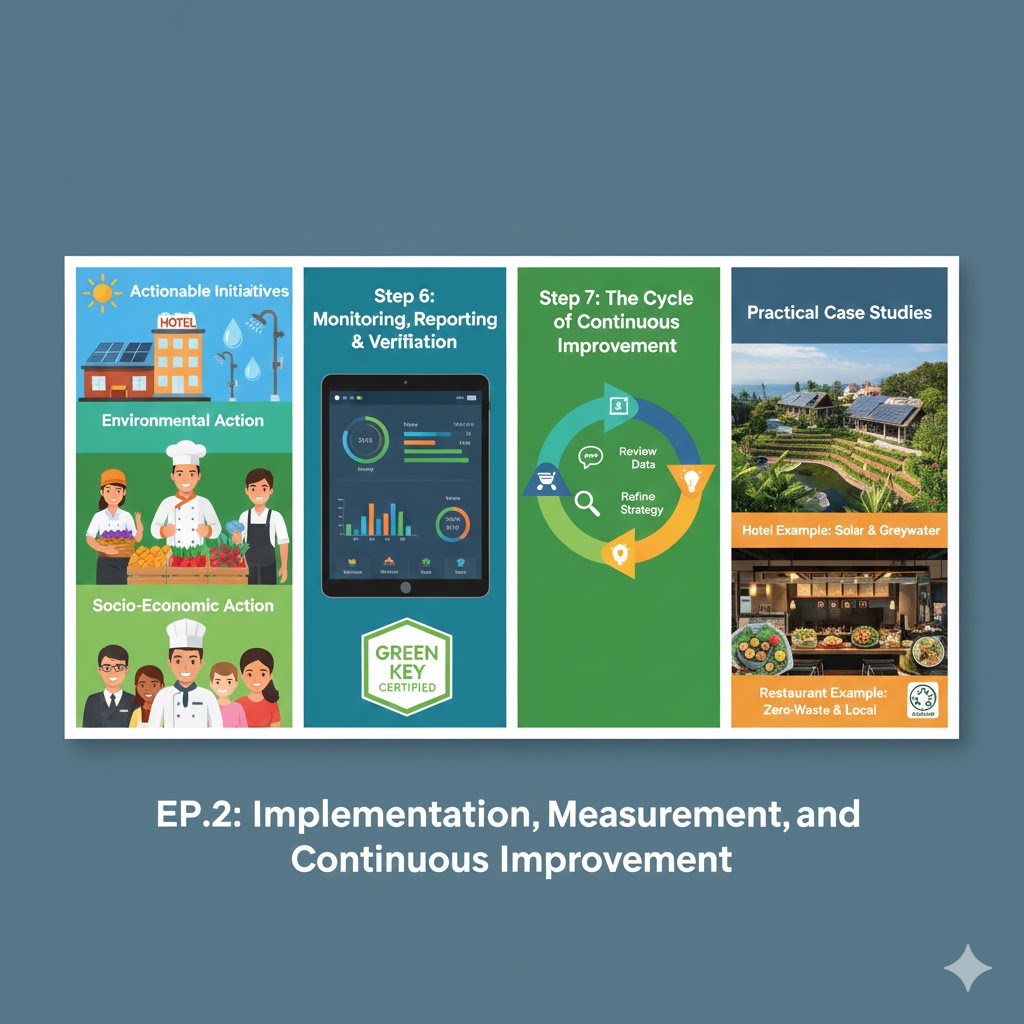
**Step 5: Actionable Initiatives**
By Charles Tan, Vigor Hotel Solutions
**Environmental Action:**
- **Energy Management:**
– Install high-efficiency equipment (LED lighting, Energy Star-rated appliances).
– Implement automated building management systems for lighting, HVAC, and water heating.
– Invest in renewable energy sources, such as solar panels.
- **Water Stewardship:**
– Install low-flow faucets, showerheads, and dual-flush toilets.
– Implement greywater recycling systems for landscaping.
– Optimize laundry and kitchen operations to minimize water use.
- **Waste Management:**
– Establish a comprehensive waste separation and recycling program.
– Reduce food waste through inventory management, portion control, and creative repurposing (e.g., stocks, preserves).
– Transition to biodegradable, compostable, or reusable packaging.
– Support circular economy models by donating surplus food to local charities.
**Socio-Economic Action:**
- **Sustainable Procurement:**
– Prioritize local, seasonal, and organic produce.
– Choose suppliers with demonstrable environmental and ethical credentials.
– Systematically phase out single-use items.
- **Employee Development:**
– Ensure fair wages, benefits, and safe working conditions.
– Offer clear career progression paths and continuous learning opportunities.
– Foster a diverse, inclusive, and equitable workplace.
- **Community Engagement:**
– Support local events, cultural heritage, and social causes.
– Offer venue space or resources for community use.
– Develop tourism experiences that authentically showcase and benefit local culture.
**Step 6: Monitoring, Reporting, and Verification**
- **Track KPIs regularly** using dedicated dashboards or software.
- **Leverage technology,** such as IoT sensors for real-time utility monitoring.
- **Report transparently** to stakeholders through annual sustainability reports or website updates.
- **Pursue credible certifications** like Green Key, LEED, or Travelife to validate efforts.
**Step 7: The Cycle of Continuous Improvement**
- **Conduct quarterly reviews** of performance data with cross-functional teams.
- **Solicit feedback** from guests, employees, and community partners.
- **Refine strategies and goals** based on new insights, innovations, and changing conditions.
**Practical Case Studies**
**Hotel Example:** A resort in Chiang Mai, Thailand:
– Installed a 100 kW solar rooftop system, reducing grid energy use by 30%.
– Treats greywater from kitchens and laundries for garden irrigation.
– Sources 70% of its vegetables from nearby organic farms.
– Reduced buffet waste through a “Buffet to Basket” program, donating surplus to local communities.
**Restaurant Example:** A Bangkok eatery:
– Transitioned entirely to plant-based, compostable takeaway packaging.
– Uses predictive ordering software to minimize ingredient spoilage.
– Designs seasonal menus based on local ingredient availability, reducing food miles.
**Conclusion: Building a Competitive Advantage**
Businesses that embrace sustainable management reap multifaceted benefits:
- **Cost Efficiency:** Reduced utility and waste disposal expenses.
- **Revenue Growth:** Appeal to the expanding market of conscious consumers.
- **Brand Equity:** Enhanced reputation, guest loyalty, and employee pride.
- **Regulatory Preparedness:** Proactive adaptation to evolving environmental regulations.
- **Social License to Operate:** Stronger, more resilient community relationships.
**The Future of Sustainable Hospitality**
Technology will play an increasing role—from AI-driven energy optimization to blockchain for supply chain transparency. Guests will demand greater accountability, expecting clear reporting on carbon footprints and social impact. The hospitality leaders of tomorrow are those embedding sustainability into their core DNA today.
**A Final Thought:** “Sustainability is not a destination, but a continuous journey of innovation and commitment. In hospitality, the greatest luxury we can offer is a future that remains beautiful, vibrant, and welcoming for all.”