By Charles Tan
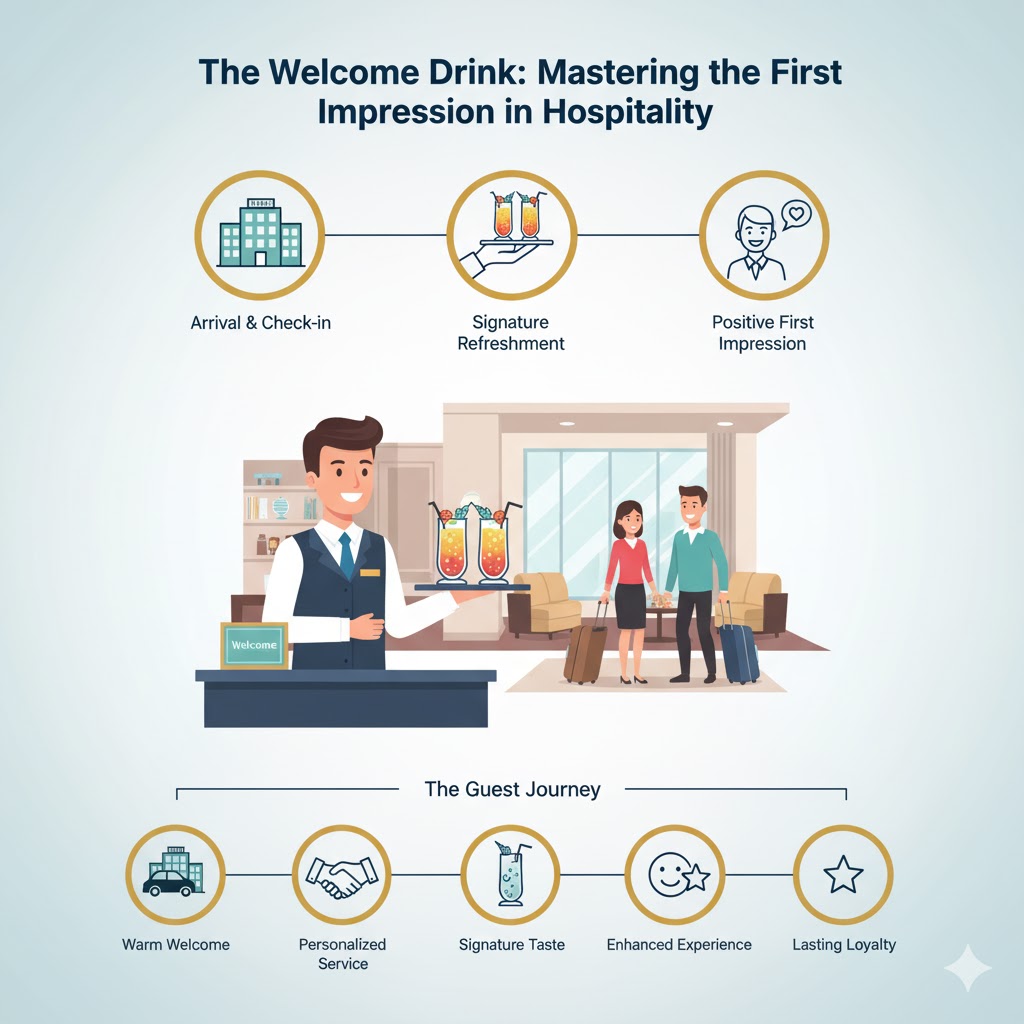
In the world of hotels, the first five minutes are critical. The **Welcome Drink** is a powerful, yet often underestimated, strategic tool designed to master this crucial moment. It is far more than a beverage; it is a non-verbal greeting that sets the tone for the entire guest stay.
#### **What is a Welcome Drink?**
A Welcome Drink is a complimentary beverage offered to guests immediately upon arrival, typically during the check-in process. This simple gesture serves as a tangible expression of hospitality, transforming a transactional procedure into the beginning of a memorable experience.
#### **The Core Objectives: Why It’s Essential**
- **Create a Powerful First Impression:** It immediately makes guests feel valued and expected.
- **Enhance the Check-in Experience:** It provides a pleasant distraction during any potential wait, reducing perceived delays and fostering patience.
- **Brand Differentiation:** A unique drink can become a signature element that distinguishes a hotel from its competitors.
- **Signal Service Quality:** It communicates the hotel’s attention to detail and commitment to guest comfort from the very start.
#### **Types of Welcome Drinks & Examples**
Hotels tailor their welcome beverage to match their brand identity and target audience.
**1. Standard & Efficient**
* **Examples:** Chilled still or sparkling water, a glass of orange or apple juice, a local iced tea.
* **Ideal for:** Business hotels, airport hotels, and mid-scale properties where speed and efficiency are key.
* **Cost Estimate:** $0.50 – $1.50 per serving.
**2. Refreshing & Local**
* **Examples:** A signature iced lemongrass tea, fresh coconut water, a sweet-tangy *nam dok anchan* (butterfly pea flower juice), a regional fruit shake.
* **Ideal for:** Resort properties, boutique hotels, and destinations emphasizing cultural authenticity.
* **Cost Estimate:** $1.50 – $3.00 per serving.
**3. Premium & Signature**
* **Examples:** A crafted mocktail (e.g., a “Mango Mojito” without alcohol), a glass of prosecco or sparkling wine, a cold-pressed juice elixir.
* **Ideal for:** Luxury hotels, 5-star resorts, and properties aiming for a sophisticated, high-end feel.
* **Cost Estimate:** $3.00 – $8.00+ per serving.
**4. Themed & Experiential**
* **Examples:** A warm spiced cider in a ski lodge, a shot of sweet *Oshibori* tea in a Japanese-style hotel, a detox shot in a wellness retreat.
* **Ideal for:** Themed hotels, eco-lodges, and properties with a very specific guest experience.
* **Cost Estimate:** $2.00 – $5.00 per serving.
#### **Cost Management & Departmental Responsibility**
**Primary Responsible Department: Food & Beverage (F&B)**
While the Front Office team often physically serves the drink, the F&B department is almost always responsible for its:
* **Development:** Creating the recipe and presentation.
* **Costing:** Calculating the cost per serving.
* **Preparation:** Pre-making batches or setting up stations.
* **Supply:** Providing the ingredients, glassware, and garnishes.
**Breakdown of Costs:**
- **Direct Material Cost:** The cost of the actual beverage ingredients (juice, tea, alcohol, syrup).
- **Labor Cost:** The time spent by F&B staff to prepare and by Front Office to serve.
- **Equipment & Supply Cost:** Glassware, napkins, garnishes, and any specialized serving equipment.
**Strategic Perspective:** The cost of a welcome drink is not an expense but a **marketing investment**. A $3 drink that leads to a positive online review and repeat business offers an exceptional return on investment.
#### **Strategic Implementation**
* **Align with Brand:** A sleek, urban hotel might offer a signature iced coffee, while a beach resort would offer a fresh coconut.
* **Consider Logistics:** The drink should be easy to serve in a lobby setting—avoiding messy or complicated presentations.
* **Train Staff:** The offering should be seamless and genuine, not robotic. Staff should be able to briefly explain the drink if it’s a signature item.
* **Seasonal Rotation:** Changing the welcome drink seasonally (e.g., a cool cucumber juice in summer, a warm mulled cider in winter) shows dynamism and attention to detail.
#### **Conclusion: More Than a Drink**
The Welcome Drink is a microcosm of the entire hotel experience. It is the first tangible touchpoint, a moment of care that immediately lowers a guest’s travel-induced stress and builds a foundation of goodwill. In a competitive landscape, this small, calculated gesture is a powerful way to say, “We’ve been expecting you, and your comfort is our priority,” ensuring the guest’s journey begins on a perfect note.