By Charles Tan
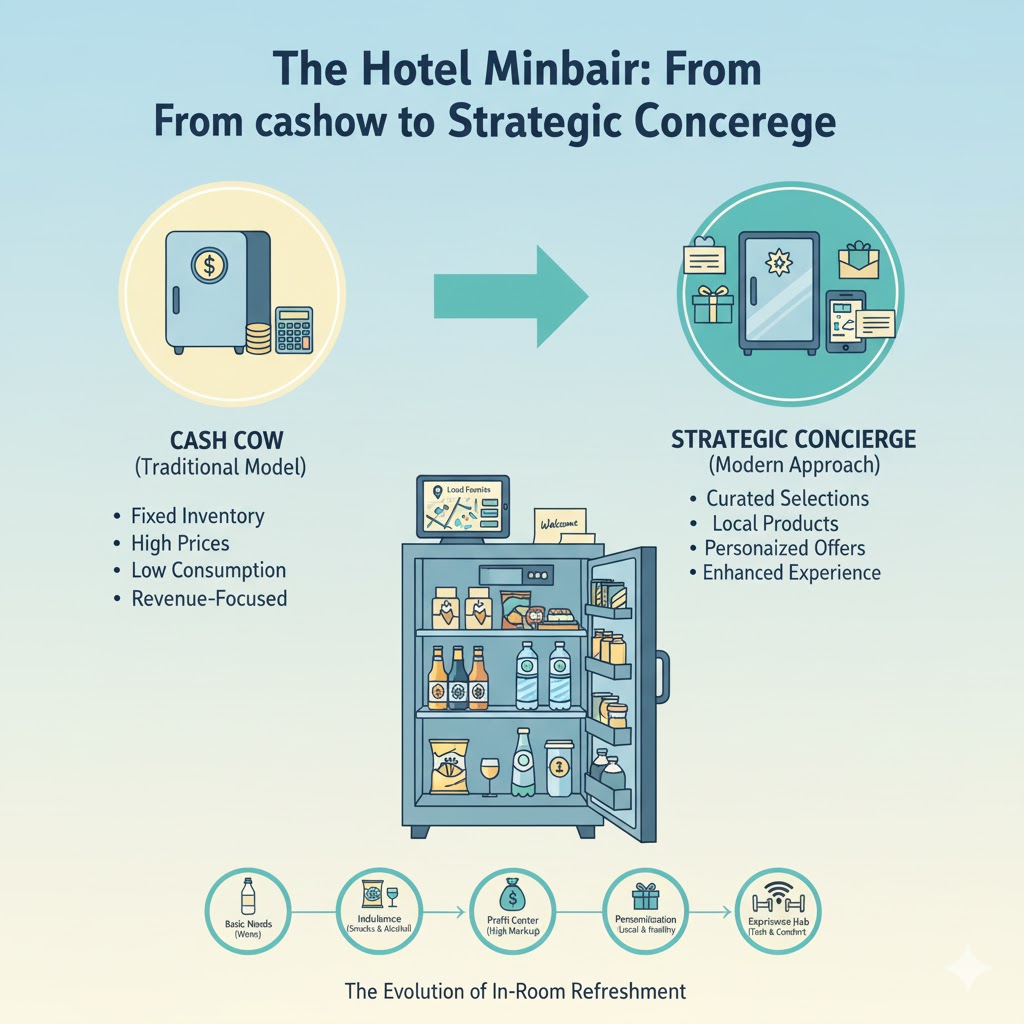
The hotel minibar, once a ubiquitous symbol of in-room luxury and a significant revenue stream, is in the midst of a profound transformation. The rise of convenience culture, shifting guest expectations, and new technologies have forced hotels to reimagine this traditional amenity entirely.
#### **The Golden Age: The MiniBar as a Profit Center**
For decades, the minibar was a beloved fixture on hotel P&L statements. Its success was built on a simple premise: **captive demand**.
* **High-Margin Revenue:** With gross profit margins often reaching **70-80%**, items like mini spirits, beers, and snacks were incredibly lucrative.
* **Immediate Gratification:** It served the tired, time-poor, or private guest who valued convenience above all else.
* **Low Competition:** Before the global proliferation of 24/7 convenience stores, the minibar had no real competitor within the “last mile” of the guest journey.
#### **The Disruption: Why the Model Broke**
The minibar’s decline was not sudden but gradual, driven by several key factors:
1. **The Convenience Store Revolution:** The global spread of chains like 7-Eleven, FamilyMart, and Lawson placed cheap, diverse alternatives on every other street corner. Guests could easily buy the same products for a fraction of the price.
2. **The Smartphone & Price Transparency:** Modern guests are savvy. A quick scan on their phone reveals the dramatic markup, leading to a feeling of being “gouged” and eroding trust.
3. **Shifting Consumer Values:** Health-conscious travelers seek fresh, local, or organic options rarely found in traditional minibars. The standard offering of sugary drinks and processed snacks feels outdated.
4. **Operational Inefficiency:** The cost of restocking, manual inventory checks, “shrinkage” (theft or uncharged consumption), and billing disputes often eroded the high margins, making the net profit far less attractive.
#### **The Modern Minibar: A Spectrum of New Strategies**
In response, hotels have adopted diverse strategies tailored to their brand and clientele.
**1. The Honest & Accessible Minibar (Mid-Scale Hotels)**
* **Strategy:** Slash prices to be more in line with local convenience stores.
* **Rationale:** Better to make a smaller margin than no sale at all. It’s a gesture of fairness that builds guest goodwill.
* **Example:** Pricing a soda at $2 instead of $5.
**2. The Complimentary Minibar (Luxury & Lifestyle Hotels)**
* **Strategy:** Offer a curated selection of non-alcoholic beverages and snacks for free.
* **Rationale:** This is a powerful marketing tool. The cost is built into the room rate, and the “wow” factor generates immense goodwill, positive reviews, and direct bookings. It positions the hotel as generous and guest-centric.
* **Example:** Stocking locally sourced artisanal sodas, premium juices, and gourmet chips at no extra charge.
**3. The Curated & Premium Minibar (Luxury & Boutique Hotels)**
* **Strategy:** Elevate the offering beyond standard fare to justify the premium price.
* **Rationale:** If guests are to pay a high price, they must perceive high value.
* **Example:** Stocking craft beers from local breweries, small-batch spirits, organic dark chocolate, and gourmet nut mixes. The minibar becomes a discovery zone for local, high-quality products.
**4. The Lobby Marketplace (The “Deconstructed” Minibar)**
* **Strategy:** Remove the in-room minibar entirely and replace it with a well-designed retail space in the lobby.
* **Rationale:** This solves multiple problems: it eliminates in-room inventory loss, reduces housekeeping labor, and offers guests a vastly wider selection. It also becomes a social hub and an additional revenue source from non-guests.
* **Example:** A stylish lobby pantry or boutique selling everything from grab-and-go salads and sushi to local souvenirs, wine, and travel essentials.
**5. The Digital & On-Demand Minibar (Tech-Forward Hotels)**
* **Strategy:** Replace the physical minibar with a digital ordering platform.
* **Rationale:** This offers infinite variety without the waste. Guests use an in-room tablet or hotel app to order from an extensive menu (including hot food, cocktails, and wellness items) for rapid delivery to their room.
* **Example:** Integrating with the hotel’s Room Service platform, allowing guests to order a late-night snack, a bottle of wine, or forgotten toiletries with a few taps.
#### **Cost & Revenue Analysis in the Modern Context**
* **Traditional Minibar:** High gross profit, but often mediocre net profit after accounting for labor, shrinkage, and guest disputes.
* **Complimentary Minibar:** A direct cost center, but the ROI comes in the form of enhanced guest satisfaction, loyalty, and premium room rates justified by the added value.
* **Lobby Marketplace:** Lower operating costs, higher inventory control, and the potential for higher overall sales volume due to a broader appeal.
#### **The Future: The Minibar as an Experience Platform**
The minibar is evolving from a simple box of snacks into a strategic touchpoint:
* **Hyper-Localization:** Featuring products that tell a story about the destination, supporting local producers.
* **Wellness Integration:** Offering healthy, functional beverages, probiotic snacks, and non-alcoholic spirit alternatives.
* **Contactless Technology:** Smart fridges with automated sensors that detect item removal and charge the guest’s folio instantly, eliminating billing errors.
* **Personalization:** Using guest preference data to pre-stock the minibar with their favorite items before arrival.
#### **Conclusion**
The minibar is not dying; it is being reborn. Its role has shifted from a pure profit center to a **strategic tool for enhancing the guest experience**. The most successful hotels now view it not as a mandatory piece of furniture, but as a flexible concept—a service, a curated gift, a local market, or a digital concierge. In the modern hospitality landscape, the minibar’s value is no longer measured just in revenue per available room, but in its contribution to overall guest satisfaction and brand perception.