Introduction
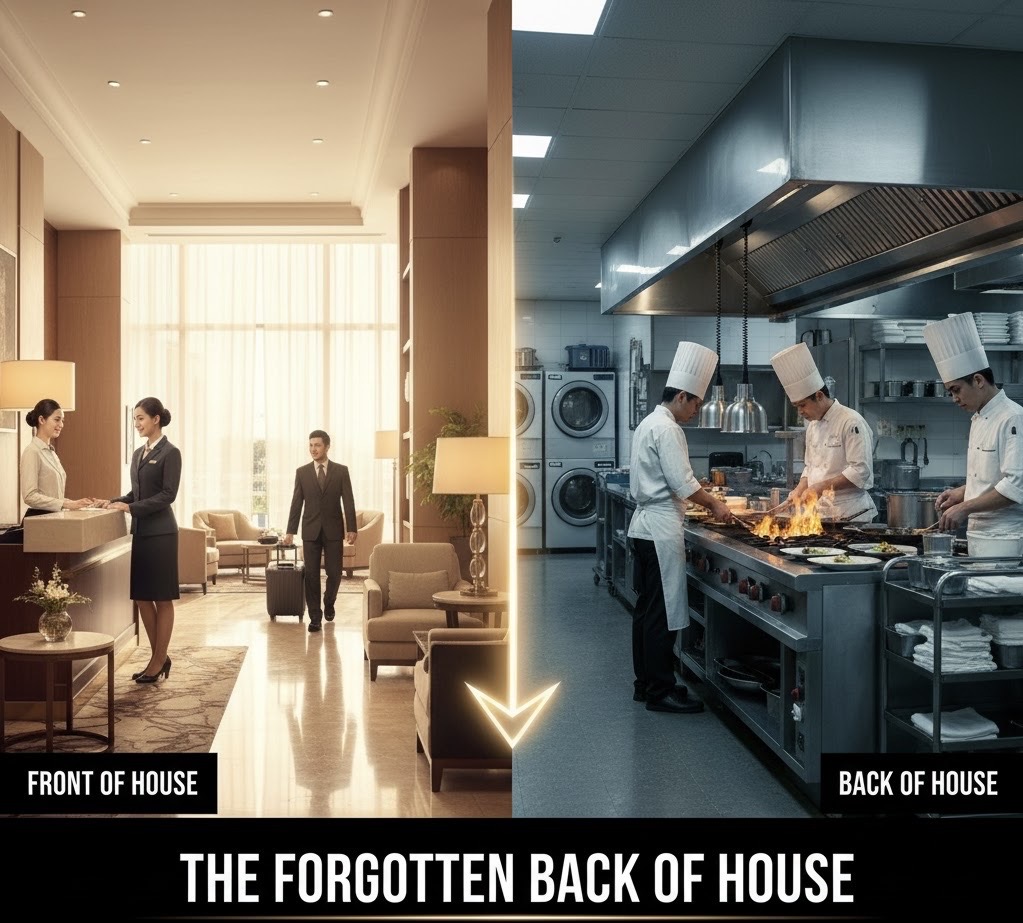
In many hotels and restaurants, the spotlight shines brightly on front-of-house operations—lobby, reception, restaurants, and bars. However, the Back of House (BOH)—including kitchens, housekeeping, engineering, laundry, and storage—is often overlooked. Neglecting the BOH can lead to operational inefficiencies, high costs, staff dissatisfaction, and ultimately, a negative guest experience.
Understanding, valuing, and optimizing BOH operations is critical for a hotel’s success.
1. What is Back of House?
· Kitchens & Food Prep Areas: Where meals are prepared, cooked, and plated.
· Housekeeping & Laundry: Ensures rooms and public areas are clean, comfortable, and well-stocked.
· Engineering & Maintenance: Keeps equipment, HVAC, plumbing, and electrical systems running.
· Storage & Inventory: Manages supplies, linen, and F&B stock.
· Administrative Support: Scheduling, purchasing, payroll, and operations coordination.
Tip: Every BOH department contributes directly to guest satisfaction, even if guests never see it.
2. Common Challenges in BOH
· Understaffing: BOH often operates with minimal personnel, leading to burnout.
· Lack of SOPs: Without standardized procedures, quality and efficiency suffer.
· Poor Communication: Disconnection between BOH and front-of-house can cause delays and mistakes.
· Neglected Training: BOH staff may lack skills or understanding of operational goals.
· Visibility & Recognition: Staff feel undervalued, reducing motivation and accountability.
3. Why BOH Matters to Guests
· Quality of Service: Clean rooms, timely meals, and functioning facilities directly affect guest satisfaction.
· Consistency: Smooth BOH operations prevent errors like late breakfast service or missing amenities.
· Guest Perception: A well-run BOH ensures seamless experiences, even if invisible to guests.
Example: A delayed room service order often points to BOH inefficiency rather than front-of-house failure.
4. Strategies to Optimize BOH
A. Implement Clear SOPs
· Standardize tasks across departments.
· Include checklists, shift routines, and quality benchmarks.
· Regularly review and update procedures.
B. Empower Staff
· Train for technical skills and problem-solving.
· Encourage ownership and accountability.
· Recognize contributions publicly to boost morale.
C. Use Technology
· Inventory management software to track stock and reduce waste.
· PMS integration for housekeeping updates and maintenance requests.
· Task management tools to monitor and prioritize work.
D. Improve Communication
· Daily briefings with BOH and FOH teams.
· Digital channels to report issues quickly.
· Encourage collaboration between departments.
E. Monitor Performance
· Track KPIs: room turnaround time, meal prep efficiency, maintenance response time.
· Use data to identify bottlenecks and optimize workflows.
5. The ROI of a Well-Managed BOH
· Reduced operational costs through efficiency and waste reduction.
· Higher guest satisfaction and positive reviews.
· Improved staff retention and morale.
· Enhanced overall brand reputation and repeat business.
Conclusion
The Back of House is the backbone of any successful hotel or restaurant. Investing time, resources, and attention into BOH operations ensures consistent service, satisfied guests, and profitable operations. Hotels and restaurants that understand and value their BOH will enjoy smoother operations and stronger long-term performance.
By Charles Tan
VIGOR Hotel Solutions – Precision with Soul