
The VIGOR 6-Step Strategic Reset
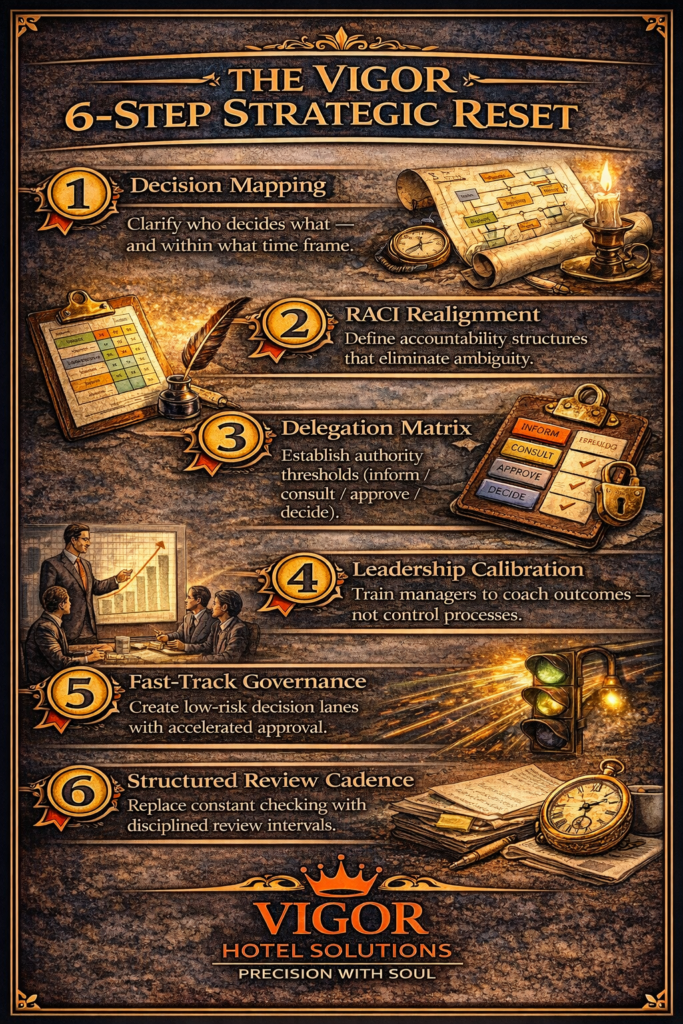
By Charles Tan 1. Decision Mapping Clarify who decides what — and within what time frame. 2. RACI Realignment Define accountability structures that eliminate ambiguity. 3. Delegation Matrix Establish authority thresholds (inform / consult / approve / decide). 4. Leadership Calibration Train managers to coach outcomes — not control processes. 5. Fast-Track Governance Create low-risk […]
The VIGOR Diagnostic Indicators
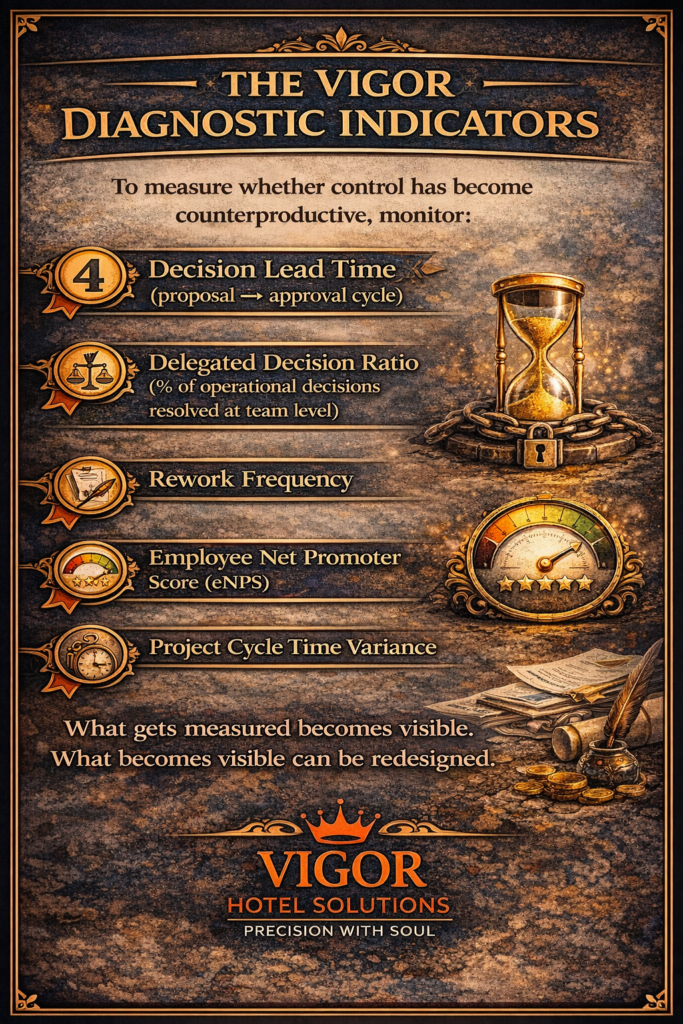
By Charles tan To measure whether control has become counterproductive, monitor: Decision Lead Time (proposal → approval cycle) Delegated Decision Ratio (% of operational decisions resolved at team level) Rework Frequency Employee Net Promoter Score (eNPS) Project Cycle Time Variance What gets measured becomes visible.What becomes visible can be redesigned.
The Hidden Cost Structure of Over-Control
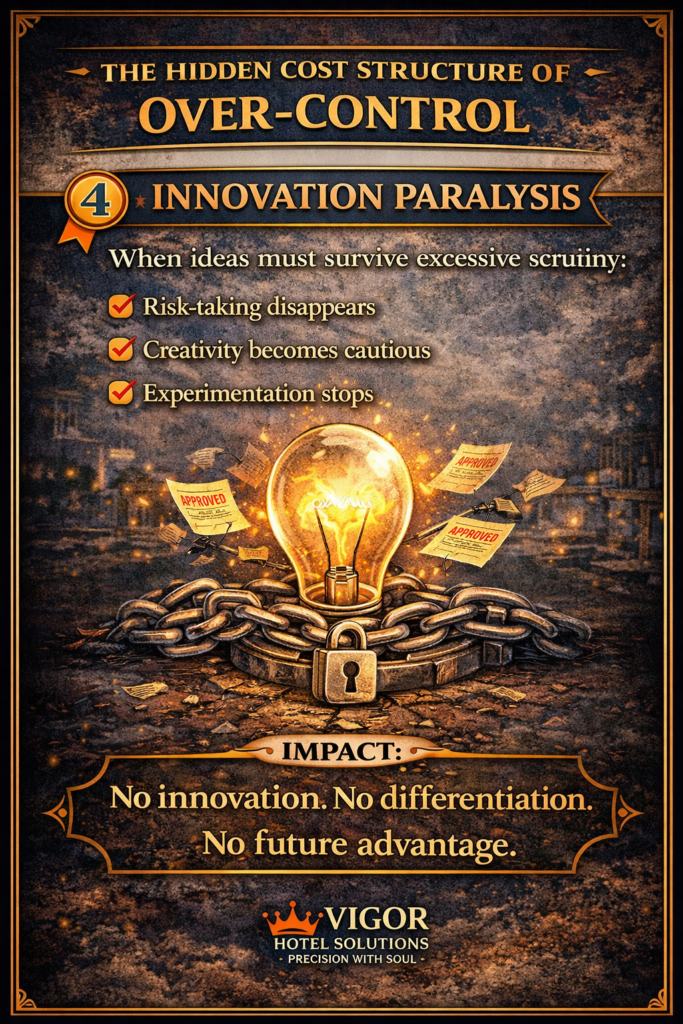
4️⃣ Innovation Paralysis By Charles Tan When ideas must survive excessive scrutiny: Risk-taking disappears Creativity becomes cautious Experimentation stops Impact: No innovation. No differentiation. No future advantage.
The Hidden Cost Structure of Over-Control
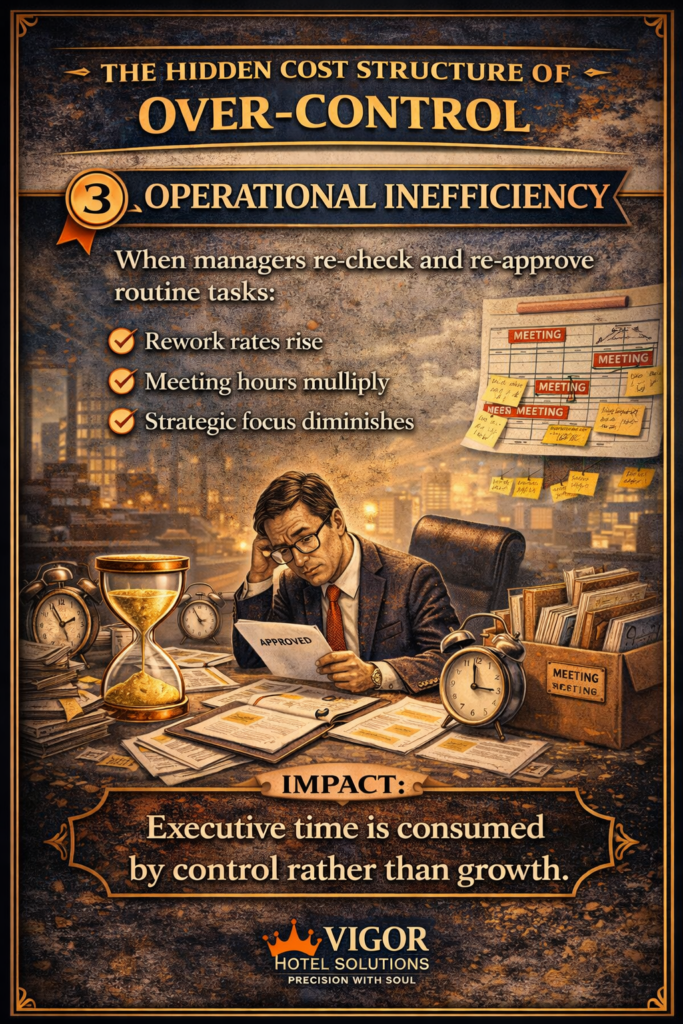
3️⃣ Operational Inefficiency By Charles Tan When managers re-check and re-approve routine tasks: Rework rates rise Meeting hours multiply Strategic focus diminishes Impact: Executive time is consumed by control rather than growth.
The Hidden Cost Structure of Over-Control
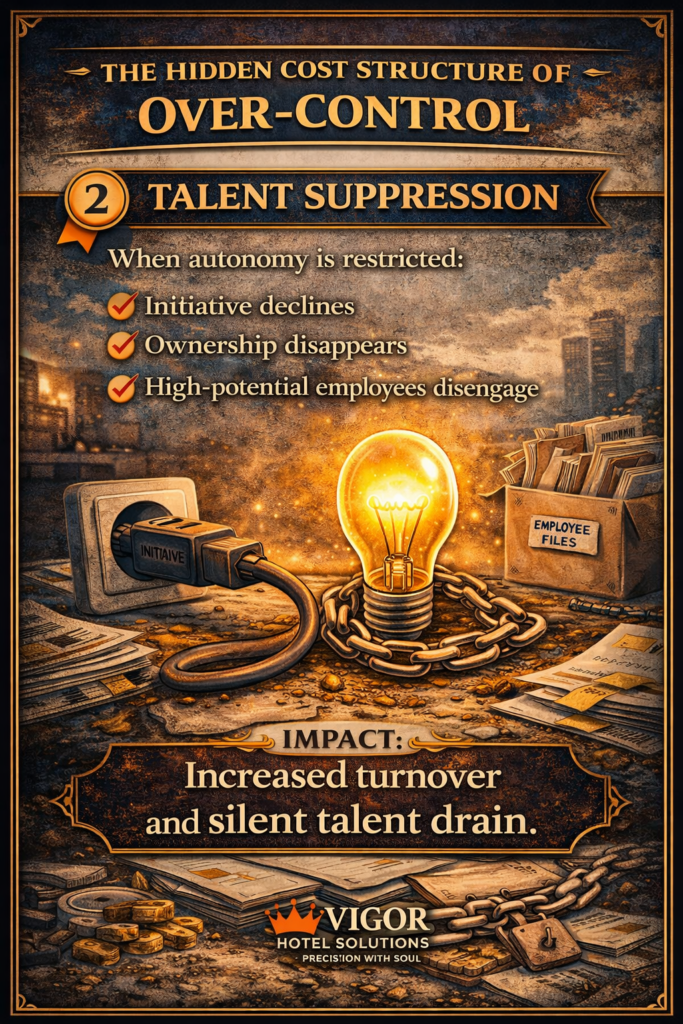
2️⃣ Talent Suppression ฺBy Charles Tan When autonomy is restricted: Initiative declines Ownership disappears High-potential employees disengage Impact: Increased turnover and silent talent drain.
The Hidden Cost Structure of Over-Control
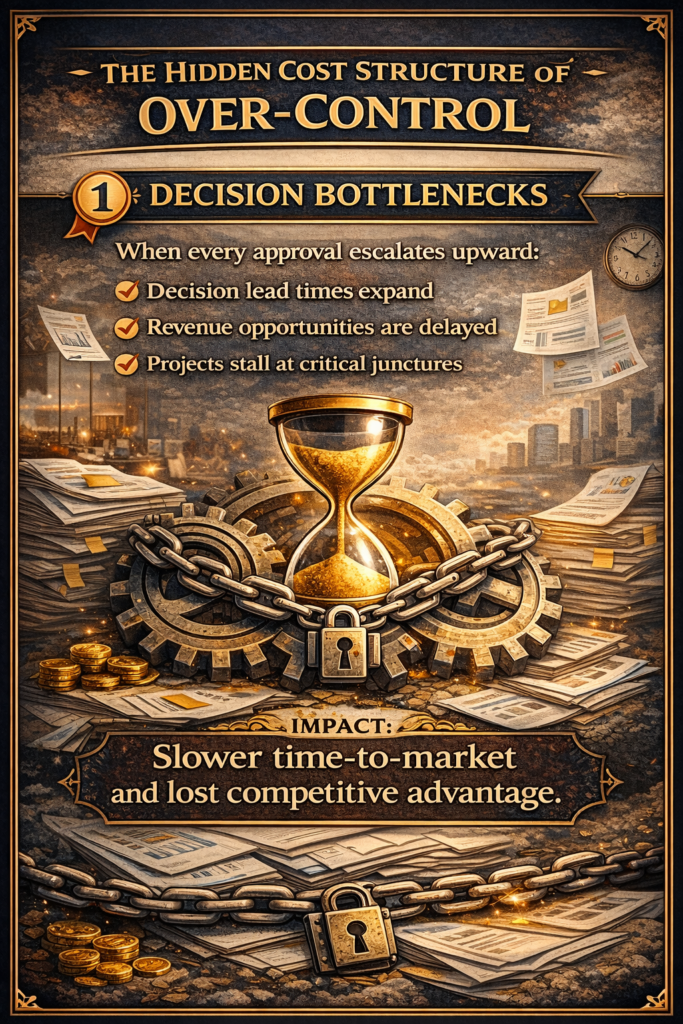
1️⃣ Decision Bottlenecks By Charles Tan When every approval escalates upward: Decision lead times expand Revenue opportunities are delayed Projects stall at critical junctures Impact: Slower time-to-market and lost competitive advantage.
Over-Control Culture
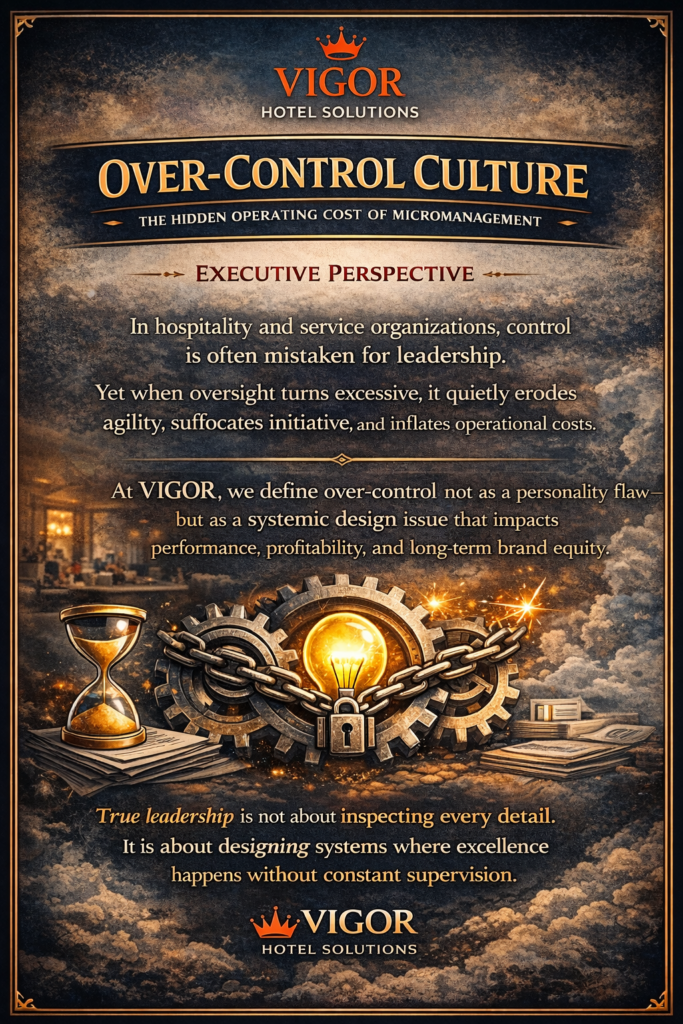
The Hidden Operating Cost of Micromanagement By Charles Tan Executive Perspective In hospitality and service organizations, control is often mistaken for leadership. Yet when oversight turns excessive, it quietly erodes agility, suffocates initiative, and inflates operational costs. At VIGOR, we define over-control not as a personality flaw — but as a systemic design issue that […]
Executive Summary (Owner-Level Statement)
By Charles Tan “The true cost of a hotel room is not just housekeeping and laundry. It is the total operating and ownership cost of the entire system, divided by the actual number of rooms sold.”
A Critical Insight
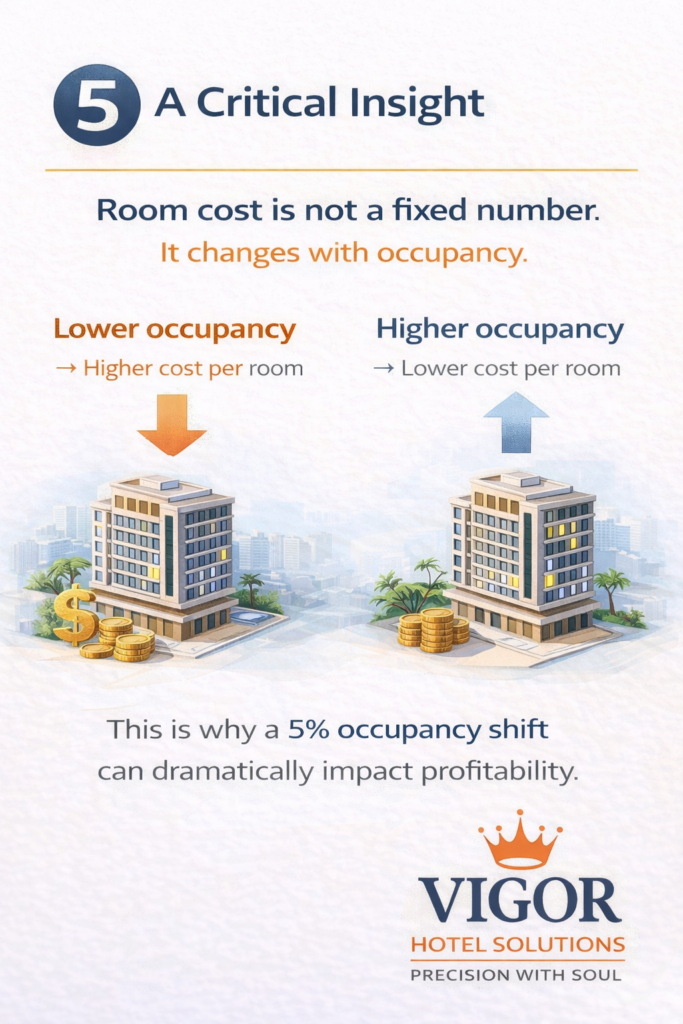
Room cost is not a fixed number. By Charles Tan It changes with occupancy. Lower occupancy → Higher cost per roomHigher occupancy → Lower cost per room This is why a 5% occupancy shift can dramatically impact profitability.
The Three Cost Levels Every GM Must Know
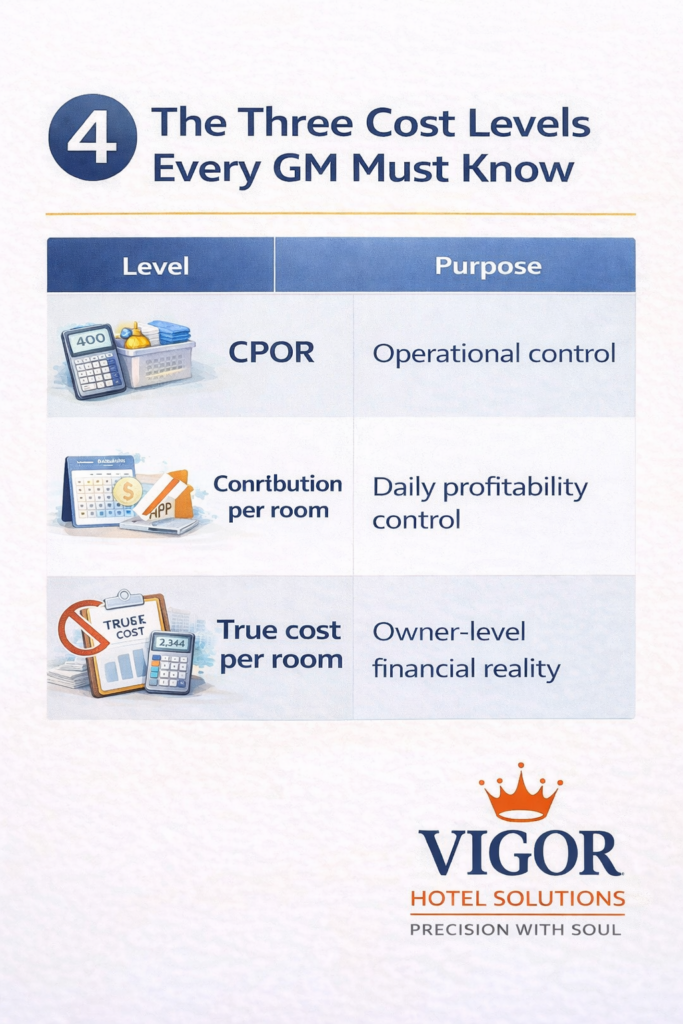
By Charles Tan Level Purpose CPOR Operational control Contribution per room Daily profitability control True cost per room Owner-level financial reality