By Charles Tan
From Supporting Channels to Strategic Growth Engines
Over the past decade, digital platforms and food delivery services have evolved from optional sales channels into core infrastructure for restaurant businesses worldwide. Restaurants that approach digital platforms strategically do more than increase short-term sales—they build scalable, resilient, and data-driven business models capable of long-term growth.
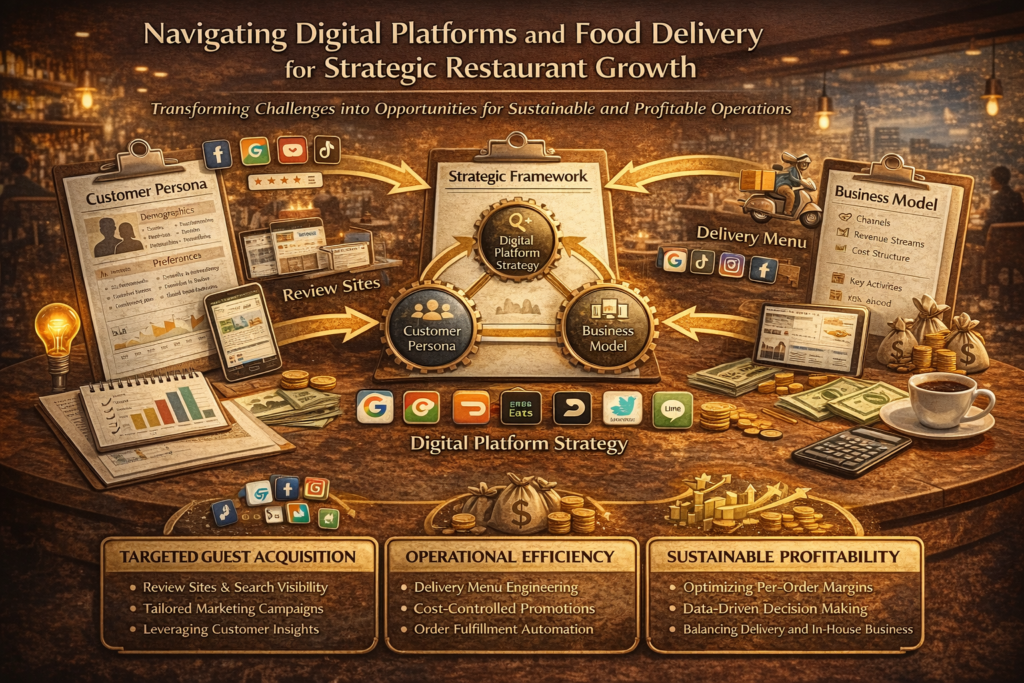
This article presents a practical, investor-oriented perspective on how restaurant operators can leverage digital platforms and food delivery effectively. It connects Customer Persona development with the Business Model Canvas, providing a structured framework for sustainable performance in highly competitive markets.
- Understanding Digital Platforms Beyond Delivery Apps
Digital platforms in the restaurant ecosystem extend far beyond food delivery applications alone. They include:
- Food Delivery Platforms (GrabFood, LINE MAN, Foodpanda, Uber Eats, etc.)
- Social Media Channels (Instagram, Facebook, TikTok, LINE Official Accounts)
- Google Ecosystem (Google Search, Google Maps, Reviews)
- Owned Digital Assets (Brand websites, CRM systems, loyalty programs, proprietary apps)
The key strategic principle is integration. These platforms should not operate independently, but function together as a single, cohesive customer journey—from awareness and consideration to purchase, repeat orders, and long-term loyalty.
- Starting with Customer Persona: Who Is Really Ordering Your Food?
One of the most common strategic mistakes is attempting to be present on every platform without a clear understanding of the customer being served.
Effective digital strategy begins with well-defined Customer Personas, such as:
- Urban Convenience Seekers: Ages 25–40, value speed, accessibility, competitive pricing, and strong reviews.
- Family Value Buyers: Order for groups, prioritize consistency, portion size, and perceived value.
- Premium Experience Diners: Seek brand story, presentation quality, packaging design, and experiential value—even in delivery.
When personas are clearly defined, strategic decisions become more precise:
- Which platforms deserve primary focus
- What promotional mechanics are appropriate
- How brand tone, visuals, and messaging should be aligned
- Embedding Digital and Delivery into the Business Model Canvas
Sustainable use of digital platforms must be embedded into the core business model—not treated as a short-term sales tactic.
Strategic Alignment Within the Business Model Canvas
- Value Proposition: Food quality maintained during delivery, delivery-exclusive menus, brand consistency off-premise
- Channels: Delivery platforms integrated with owned channels such as LINE OA or CRM systems
- Customer Relationships: Loyalty programs, re-order prompts, personalized digital offers
- Revenue Streams: Differentiated pricing for dine-in vs. delivery, bundled meal sets, subscription-style offers
- Cost Structure: Platform commissions, digital marketing spend, packaging innovation
High-performing restaurants clearly understand where delivery generates margin—and where it should not compete aggressively.
- Practical and Updated Food Delivery Strategies
4.1 Designing Menus Specifically for Delivery
- Focus on items that travel well and maintain quality
- Limit SKUs to improve consistency and operational control
- Use curated combo sets to increase average order value
4.2 Strategic Pricing and Promotion
- Establish transparent delivery pricing structures
- Avoid permanent discounting that erodes brand value
- Use time-based promotions to optimize off-peak demand
4.3 Reviews as Strategic Assets
- Respond to reviews professionally and consistently
- Address recurring operational pain points reflected in feedback
- Use review data as input for continuous improvement
- Using Social Media to Lead Demand, Not Just Generate Content
Modern restaurant brands use social media to:
- Create desire and anticipation
- Build trust through behind-the-scenes storytelling
- Direct customers toward controlled ordering channels
The ultimate objective is not engagement metrics alone, but conversion, retention, and lifetime value.
- From Platform Dependency to Platform Strategy
Restaurants that achieve long-term resilience avoid over-dependence on any single platform. Instead, they:
- Use delivery platforms to acquire new customers
- Gradually migrate customers to owned channels
- Build direct relationships that reduce recurring commission costs
This shift transforms platforms from cost centers into strategic acquisition tools.
Conclusion: Digital Platforms Are Tools—Strategy Creates Value
Digital platforms and food delivery generate sustainable value only when guided by clear strategy. Successful restaurant operators:
- Understand their customers deeply through Customer Personas
- Design digital channels within a coherent Business Model Canvas
- Make decisions based on data, not intuition
Restaurants that adopt this approach will not merely survive the digital era—they will use digital infrastructure as a catalyst for disciplined growth, brand strength, and long-term performance.