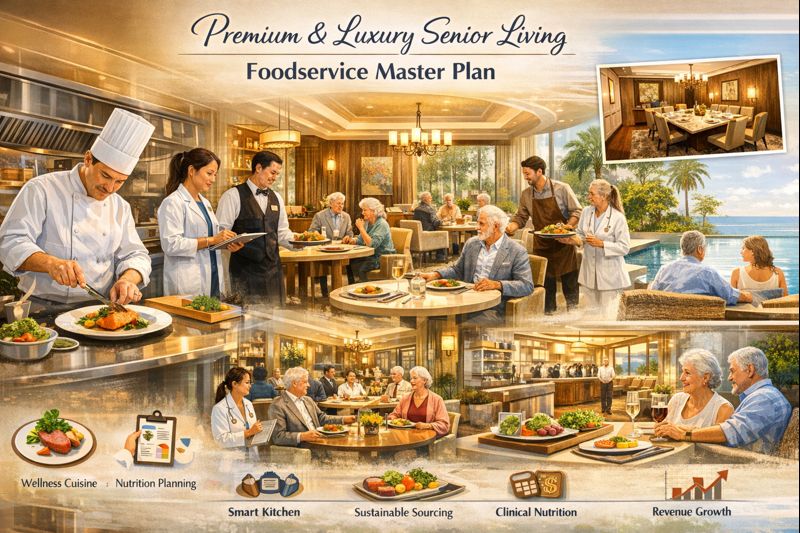
Premium & Luxury Senior Living Project
Developed by Charles Tan, Vigor Hotel Solutions
- Strategic Vision & Positioning
1.1 Master Plan Objective
Design a foodservice system that:
- Serves as a distinctive brand signature of the development
- Actively supports wellness, longevity, and medical integration
- Delivers a luxury hospitality–level resident experience
- Enables cost control while creating sustainable long-term value
Foodservice is positioned as a core lifestyle and wellness asset, not a support service.
1.2 Target Resident Profile
- Affluent / HNWI seniors
- International retirees & long-stay residents
- Rehabilitation & post-acute care guests
- Family members and visiting guests
- Foodservice Concept Architecture
2.1 Dining Portfolio Structure
|
Outlet |
Concept Role |
Positioning |
|
Signature All-Day Dining |
Core daily dining |
Luxury casual, wellness-driven |
|
Wellness Dining Studio |
Functional & medical nutrition |
Preventive & longevity focus |
|
Private Dining Rooms |
Family & social hosting |
Premium / bespoke |
|
In-Residence Dining |
Room & villa service |
Hotel-grade |
|
Café & Social Lounge |
Community interaction |
Lifestyle & social |
|
Event / Chef’s Table |
Brand storytelling |
Experiential luxury |
2.2 Culinary Identity
- Modern European & Asian wellness cuisine
- Local premium sourcing with international techniques
- Low-sodium, low-sugar, anti-inflammatory principles
- Comfort food reimagined for senior lifestyles
- Nutrition & Wellness Integration
3.1 Personalised Nutrition System
- Entry-stage nutrition profiling
- Diet categories:
- Wellness & Longevity
- Medical / Therapeutic
- Texture-modified (soft / minced / pureed)
- Seamless coordination with doctors, therapists, and nurses
Clinical precision delivered with fine-dining presentation.
3.2 Rehabilitation Alignment
- Meal timing synchronised with therapy schedules
- Protein & recovery-focused menus
- Cognitive and mood-supporting nutrition
- Hydration and micronutrient monitoring
- Kitchen & Production Master Planning
4.1 Kitchen Strategy
- Central Production Kitchen (CPK)
- Satellite finishing kitchens per outlet
- Dedicated diet-prep and allergen-control zones
4.2 Design Principles
- HACCP & healthcare-grade hygiene
- Energy-efficient equipment
- Ergonomic workflow for ageing workforce
- Future scalability for expansion
- Procurement & Supply Chain Governance
5.1 Sourcing Strategy
- Local premium farms & fisheries
- Medical-grade suppliers for special diets
- Seasonal and sustainable procurement
5.2 Cost & Quality Control
- Approved vendor lists
- Yield and portion control systems
- Regular supplier audits
- Service Design & Staffing Model
6.1 Service Philosophy
- Restaurant-style hospitality
- High-touch, low-intrusion service
- Respect for independence and dignity
6.2 Staffing Structure
|
Role |
Focus |
|
Executive Chef |
Culinary & brand leadership |
|
Nutrition Manager |
Clinical & wellness integration |
|
Restaurant Manager |
Service excellence |
|
Care-F&B Liaison |
Medical coordination |
|
Service Associates |
Hospitality delivery |
- Technology & Smart Operations
7.1 Systems Integration
- POS + Resident Management System
- Diet and allergy tracking
- Inventory & waste analytics
7.2 Data Utilisation
- Consumption pattern analysis
- Menu performance optimisation
- Cost forecasting & reporting
- Financial Framework
8.1 Cost Structure (Indicative)
- Food Cost: 28–35% (premium ingredients)
- Labour Cost: 35–40% (high service ratio)
- Overheads & Utilities: 10–15%
8.2 Revenue Opportunities
- Tiered dining packages
- Wellness meal subscriptions
- Guest dining & private events
- Culinary experiences & classes
- ESG & Sustainability Framework
Environmental
- Zero-waste kitchen targets
- Energy-efficient operations
- Sustainable packaging
Social
- Resident wellbeing & dignity
- Career pathways for staff
Governance
- Transparent reporting
- Compliance with healthcare and hospitality standards
- Pre-Opening & Implementation Roadmap
Phase 1: Concept & Design
- Market and resident analysis
- Dining & kitchen design
- Financial modelling
Phase 2: Build & Setup
- Equipment procurement
- Recruitment & training
- SOP and system deployment
Phase 3: Soft Opening
- Menu trials & resident feedback
- Service calibration
- Cost and quality benchmarking
Phase 4: Optimisation
- Performance review
- Continuous improvement
- Brand storytelling & PR
- Governance & Performance KPIs
Operational KPIs
- Resident satisfaction score
- Food cost variance
- Waste reduction percentage
Clinical KPIs
- Nutrition compliance
- Recovery & wellbeing indicators
Brand KPIs
- Occupancy & referrals
- Guest dining revenue
- Strategic Outcome
A professionally designed Foodservice Master Plan enables the project to:
- Differentiate clearly in the premium market
- Enhance resident wellbeing and dignity
- Achieve financial resilience and scalability
- Increase long-term asset value
In premium senior living, foodservice is where hospitality, healthcare, and investment value converge.