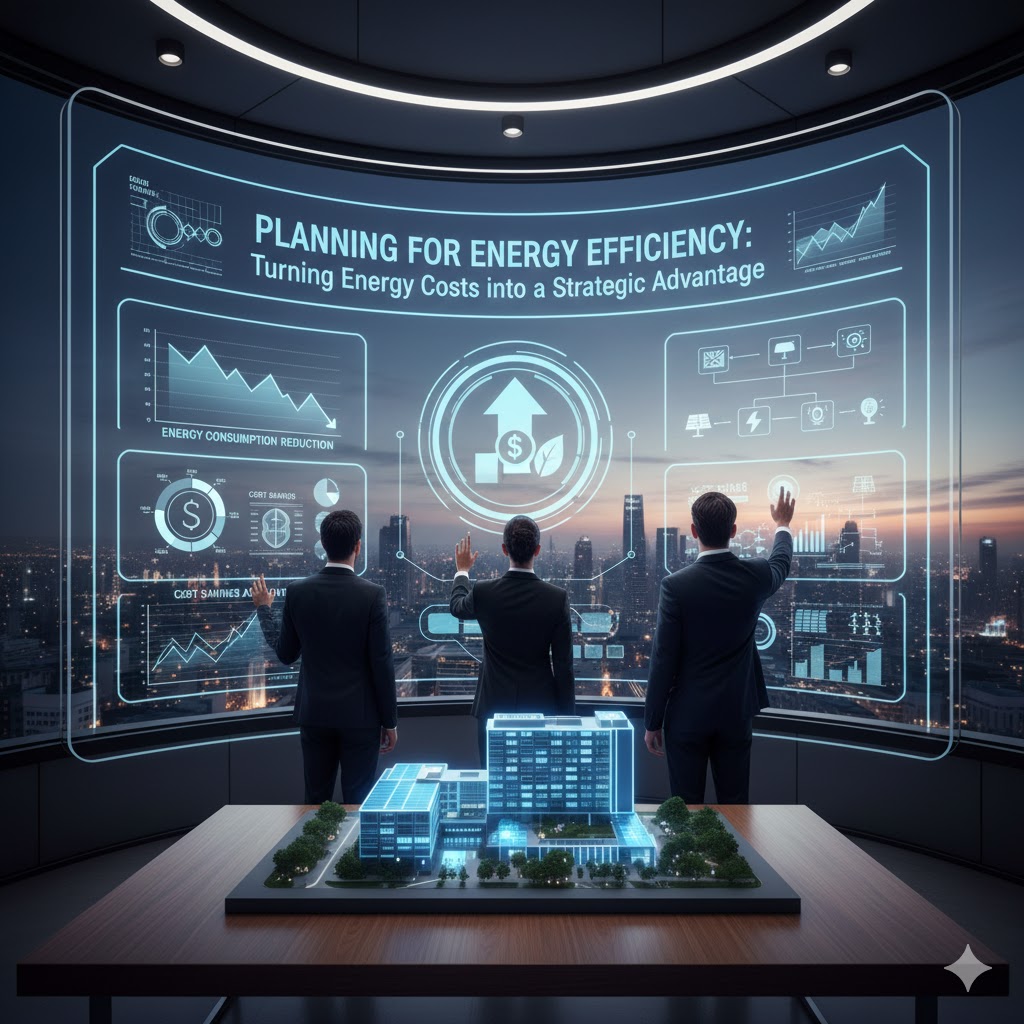
Turning Energy Costs into a Strategic Advantage
From Cost Control to Long-Term Business Resilience
By Charles Tan , Vigor Hotel Solutions
Modern Hospitality & Restaurant Advisory
Precision with Soul. Performance by Design.
Introduction: Energy Is No Longer a Fixed Cost
Energy was once considered an unavoidable operating expense.
Today, it is one of the fastest-growing and most volatile cost drivers in hotels, resorts, and restaurants.
Rising electricity tariffs, increasing environmental regulations,
and investor focus on ESG performance
have elevated energy efficiency from a technical concern
to a board-level strategic issue.
At Vigor Hotel Solutions,
we view energy planning not as cost cutting,
but as profit protection and future readiness.
- Redefining Energy Efficiency in Hospitality
Traditional Energy Management
- Replace equipment only when it fails
- Remind staff to switch things off
- Address problems reactively
Modern Energy Planning
- Designed into the building and layout
- Embedded into daily operations
- Measured, analysed, and optimised
- Planned across the asset lifecycle
Energy efficiency is not about using less.
It is about using energy intelligently.
- Why Energy Planning Matters More Than Ever
Direct Financial Impact
- Energy typically represents 6–15% of total operating costs
- Kitchens, refrigeration, HVAC, and hot water systems run continuously
- Small inefficiencies compound into significant annual losses
Strategic Impact
- Predictable energy costs improve cash-flow forecasting
- Energy-efficient assets attract institutional investors
- Sustainability increasingly influences guest choice and brand trust
- Core Pillars of Energy Planning
3.1 Design & Layout Planning
The cheapest energy is the energy you never need to consume.
Key principles:
- Building orientation and natural ventilation
- Daylight utilisation without heat gain
- Clear zoning of high-energy-use areas (kitchen, cold rooms, BOH)
- Efficient airflow and heat extraction in kitchens
Good design alone can reduce energy consumption by 20–30% before opening.
3.2 Equipment & Technology Planning
Equipment decisions lock in energy costs for years.
Best practices:
- Select equipment based on actual operating demand, not price
- Right-size HVAC, chillers, and kitchen equipment
- Use automation to eliminate human error
- Ensure systems can integrate with monitoring platforms
3.3 Operational Energy Planning
Many energy losses occur during daily operations.
Effective operational planning includes:
- Clear SOPs for energy usage
- Staff training focused on understanding impact, not policing behaviour
- Scheduling equipment around peak and off-peak demand
- Assigning accountability through KPIs
- Planning for the Future: Energy as a Strategic Asset
4.1 Renewable and Alternative Energy
Forward-looking operators plan for:
- Solar rooftop readiness
- Heat recovery from kitchens and HVAC
- Future battery storage integration
Even if not installed immediately,
designing for future integration avoids costly retrofits.
4.2 Smart Energy Management
What cannot be measured cannot be managed.
Modern systems include:
- Smart meters and sub-metering
- Real-time dashboards
- Automated alerts for abnormal consumption
- Benchmarking by department or outlet
4.3 Energy Risk Planning
Future risks include:
- Energy price volatility
- Regulatory tightening
- ESG reporting requirements
- Investor and brand scrutiny
Energy planning mitigates these risks proactively.
- Energy Planning Checklist / Framework
A Practical Tool by Vigor Hotel Solutions
Below is a practical executive-level framework
used by Vigor Hotel Solutions across hotel and restaurant projects.
🔹 Phase 1: Strategic Assessment
☐ Identify major energy-consuming areas (HVAC, kitchen, refrigeration, laundry)
☐ Analyse energy cost as a percentage of total operating costs
☐ Define energy objectives (cost reduction, ESG, resilience)
☐ Establish baseline consumption data
🔹 Phase 2: Design & Infrastructure
☐ Review building orientation and thermal efficiency
☐ Optimise zoning of high-energy-use spaces
☐ Ensure proper ventilation and heat extraction
☐ Allocate space for future renewable energy systems
🔹 Phase 3: Equipment & Systems
☐ Select energy-efficient equipment sized to actual demand
☐ Specify automation and smart controls
☐ Ensure compatibility with energy monitoring systems
☐ Evaluate lifecycle cost—not just purchase price
🔹 Phase 4: Operational Integration
☐ Develop energy-related SOPs
☐ Train staff with clear, practical guidelines
☐ Align energy use with operational schedules
☐ Assign ownership and responsibility
🔹 Phase 5: Monitoring & Optimisation
☐ Install metering and sub-metering
☐ Track performance against benchmarks
☐ Investigate anomalies immediately
☐ Review and optimise quarterly
🔹 Phase 6: Future Readiness
☐ Prepare for renewable energy integration
☐ Model long-term energy cost scenarios
☐ Align energy planning with ESG and investor requirements
☐ Review strategy annually
- Common Energy Planning Mistakes
❌ Treating energy as a technical issue, not a business strategy
❌ Investing in equipment without operational alignment
❌ No continuous monitoring or accountability
❌ Ignoring future energy price and regulation risks
❌ Acting only after costs escalate
- The Vigor Hotel Solutions Approach
Before recommending any energy initiative, we ask:
- Where is energy being consumed without adding guest value?
- Which investments deliver the fastest and most reliable payback?
- Can the system function consistently without relying on individual discipline?
- Is the asset prepared for future energy and ESG expectations?
Sustainable energy efficiency depends on systems, not people.
Conclusion: Energy Efficiency Is Hidden Profit
For many hospitality businesses,
energy inefficiency is an invisible drain on profitability.
Planning for Energy Efficiency
is not a sustainability trend
—it is a long-term financial and operational strategy.
Every unit of energy saved
is profit gained without selling a single extra room or meal.