By Charles Tan
In the dynamic world of hospitality, profitability is not solely driven by high occupancy rates or packed dining rooms. It is fundamentally anchored in your ability to intelligently manage expenses and mitigate legal exposure. Disciplined execution in these two areas is what protects your margins and builds long-term operational resilience for both your hotel and restaurant.
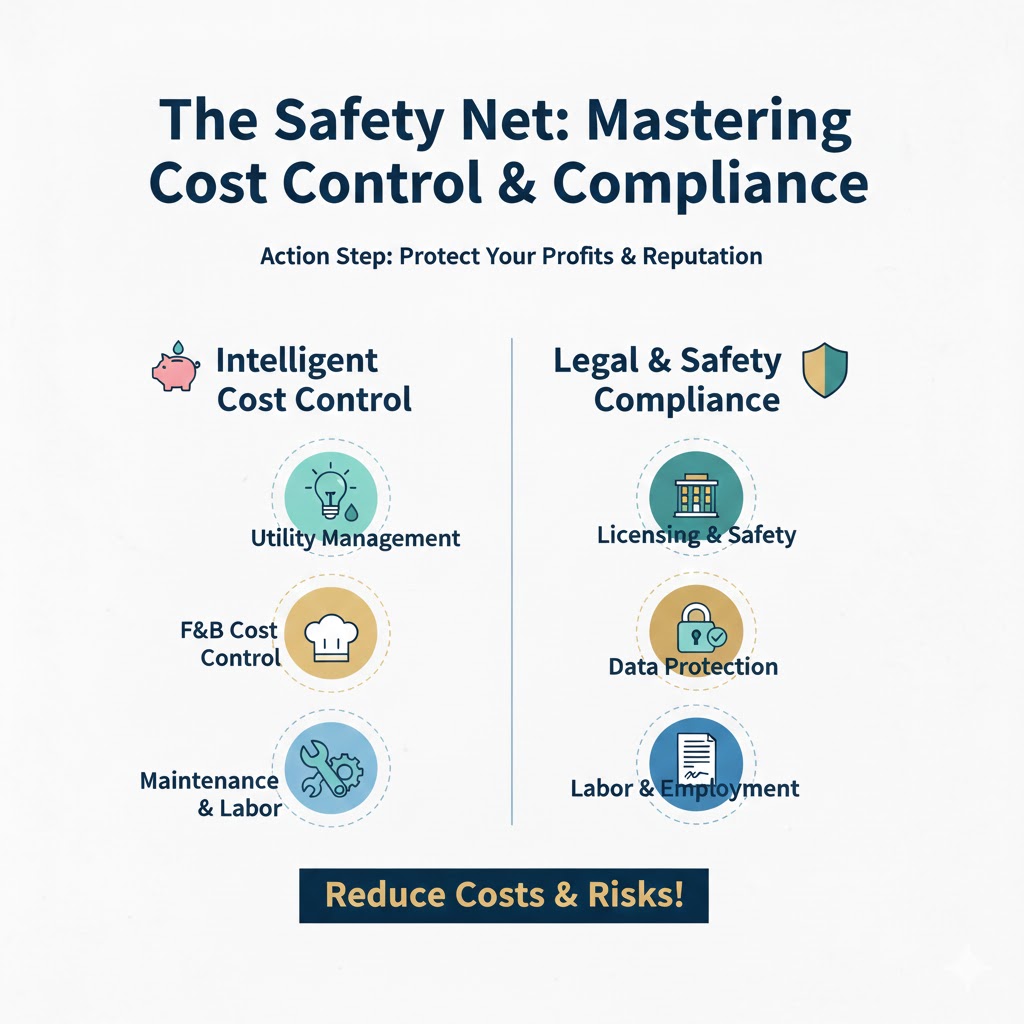
- 💰 Intelligent Cost Control: Eliminating ‘Profit Leaks’
Cost control moves beyond mere “saving”; it is a strategic approach to maximizing efficiency and eliminating waste across every facet of the business.
- Utility and Energy Management (The Silent Drain)
Utility costs (electricity, water, gas) are often the largest single fixed overhead that can be proactively managed.
- Electricity:
- 💡 LED Conversion: Switching all traditional lighting to LEDs can yield energy savings of 75-80% on lighting consumption alone.
- 🌡️ HVAC Discipline: Standardize air conditioning settings in common areas to the 25–26°C (77–79°F) range.
- 🔑 Smart Disconnects: Install key card or motion sensor systems in guest rooms to automatically shut down power when rooms are unoccupied.
- Water:
- 💧 Low-Flow Fixtures: Install water-saving showerheads and low-flow toilets to significantly reduce consumption without impacting the guest experience.
- 🛠️ Regular Leak Audits: A tiny, unaddressed leak can lead to thousands of lost liters monthly. Implement a scheduled check system.
- Food & Beverage Cost Mastery (The F&B Heartbeat)
For restaurants and hotel F&B outlets, maintaining the Food Cost Percentage (ideally 25-35% of sales price) is paramount.
- 📋 Recipe Standardization: Define precise ingredient quantities for every dish. This ensures consistent quality and allows for accurate cost per dish ($Cost\ per\ Dish$) calculation.
- 🗑️ Waste Documentation: Track and record why food is being discarded (e.g., spoilage, overproduction, kitchen error). This data is vital for tightening ordering and preparation protocols.
- 🛒 Inventory Control: Strictly adhere to the FIFO (First In, First Out) method for stock rotation to minimize spoilage. Conduct formal inventory counts (stocktakes) at least weekly.
- Maintenance and Labor Efficiency
- 🛠️ Preventive Maintenance (PM): Investing in regular, scheduled checks (e.g., quarterly AC deep cleans, pump inspections) is far more cost-effective than emergency repairs that lead to sudden equipment failure, revenue loss, and guest dissatisfaction.
- 🧑🔧 Labor Scheduling: Optimize staffing levels based on occupancy forecasts and daily sales patterns. Avoid overstaffing during slow hours, especially in F&B.
- ⚖️ Legal Compliance: Building a Resilient Operation
Failure to comply with mandatory regulations can result in crippling fines, license suspension, and irreversible damage to your brand reputation.
- Licensing and Local Regulations
- ✅ Up-to-Date Licensing: Ensure all operating licenses (Hotel Permit, Restaurant Health Certificate, Liquor License) are current and accurately reflect your current operations. Any major renovation requires updated compliance checks.
- 🔥 Fire Safety: Maintain certified, easily accessible fire extinguishers, clear emergency exit signs, and fully functional smoke detectors in all areas. Conduct mandatory staff fire drills annually.
- Hygiene Standards: For all F&B operations, enforce strict kitchen hygiene protocols, proper food storage temperatures, and ensure all staff possess valid health certifications.
- Data Protection (PDPA/GDPR Principles)
As a business that handles customer identification (passports, IDs) and contact information (email, phone numbers), data privacy is non-negotiable.
- 🔒 Informed Consent: Clearly state why you are collecting guest data (e.g., for reservation purposes only). Obtain explicit consent before using their information for secondary purposes (e.g., marketing newsletters).
- 🛡️ Data Security: Store all customer data (digital and physical) securely. Use encrypted systems for digital records and lockable cabinets for physical documents.
- Labor and Employment Law
- 📜 Clear Contracts: Every employee must have a clear, written employment contract detailing wages, duties, working hours, and benefits to prevent disputes.
- 🕒 Overtime Compliance: Strictly adhere to local labor laws regarding standard working hours, rest breaks, and the accurate calculation and payment of overtime (OT) wages.
Summary: Vigor as Your Compliance & Cost Partner
Cost control and legal compliance are not burdens; they are essential investments in stability.
Vigor is ready to protect your bottom line by providing:
- Vigor Energy Audit: A detailed analysis and strategy for immediate utility cost reduction.
- Vigor F&B System: Implementation of robust inventory and recipe costing systems.
- Vigor Compliance Check: A thorough review of essential licensing, fire safety, and PDPA protocols.
Mastering Cost Control and Legal Compliance for Hospitality Longevity
In the dynamic world of hospitality, profitability is not solely driven by high occupancy rates or packed dining rooms. It is fundamentally anchored in your ability to intelligently manage expenses and mitigate legal exposure. Disciplined execution in these two areas is what protects your margins and builds long-term operational resilience for both your hotel and restaurant.
1. 💰 Intelligent Cost Control: Eliminating ‘Profit Leaks’
Cost control moves beyond mere “saving”; it is a strategic approach to maximizing efficiency and eliminating waste across every facet of the business.
A. Utility and Energy Management (The Silent Drain)
Utility costs (electricity, water, gas) are often the largest single fixed overhead that can be proactively managed.
-
Electricity:
-
💡 LED Conversion: Switching all traditional lighting to LEDs can yield energy savings of 75-80% on lighting consumption alone.
-
🌡️ HVAC Discipline: Standardize air conditioning settings in common areas to the 25–26°C (77–79°F) range.
-
🔑 Smart Disconnects: Install key card or motion sensor systems in guest rooms to automatically shut down power when rooms are unoccupied.
-
-
Water:
-
💧 Low-Flow Fixtures: Install water-saving showerheads and low-flow toilets to significantly reduce consumption without impacting the guest experience.
-
🛠️ Regular Leak Audits: A tiny, unaddressed leak can lead to thousands of lost liters monthly. Implement a scheduled check system.
-
B. Food & Beverage Cost Mastery (The F&B Heartbeat)
For restaurants and hotel F&B outlets, maintaining the Food Cost Percentage (ideally 25-35% of sales price) is paramount.
-
📋 Recipe Standardization: Define precise ingredient quantities for every dish. This ensures consistent quality and allows for accurate cost per dish (Cost per Dish) calculation.
-
🗑️ Waste Documentation: Track and record why food is being discarded (e.g., spoilage, overproduction, kitchen error). This data is vital for tightening ordering and preparation protocols.
-
🛒 Inventory Control: Strictly adhere to the FIFO (First In, First Out) method for stock rotation to minimize spoilage. Conduct formal inventory counts (stocktakes) at least weekly.
C. Maintenance and Labor Efficiency
-
🛠️ Preventive Maintenance (PM): Investing in regular, scheduled checks (e.g., quarterly AC deep cleans, pump inspections) is far more cost-effective than emergency repairs that lead to sudden equipment failure, revenue loss, and guest dissatisfaction.
-
🧑🔧 Labor Scheduling: Optimize staffing levels based on occupancy forecasts and daily sales patterns. Avoid overstaffing during slow hours, especially in F&B.
2. ⚖️ Legal Compliance: Building a Resilient Operation
Failure to comply with mandatory regulations can result in crippling fines, license suspension, and irreversible damage to your brand reputation.
A. Licensing and Local Regulations
-
✅ Up-to-Date Licensing: Ensure all operating licenses (Hotel Permit, Restaurant Health Certificate, Liquor License) are current and accurately reflect your current operations. Any major renovation requires updated compliance checks.
-
🔥 Fire Safety: Maintain certified, easily accessible fire extinguishers, clear emergency exit signs, and fully functional smoke detectors in all areas. Conduct mandatory staff fire drills annually.
-
Hygiene Standards: For all F&B operations, enforce strict kitchen hygiene protocols, proper food storage temperatures, and ensure all staff possess valid health certifications.
B. Data Protection (PDPA/GDPR Principles)
As a business that handles customer identification (passports, IDs) and contact information (email, phone numbers), data privacy is non-negotiable.
-
🔒 Informed Consent: Clearly state why you are collecting guest data (e.g., for reservation purposes only). Obtain explicit consent before using their information for secondary purposes (e.g., marketing newsletters).
-
🛡️ Data Security: Store all customer data (digital and physical) securely. Use encrypted systems for digital records and lockable cabinets for physical documents.
C. Labor and Employment Law
-
📜 Clear Contracts: Every employee must have a clear, written employment contract detailing wages, duties, working hours, and benefits to prevent disputes.
-
🕒 Overtime Compliance: Strictly adhere to local labor laws regarding standard working hours, rest breaks, and the accurate calculation and payment of overtime (OT) wages.
Summary: Vigor as Your Compliance & Cost Partner
Cost control and legal compliance are not burdens; they are essential investments in stability.
Vigor is ready to protect your bottom line by providing:
-
Vigor Energy Audit: A detailed analysis and strategy for immediate utility cost reduction.
-
Vigor F&B System: Implementation of robust inventory and recipe costing systems.
-
Vigor Compliance Check: A thorough review of essential licensing, fire safety, and PDPA protocols.
Would you like to start with a Vigor Energy Audit to identify immediate savings opportunities in your hotel or restaurant?