By Charles Tan
In the complex and highly competitive world of hotel operations, maximizing room inventory efficiency is paramount. One of the core strategies widely adopted by hotels and tourism operators is the “Allotment.”
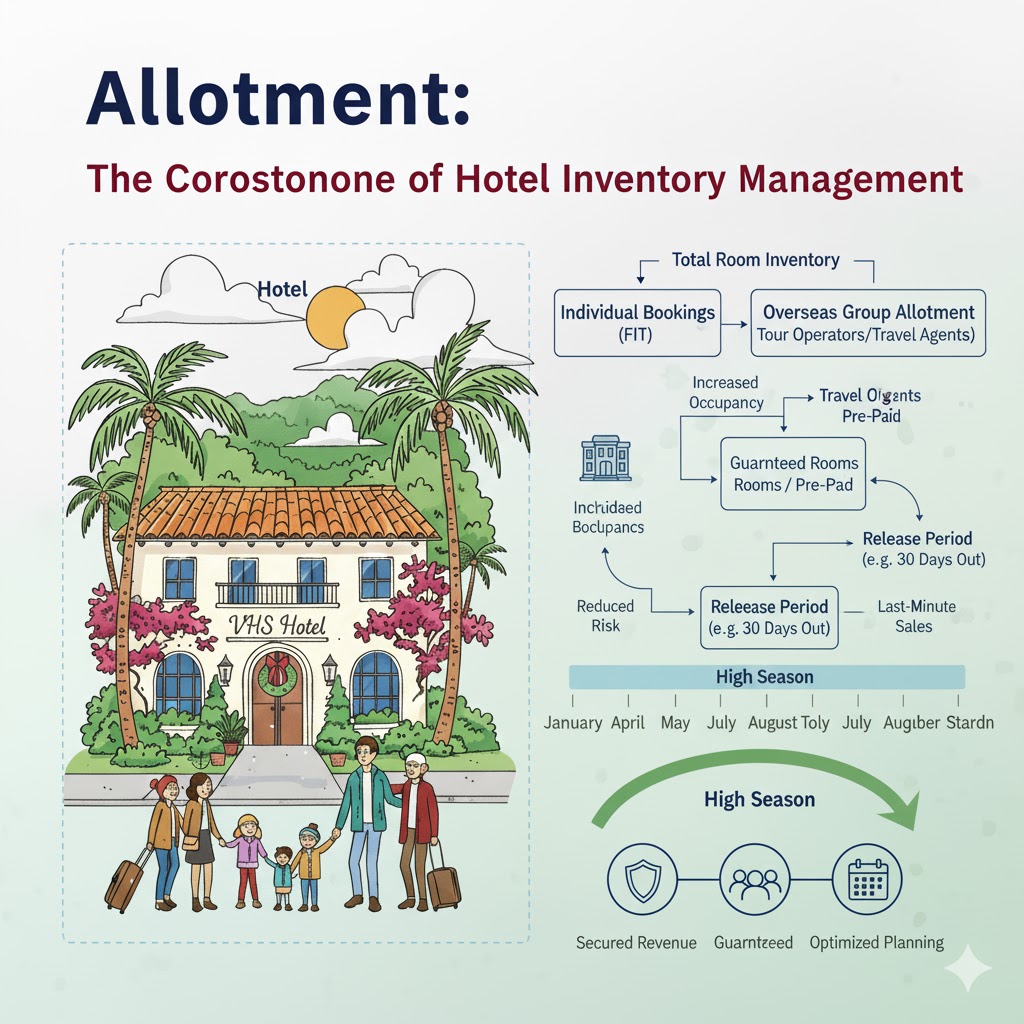
What is an Allotment? An allotment, or room quota allocation, is an agreement between a hotel and a tour operator or travel agent. Under this arrangement, the hotel pre-reserves a specific number of rooms for these companies, allowing the tour operator to sell packages or rooms directly to their clients without needing to make individual bookings with the hotel each time. Allotments typically come with defined terms and conditions, including the number of rooms, the specific period they are held for, and a “release period” specifying when any unsold rooms must be returned to the hotel’s general inventory.
Benefits of Allotment for Hotels:
-
Guaranteed Revenue and Occupancy: Allotments provide hotels with a degree of certainty that a portion of their rooms will be booked and generate revenue, particularly during high season, thereby mitigating the risk of vacancies.
-
Reduced Administrative Burden: With an allotment in place, hotels don’t need to manage individual bookings from agents, significantly reducing the time and resources spent on communication and booking confirmations.
-
Advanced Planning: Allotment data enables hotels to plan their room allocation, staffing, and other resources more effectively and far in advance.
-
Expanded Sales Channels: Allotments serve as a powerful tool for hotels to access new customer segments through the extensive networks of tour operators or travel agents who may have large client bases.
Benefits of Allotment for Tour Operators/Travel Agents:
-
Sales Agility: Tour operators can offer and confirm room bookings to their clients instantly, making the sales process swift and efficient.
-
Preferential Rates: Allotments often come with special room rates or discounts from the hotel, allowing tour operators to create attractive and competitive packages.
-
Access to Peak Season Inventory: During periods of high demand, allotments ensure that tour operators have rooms available to accommodate their clients, even when general availability might be scarce.
Challenges and Considerations:
Despite its numerous advantages, allotments do come with challenges. Hotels must manage the “release period” effectively to ensure that any unsold rooms are released back into the system in a timely manner for re-sale. Conversely, tour operators must accurately assess customer demand to avoid holding too many unused rooms, which could lead to missed opportunities or penalties.
Conclusion: Allotment is a potent room inventory management strategy that benefits both hotels and tour operators. It contributes to business stability, enhances operational efficiency, and opens doors to broader market reach. A shrewd understanding and strategic utilization of allotments are therefore crucial for anyone in the hospitality industry.