By Charles Tan
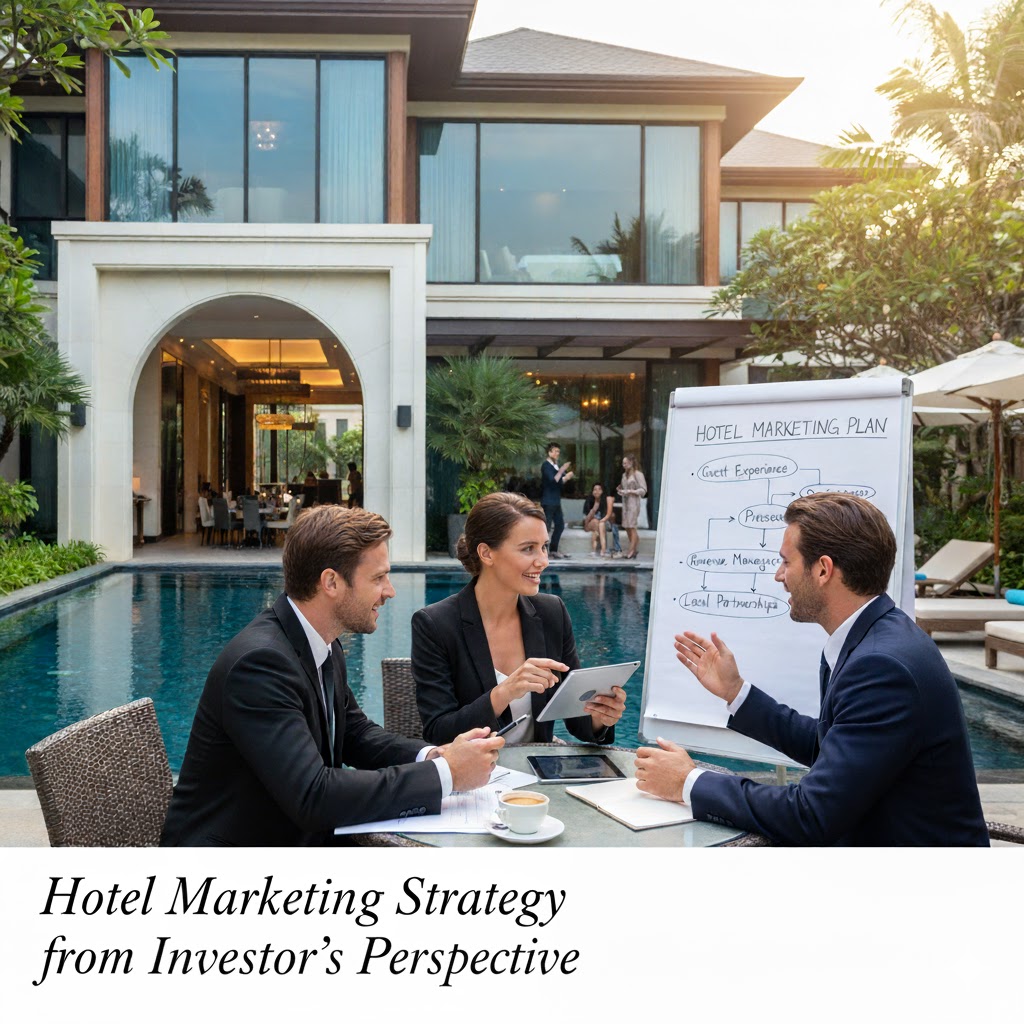
In today’s competitive hospitality landscape, investors no longer view marketing as a cost — it’s an investment that must generate measurable returns. What investors expect from hotel marketing goes far beyond brand exposure or social media presence. They want a strategy that drives revenue growth, enhances asset value, and supports the overall investment objectives.
- ROI-Driven Marketing
Every marketing dollar must deliver quantifiable results.
Investors expect a clear link between marketing spend and performance metrics such as:
- Incremental revenue and RevPAR growth
- Improved conversion rate and ADR
- Marketing ROI dashboards that visualize cost vs. revenue impact
Data transparency and performance tracking are key to earning investor confidence.
- Alignment with Investment Strategy
A successful marketing plan must align with the investor’s business intent:
- Short-term hold / sale: Focus on driving occupancy, market visibility, and NOI to enhance resale value.
- Long-term asset growth: Prioritize brand loyalty, repeat guests, and direct booking channels to ensure sustainable profitability.
Marketing must support the asset’s financial story — not just its brand identity.
- Data-Driven Decision Making
Modern investors expect marketing teams to use data analytics, not guesswork.
Hotels should integrate CRM, PMS, and web analytics to track guest behavior, segmentation, and campaign performance.
Predictive analytics can forecast demand trends, optimize pricing, and tailor promotions to high-value guests.
- Integrated Commercial Strategy
Marketing should not operate in isolation.
Investors look for cross-functional synergy among Sales, Revenue Management, F&B, and Operations.
For example:
- Packaging rooms with dining or spa offers
- Turning hotel events and F&B outlets into lead generators for room bookings
An integrated marketing ecosystem maximizes total revenue per guest.
- Brand Value and Reputation Management
Beyond revenue, investors also value brand equity — the intangible yet powerful driver of asset worth.
Marketing should consistently strengthen the hotel’s positioning, storytelling, and online reputation through:
- Consistent brand messaging across all channels
- Strong guest engagement and positive reviews
- Purpose-driven marketing (sustainability, community, or wellness themes)
A strong brand reputation builds long-term market resilience and investor confidence.
✅ Conclusion
“What investors expect from hotel marketing is not just promotion — it’s performance. Effective marketing elevates the hotel’s financial results, strengthens brand value, and supports the investor’s overall asset growth strategy.”