By Charles Tan
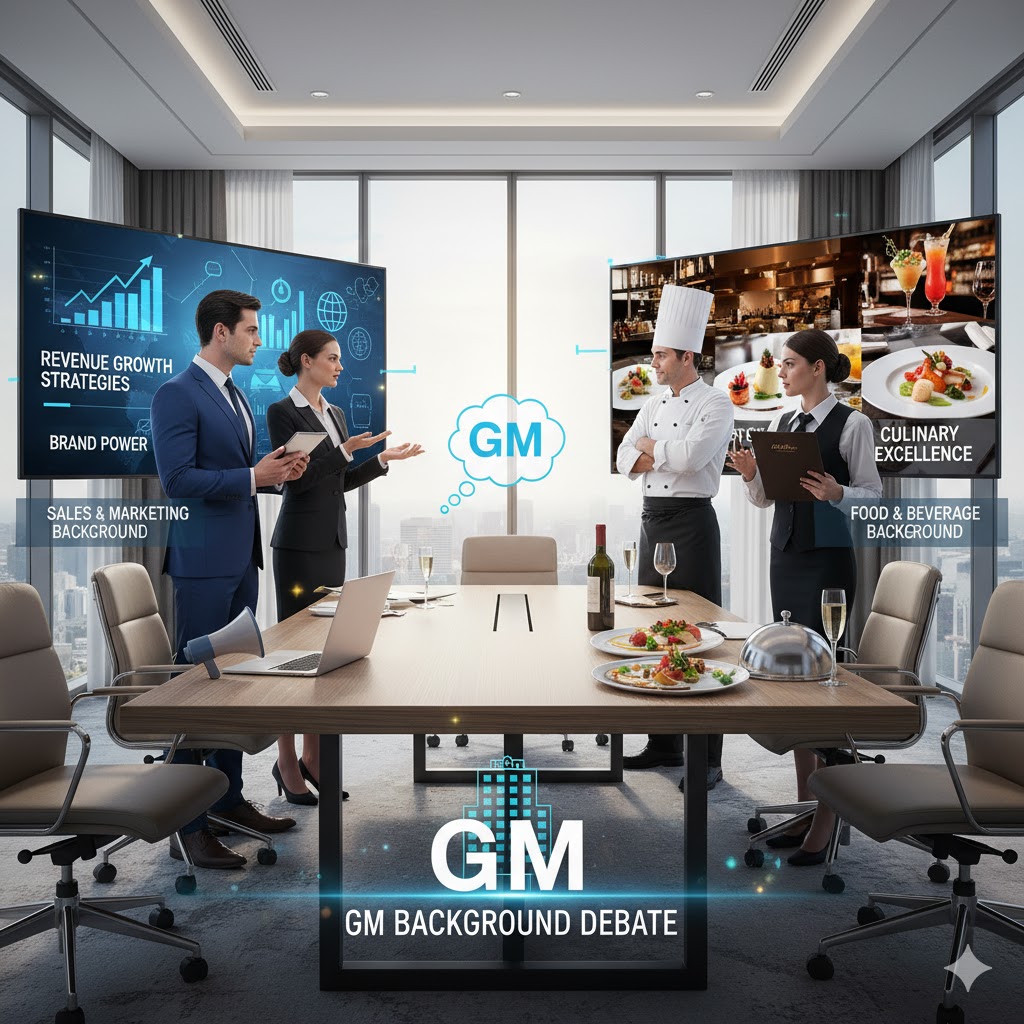
In today’s hotel landscape, the background of a General Manager often determines how the property performs — not just financially, but culturally. Among the most common routes to the GM office are two distinct paths: Sales & Marketing and Food & Beverage (F&B). Each background shapes leadership style, operational priorities, and strategic decisions in profoundly different ways.
- The Sales & Marketing GM – The Strategist and Revenue Driver
A GM who comes from a Sales & Marketing (S&M) background is often commercially minded, analytical, and performance-driven. They view the hotel as a dynamic business ecosystem where demand generation, positioning, and revenue mix define success.
Strengths:
- Revenue Focus: Skilled in segmentation, distribution channels, and market trends, enabling proactive strategies to drive occupancy and ADR.
- Brand Building: Excellent understanding of storytelling, branding, and digital visibility.
- Networking & Partnerships: Strong external relationships with OTAs, travel agents, and corporate accounts.
- Forward Thinking: Data-oriented and adaptable to market changes, especially in recovery or competitive situations.
Weaknesses:
- Operational Depth: May lack in-depth understanding of daily hotel operations or service flow.
- Team Connection: Sometimes perceived as more “numbers-driven” than “people-driven.”
- Short-term Focus: Risk of prioritizing sales targets over long-term service consistency.
Ideal for:
Urban hotels, corporate city properties, or chain-affiliated hotels in highly competitive markets where positioning and revenue optimization are critical.
- The Food & Beverage GM – The Operator and People Leader
A GM who rises from an F&B background tends to be hands-on, detail-oriented, and passionate about guest experience. They usually embody the service spirit that defines hospitality — seeing the hotel as a stage where every detail matters.
Strengths:
- Operational Mastery: Deep understanding of quality, standards, and guest touchpoints across outlets.
- Service Leadership: Strong interpersonal and motivational skills; often a natural mentor to staff.
- Guest Relations: Highly visible on the floor, cultivating loyalty through personal engagement.
- Profit Control: Experienced in cost management, menu engineering, and maximizing outlet profitability.
Weaknesses:
- Commercial Awareness: May be less comfortable with digital marketing, online distribution, or revenue analytics.
- Strategic Vision: Sometimes more focused on day-to-day operations than long-term business strategy.
- Limited Market Network: Fewer external commercial connections compared to S&M counterparts.
Ideal for:
Resorts, lifestyle hotels, and independent properties where guest experience, service excellence, and team culture are key differentiators.
- The Modern Perspective – The Best GMs Blend Both
In the modern hospitality world, the strongest GMs are those who combine commercial intelligence with service passion. Data-driven yet human-centered. They can analyze revenue reports in the morning and inspire the service team by evening.
Owners and executives now seek leaders who:
- Understand both top-line growth and guest satisfaction metrics.
- Can drive digital sales strategy while maintaining operational finesse.
- Build a culture where financial success and service excellence coexist.
Conclusion
Whether from Sales & Marketing or Food & Beverage, a GM’s effectiveness ultimately depends on their ability to balance business logic with hospitality soul. The former ensures profitability; the latter sustains reputation. The new era of hotel leadership demands not just a specialist — but a hybrid generalist who can speak the languages of revenue, people, and purpose all at once.