By Charles Tan
Once content is engaging,
the next step is making it commercially meaningful.
Many restaurants create beautiful content —
but fail to connect it to business results.
This is where strategy completes creativity.
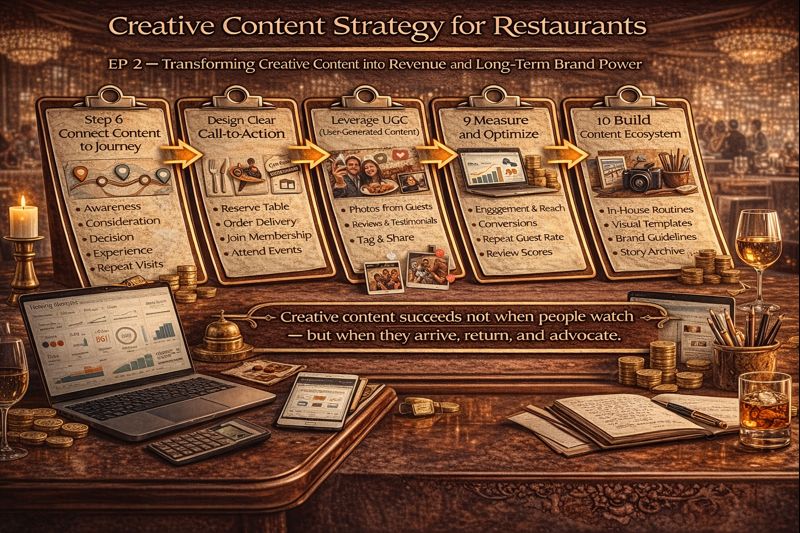
Step 6 — Connect Content to the Customer Journey
Every piece of content should serve a purpose:
- Viral storytelling → Awareness
• Guest reviews → Consideration
• Menu highlights → Decision to visit
• Ambience stories → Experience enhancement
• Loyalty content → Repeat visits
Content becomes a guided path — not random exposure.
Step 7 — Design Clear Calls-to-Action
Engagement without direction does not generate revenue.
Content must gently guide guests to:
- Reserve a table
• Order delivery
• Join membership
• Attend events
Clarity turns interest into action.
Step 8 — Leverage User-Generated Content
Nothing builds trust faster than real guests.
Photos taken by customers.
Honest reviews.
Shared dining moments.
People believe people — not advertisements.
Smart restaurants design “shareable moments” intentionally.
Step 9 — Measure and Optimize
Sustainable content strategy relies on data:
- Engagement & reach
• Click-to-reservation ratio
• Conversion rate
• Repeat guest frequency
• Review scores
Numbers replace guesswork.
Refinement replaces repetition.
Step 10 — Build a Long-Term Content Ecosystem
The strongest brands do not chase virality.
They build systems:
- In-house content routines
• Visual templates
• Story archives
• Brand tone guidelines
When creativity becomes a process, growth becomes predictable.
EP 2 Key Takeaway
Creative content succeeds not when people watch —
but when they arrive, return, and advocate.
Final Thought
The kitchen creates food.
Creative content creates customers.
When both move in harmony,
a restaurant becomes more than a place to dine —
it becomes a destination.