
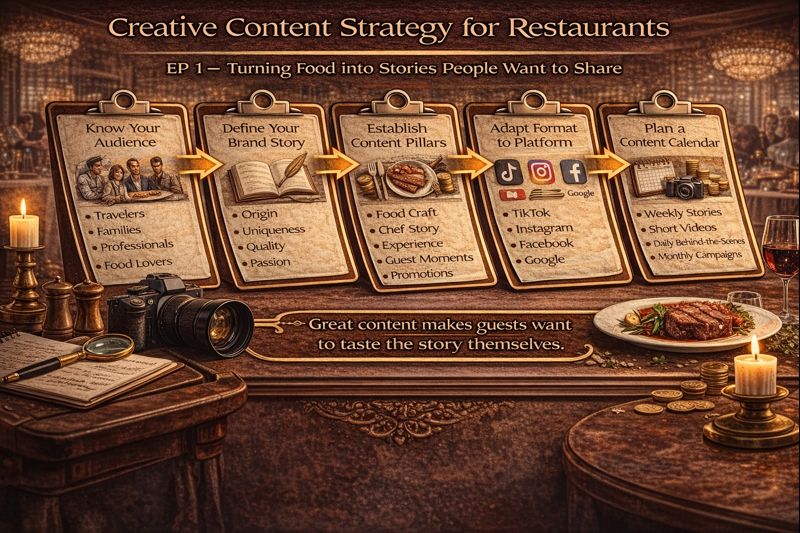
Building Sustainable Customer Engagement Through Story, Experience, and Strategy
EP 1 — Turning Food into Stories People Want to Share
By Charles Tan
In the past, restaurants competed on taste.
Today, they compete on attention.
Before a guest walks through your door,
they have already visited your restaurant — on their phone.
If your content fails to spark curiosity, emotion, or desire,
even exceptional food may remain undiscovered.
This is why Creative Content has become a strategic asset —
not a marketing accessory — in modern restaurant growth.
What Creative Content Means in a Restaurant Context
It is not simply photographing dishes beautifully.
It is the art of designing emotional connection through storytelling.
A chef grilling over open fire.
A fisherman delivering the morning’s catch.
A family laughing around the table.
A behind-the-scenes moment in the kitchen.
When people feel the experience,
they want to live the experience.
Step 1 — Know Exactly Who You Are Speaking To
Great content begins with a simple question:
Who is our audience?
- Travelers seeking local experiences
• Urban professionals looking for atmosphere
• Families searching for value
• Food lovers chasing craftsmanship
When the customer persona is clear,
the creative direction becomes natural.
Step 2 — Define Your Brand Story
Every restaurant has a reason for existence.
Content should express:
- Why the restaurant was created
• What makes it distinctive
• How quality is protected
• Who the people behind the kitchen are
A brand with a story feels alive.
A restaurant without a story is just a place to eat.
Step 3 — Establish Content Pillars
Sustainable creativity requires structure.
Successful restaurants build recurring content themes:
- Food Craft & Ingredients
- Chef & Team Culture
- Dining Experience & Atmosphere
- Guest Moments
- Seasonal Events & Promotions
With clear pillars, content creation stays consistent — never random.
Step 4 — Adapt Format to Each Platform
One story. Multiple expressions.
- TikTok → Short, dynamic storytelling
• Instagram → Visual emotion & lifestyle
• Facebook → Reviews & community engagement
• Google → Authentic imagery & credibility
Consistency of message, flexibility of format.
Step 5 — Plan a Content Calendar
Creative content thrives on rhythm, not impulse.
- Weekly storytelling posts
• Short-form videos
• Daily behind-the-scenes stories
• Monthly campaign features
A system reduces cost, increases quality, and prevents burnout.
EP 1 Key Takeaway
Great content does not just show food.
It makes people want to taste the story themselves.