By Charles Tan
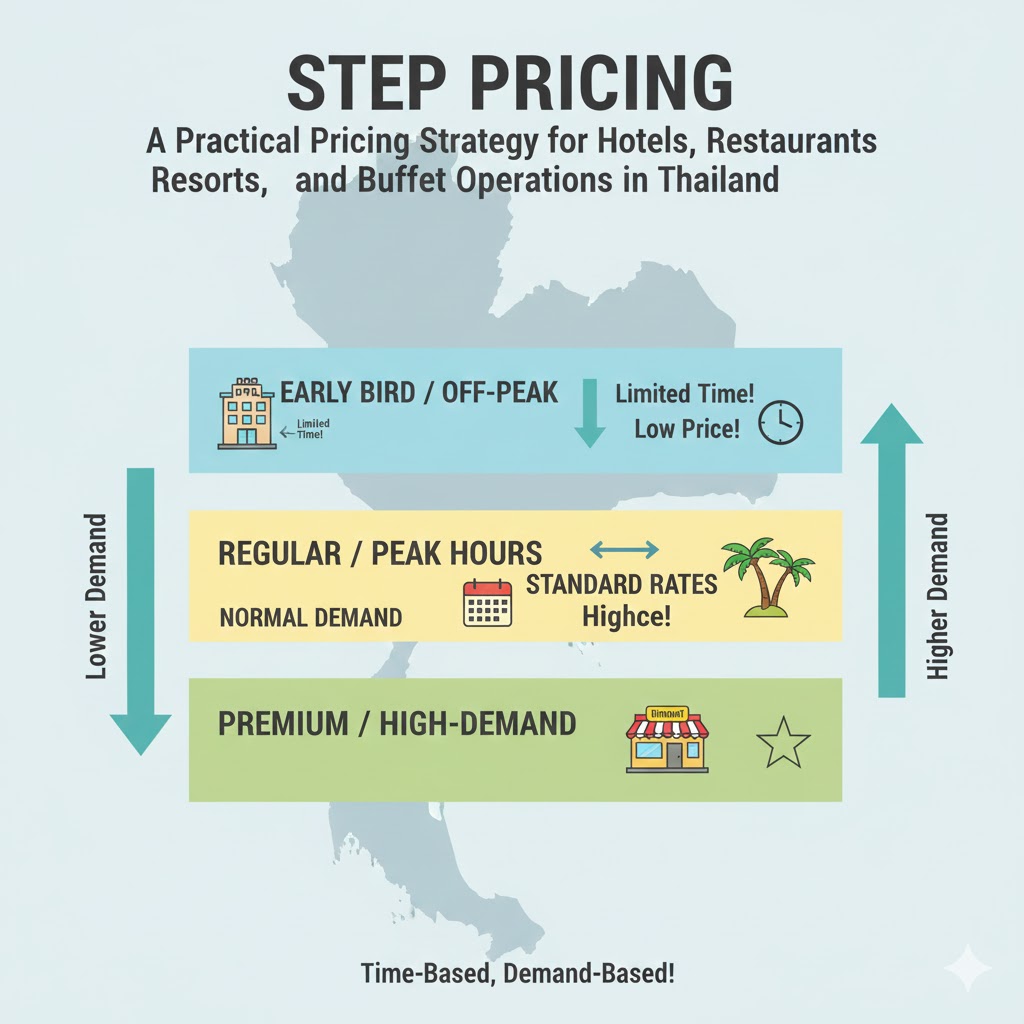
In the hospitality industry, pricing is not merely about numbers—it is a strategic tool that directly influences revenue performance, brand positioning, and guest satisfaction. One of the most widely adopted and effective pricing approaches in Thailand is Step Pricing.
This article, prepared by Vigor Hotel Solutions, provides a clear and practical explanation of Step Pricing for international investors, hotel owners, and hospitality professionals seeking to understand how pricing is structured in the Thai market.
What Is Step Pricing?
Step Pricing is a pricing strategy in which rates are set in clearly defined levels or “steps,” based on predetermined conditions such as:
- Time periods
- Seasons
- Demand levels
- Service tiers
- Customer segments
Instead of fluctuating continuously, prices change only when a specific condition is met, creating transparency and predictability for both operators and guests.
- Step Pricing for Hotels
Hotels operate in a demand-driven environment where revenue per available room must be carefully managed. Step Pricing provides clarity and structure while protecting brand value.
Common Applications
- Season-Based Pricing
- Low Season
- Shoulder Season
- High Season
- Peak Season
- Day-Based Pricing
- Weekdays
- Weekends
- Public holidays and long weekends
Example
- Deluxe Room
- Weekday rate: THB 2,800
- Weekend rate: THB 3,500
- Peak period rate: THB 4,500
Vigor Hotel Solutions Insight
Step Pricing allows hotels to manage rate integrity, reduce unnecessary discounting, and align pricing effectively across OTAs, direct channels, and corporate contracts.
- Step Pricing for Restaurants
Customer demand in restaurants varies significantly by time of day. Step Pricing helps maximize revenue without eroding perceived value.
Effective Structures
- Time-Based Pricing
- Lunch menus
- Dinner menus
- Menu Tier Pricing
- Standard
- Premium
- Chef’s Specials
Example
- Lunch set (11:00–14:00): THB 199
- Standard dinner menu: from THB 259
- Chef’s Special: THB 349–399
Vigor Hotel Solutions Insight
Well-designed price steps encourage customers to trade up while allowing operators to maintain food cost control and stable margins.
- Step Pricing for Resorts
Resorts sell experiences rather than rooms alone. Step Pricing works best when combined with value-added packages.
Recommended Approaches
- Seasonal Package Pricing
- Room only
- Room with breakfast
- Room with activities, spa, or experiences
Example
- Green Season
- Room only: THB 3,200
- High Season
- Room with breakfast: THB 4,800
- Peak Season
- Romantic or experiential package: THB 6,500
Vigor Hotel Solutions Insight
Packaging reduces direct price comparison, increases guest spend per stay, and strengthens brand differentiation.
- Step Pricing for Buffet Operations
Buffet businesses are highly sensitive to volume and food cost. Step Pricing is essential for profitability and operational control.
Common Structures
- Customer-Based Pricing
- Children
- Adults
- Quality-Based Pricing
- Standard buffet
- Premium buffet
- Signature or seafood buffet
Example
- Children: THB 199
- Adults: THB 399
- Premium seafood buffet: THB 699–999
Vigor Hotel Solutions Insight
Clear price tiers allow operators to upsell premium offerings while maintaining cost efficiency and guest satisfaction.
Key Considerations When Implementing Step Pricing
- Avoid excessive price tiers that may confuse customers
- Ensure each price step clearly reflects added value
- Communicate pricing consistently across all channels: on-site, online, and social media
Conclusion
A Strategic Perspective from Vigor Hotel Solutions
Step Pricing is a highly effective and market-appropriate pricing strategy for Thailand’s hospitality industry, including:
- Hotels
- Restaurants
- Resorts
- Buffet operations
When thoughtfully designed, Step Pricing creates a balance between:
revenue optimization, operational efficiency, and guest perception of fairness.
For investors and international operators, understanding Step Pricing is essential to successfully navigating the Thai hospitality market.