by Charles Tan
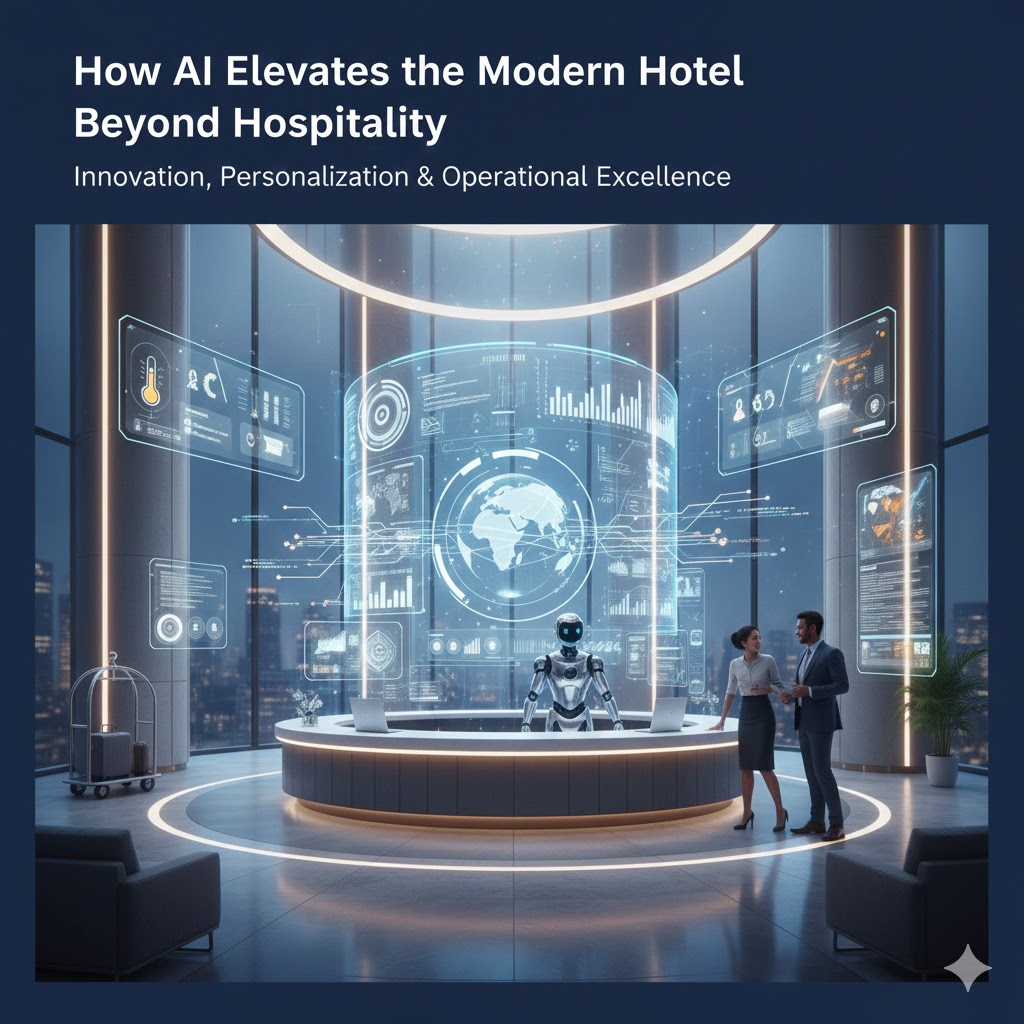
In the long history of hospitality, few innovations have arrived as quietly—and as powerfully—as Artificial Intelligence. It slips seamlessly into the daily rhythm of a hotel, not to replace human warmth, but to amplify it, refine it, and give it new precision.
Where hotels once depended solely on instinct, AI now provides clarity, foresight, and orchestration, transforming ordinary operations into a symphony of intelligent decisions.
Below is a comprehensive exploration of how AI can reshape the hotel business in ways that, until recently, belonged to imagination.
- AI as the Architect of Intelligent Guest Journeys
Today’s guest expects more than efficiency; they expect anticipation—an experience that understands them without being told.
AI enables hotels to craft this experience through:
- Hyper-Personalized Preferences
AI analyzes past stays, dining patterns, room choices, even temperature habits to propose:
- Room type before the guest asks
- Pillow selection on arrival
- Wine preferences in the restaurant
- Spa recommendations based on traveler profile
The hotel becomes less of a building and more of a thoughtful host.
- Predictive Service Recovery
AI flags signals of dissatisfaction—slow responses, negative tone in messages, unusual requests—allowing teams to intervene before a complaint becomes a review.
- Conversational Concierge
AI-driven chat assistants provide 24/7 multilingual service that feels human:
“He speaks your language, knows your preference, and never sleeps.”
- AI as the Invisible Manager Behind Every Operation
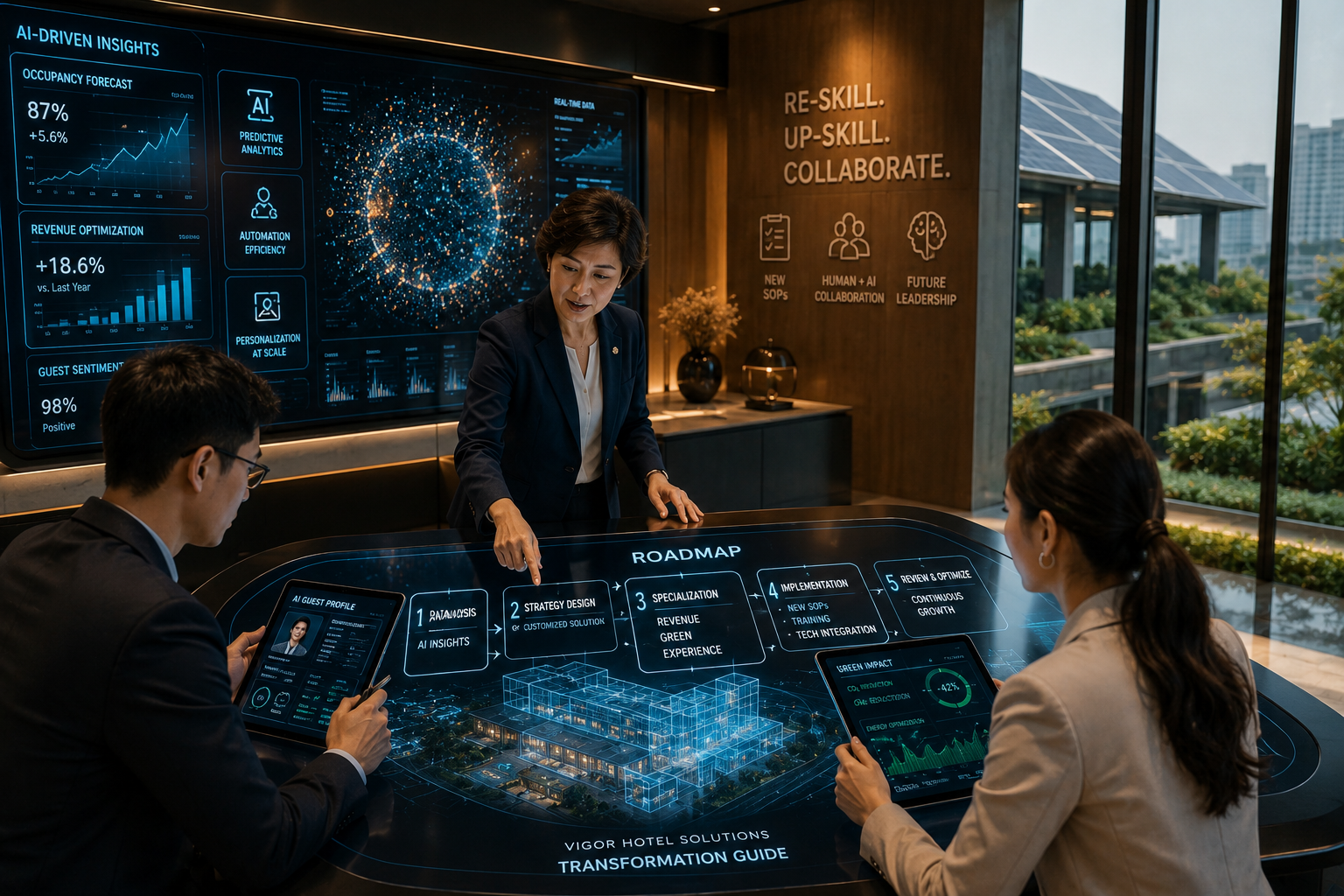
Beyond the glamorous front-of-house, AI revolutionizes the engine room of a hotel.
- Inventory & Purchasing Intelligence
Instead of overstocking or running short, AI forecasts consumption using real-time data on:
- Occupancy patterns
- Restaurant covers
- Seasonality
- Event calendars
- Guest behavior trends
Purchasing shifts from reactive to mathematical precision, reducing waste and tightening margins.
- Smart Scheduling
AI creates staff rosters based on demand curves, labor rules, skills mix, and customer flow.
It eliminates guesswork and ensures the right talent is present at the right moment.
- Predictive Maintenance
Air-conditioners, elevators, boilers, and kitchen equipment are monitored continuously.
AI detects abnormalities before they fail—cutting downtime, energy cost, and guest inconvenience.
- AI as the Revenue Maestro
For decades, revenue management relied on spreadsheets and instinct. AI rewrites the rules.
- Dynamic Pricing with Real-Time Sensitivity
AI evaluates:
- City compression
- Competitor rates
- Flight data
- Weather forecasts
- Web search volume
- Booking pace
- Local events
Then it adjusts room rates by the minute, ensuring every room earns its true value.
- Intelligent Upselling
Instead of generic offers, AI sends micro-targeted add-ons:
- Breakfast to corporate travelers
- Spa packages to weekend couples
- Early check-in to long-haul arrivals
Upselling becomes natural, personalized, and significantly more profitable.
- AI as the Storyteller of Modern Marketing
Marketing is no longer about shouting the loudest—it’s about whispering the right message to the right guest.
- Behavior-Driven Campaigns
AI identifies micro-segments:
“Families that love nature,”
“Solo travelers who prefer wellness,”
“Foodie couples who travel for gastronomy.”
Ads are generated instantly, content is tailored, and conversion rates rise sharply.
- Photo, Video, and Creative Generation
AI builds:
- Social media posts
- Mood videos
- Virtual tours
- Professional-grade images
Hotels save weeks of production time while maintaining brand consistency.
- AI in F&B: The New Culinary Strategist
In restaurants, lounges, and banquet operations, AI enhances creativity rather than restricting it.
- Predictive Menu Engineering
AI identifies which dishes:
- Sell best
- Deliver highest profit
- Suit upcoming guest profiles
- Require costly ingredients
This enables chefs and F&B directors to design menus that are profitable, trending, and waste-conscious.
- Smart Buffet Management
AI calculates exact volumes per meal period, reducing waste and optimizing food cost without reducing abundance.
- Guest Sentiment Analysis
Reviews, photos, and comments online are analyzed to refine flavors, service steps, and dining experiences.
- AI as the Guardian of Financial Integrity
Hotels gain a new level of oversight through AI-driven analytics:
- Detection of unusual transactions
- Flagging revenue leakages
- Monitoring duplications or rate manipulations
- Real-time cost control dashboards
Finance shifts from reporting history to shaping the future.
- AI Empowering Human Talent, Not Replacing It
Contrary to fear, AI does not remove the human element.
Instead, it frees staff from mechanical tasks so they can focus on hospitality’s true essence—warmth, empathy, and service.
AI handles the repetition; humans deliver the emotion.
The best hotels in the future will be the ones that blend machine precision with human soul.
Conclusion: AI Is Not a Tool—It Is a New Way of Thinking
AI does not merely improve hotels; it redefines what a hotel can be.
It transforms data into wisdom, operations into orchestration, and service into something almost intuitive.
For hotel owners, GMs, consultants, and visionaries, AI is no longer optional.
It is the quiet force that will decide which hotels rise, and which remain in yesterday.
And in this new era of hospitality, the most successful hotels will be those that embrace AI not as a machine, but as a partner in delivering precision with soul