By Charles Tan
Common Blind Spots in Hotel & Resort Management – Expert Insights
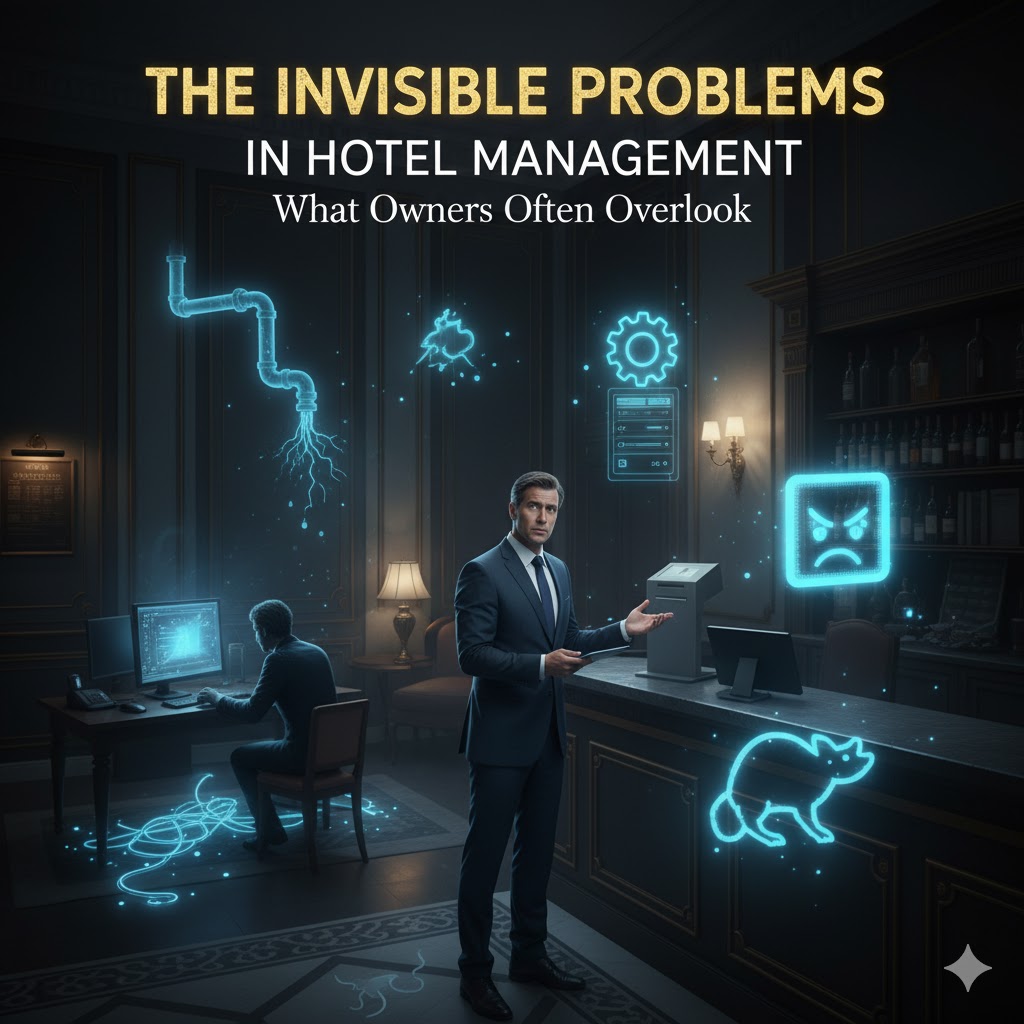
Running a hotel or resort is a complex craft—part science, part art, and part instinct. Yet many owners, especially those deeply involved in day‑to‑day operations, unknowingly develop “blind spots” that slow growth, inflate costs, or weaken guest satisfaction. These issues often hide in plain sight, becoming part of the daily routine until they are no longer questioned.
Below are the most common management blind spots our consulting team repeatedly encounters across Thailand—and how owners can address them before they become long‑term liabilities.
1. Focusing too much on operations, not enough on strategy
Many owners spend most of their time solving immediate issues—guest complaints, maintenance fixes, staff conflicts—while long‑term planning takes a back seat. Without clear revenue strategy, cost control systems, and measurable KPIs, the hotel drifts instead of grows.
2. Underestimating the power of team culture
High turnover, inconsistent service, and staff disengagement usually stem from leadership gaps, not employee faults. Successful properties invest in clear standards, training, and empowerment—not just instructions.
3. Marketing without a real funnel
Many hotels “post on Facebook” but do not have a structured marketing funnel: awareness → interest → conversion → retention. Without this, marketing becomes guesswork, and results are unpredictable.
4. Neglecting product consistency
Rooms, breakfast, cleanliness, service greeting—these small elements compound into a big impression. Inconsistent quality is the silent killer of repeat business.
5. Not adapting to new traveler behaviors
Modern travelers compare 10 properties before booking. They seek authenticity, value, and unique experiences. Hotels that rely only on old channels or old offerings slowly lose relevance.
6. Weak cost discipline
Without proper cost control, P&L transparency, and benchmarking, even a busy hotel can lose profit. Many owners don’t see the leak until the numbers are alarming.
7. Ignoring upsell and ancillary revenue
Most hotels leave money on the table—late check‑out, experiences, dining, transfers. Properly executed, these can add 10–25% more revenue with zero new rooms.
8. Lack of clear brand identity
A hotel without a strong identity becomes just another option. Properties with a clear theme, story, and emotional positioning convert better and retain guests longer.
The way forward
Hotel success is not about spending more—it’s about seeing more. When owners step back and allow experts to analyze the property from the outside, hidden opportunities become visible. Small improvements, when aligned with the hotel’s identity and executed consistently, often produce the biggest impact. The smartest hoteliers are not the ones who know everything—but the ones who are willing to see what they’ve been missing.