Introduction
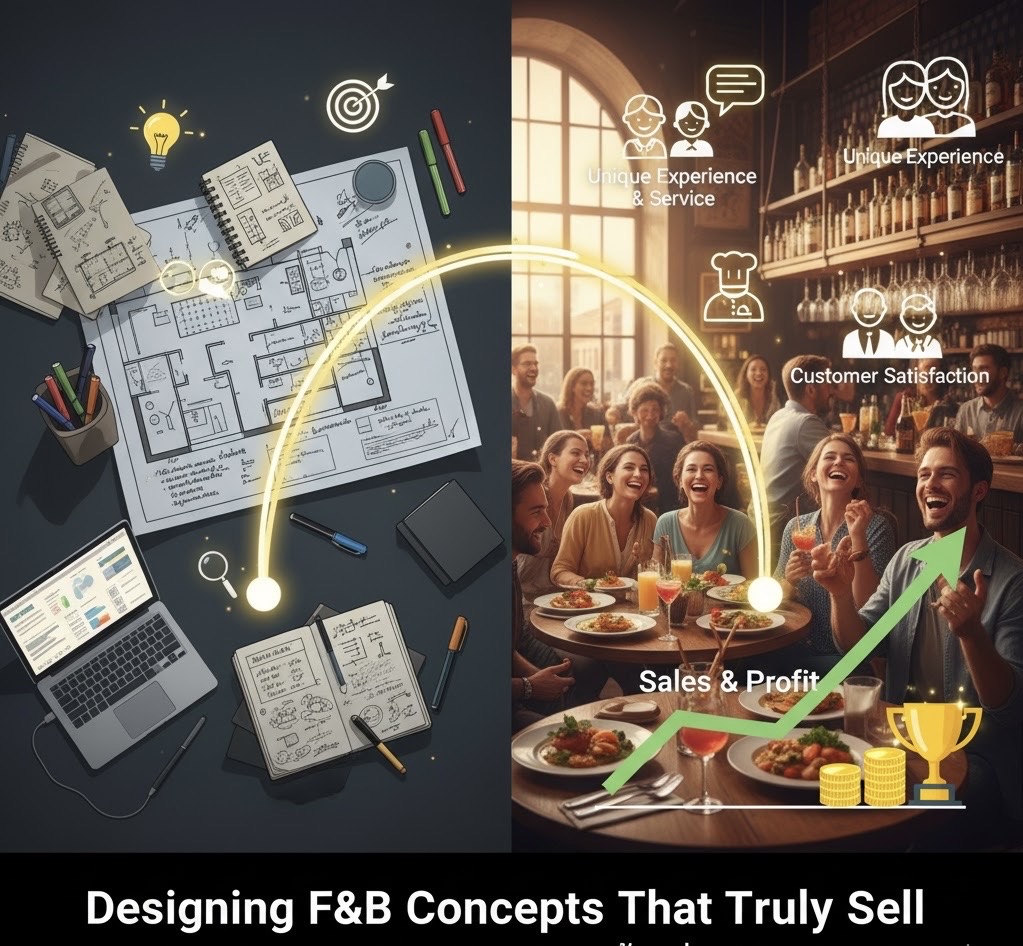
A successful Food & Beverage (F&B) concept is more than just a menu or interior design. It is a strategic revenue driver, a guest experience enhancer, and a brand identity amplifier. Hotels and restaurants that fail to create a compelling F&B concept often experience low sales, inconsistent service, and operational inefficiencies.
Designing a concept that truly sells requires market understanding, operational feasibility, branding alignment, and guest-centric innovation.
1. Know Your Target Market
· Demographics: Consider age, income, lifestyle, and dining preferences.
· Guest Segments: Leisure travelers, business guests, locals, or event groups.
· Behavior Patterns: Frequency of dining, preferred cuisine, budget, and expectations.
· Competitor Analysis: Identify gaps and opportunities to differentiate your offering.
Tip: Design your F&B concept to appeal to your primary target while retaining flexibility for secondary segments.
2. Align With Brand Identity
· Brand Consistency: The F&B concept should reinforce the hotel or restaurant’s brand positioning.
· Storytelling: Every element—menu, décor, music, service—should contribute to a cohesive story.
· Experience over Food Alone: Memorable experiences encourage repeat visits and loyalty.
Example: A wellness-focused resort could emphasize farm-to-table menus, detox drinks, and serene dining spaces.
3. Menu Design That Sells
· Signature Dishes: Highlight unique offerings that reinforce your concept.
· Profitability: Ensure pricing, food cost, and portioning are aligned with revenue goals.
· Flexibility & Seasonality: Introduce seasonal items or limited-time menus to drive excitement.
· Upselling Opportunities: Include premium add-ons, tasting menus, and beverage pairings.
4. Create a Compelling Ambience
· Interior & Layout: Reflect the concept while optimizing guest flow.
· Lighting & Music: Set moods appropriate for casual dining, fine dining, or lounge experiences.
· Functional Zones: Separate areas for events, casual dining, and private gatherings to maximize revenue.
5. Operational Feasibility
· Staff Skills: Ensure chefs and service teams are trained to deliver the concept consistently.
· Equipment & Workflow: Efficient kitchen and service areas prevent bottlenecks.
· SOPs: Maintain quality and consistency in food preparation and service.
6. Marketing & Promotion
· Digital Presence: Website, social media, and review platforms should communicate the concept clearly.
· Launch Events: Tastings, themed nights, or influencer collaborations create awareness.
· Partnerships: Collaborate with local suppliers, tourism boards, and media to enhance visibility.
7. Monitor, Learn & Adapt
· Track sales, popular dishes, guest feedback, and table turnover.
· Adjust menus, pricing, and promotions based on insights.
· Innovate while staying true to the concept and brand identity.
Conclusion
A profitable F&B concept is strategically designed, operationally viable, and guest-focused. By understanding the market, crafting a compelling story, ensuring operational feasibility, and continuously monitoring performance, hotels and restaurants can create F&B outlets that not only attract guests but also maximize revenue and strengthen the brand.
By Charles Tan
VIGOR Hotel Solutions – Precision with Soul