
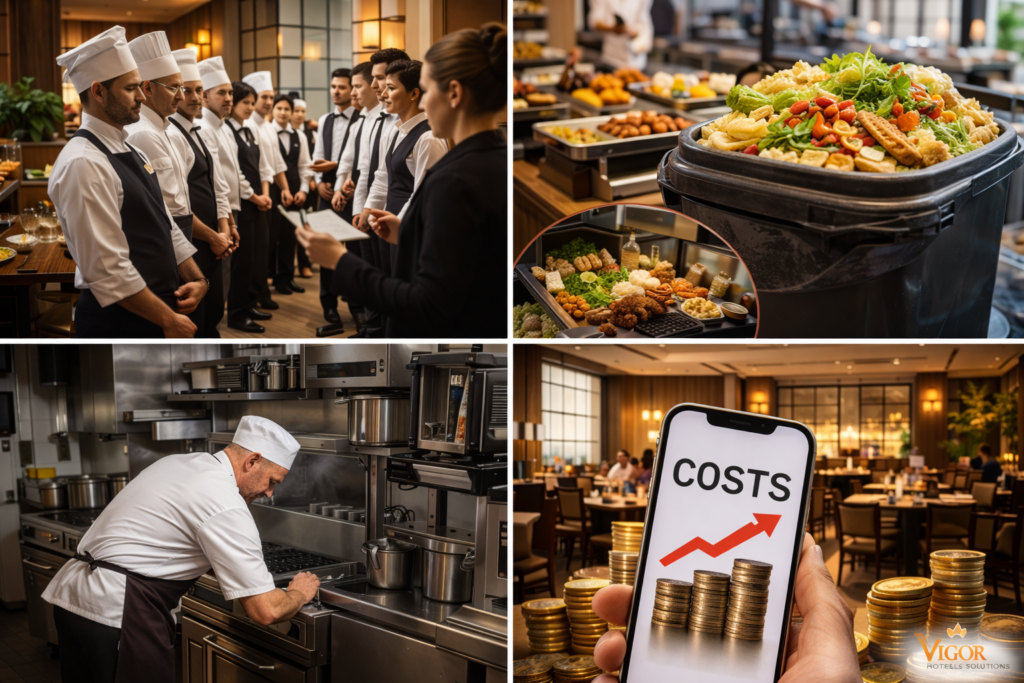
EP2: The Cost Structure Trap
By Charles Tan
In the previous article, we discussed one of the hidden reasons why many hotel restaurants struggle — the lack of a clear concept and strategy.
But even when the food is good, the chef is talented, and the location is excellent, many hotel restaurants still fail financially.
Why?
One of the most common reasons is something many hotel owners underestimate:
The Cost Structure.
A restaurant inside a hotel usually operates with a very different cost structure compared to independent restaurants outside the hotel.
And unfortunately, that structure is often much heavier.
Let’s look at a few typical examples.
- Higher Staffing Costs
Hotel restaurants often follow hotel service standards.
This means:
- more staff on the floor
- more supervisors
- stricter service procedures
While this may create a more formal dining experience, it also significantly increases labor costs.
Independent restaurants, on the other hand, often operate with leaner teams and more flexible roles.
The result?
The hotel restaurant carries a much heavier payroll burden.
- Operational Complexity
Hotel restaurants are rarely just restaurants.
They also support:
- breakfast service
- room service
- banquet or event operations
- sometimes even staff meals
All these additional responsibilities create operational complexity and higher costs.
The kitchen must be larger.
The staff must be more versatile.
And food preparation often becomes less efficient.
- Food Cost and Waste
Another hidden problem is food waste.
Because hotel restaurants must maintain variety and availability — especially for breakfast buffets — they often prepare more food than necessary.
When guest numbers fluctuate, the result is predictable:
Food gets thrown away.
And over time, this silent waste becomes a significant financial drain.
- Facilities and Overhead
Hotel restaurants also carry overhead costs that independent restaurants rarely face.
These may include:
- larger dining spaces
- higher interior design standards
- more expensive equipment
- higher maintenance costs
All of these expenses increase the break-even point of the restaurant.
Which means the restaurant must generate much higher revenue just to cover its costs.
The Reality Many Owners Discover Too Late
Many hotel owners assume that if the restaurant looks beautiful and the food is good, it should naturally make money.
But in reality, a restaurant is not just about food.
It is a business system.
And if the cost structure is too heavy from the beginning, even a popular restaurant may struggle to produce real profit.
In the final article of this series, we will discuss the most important question of all:
How can hotel restaurants be designed to actually generate profit?
Because when the strategy is correct, a hotel restaurant can become more than just a service department.
It can become a powerful driver of both revenue and brand identity.
To be continued.