Integrated Marketing Communication for Sustainable Growth
🔹 EP 1 — Building the Strategic Foundation
Aligning Brand Identity, Guests, and Core Messages
By Charles Tan
Introduction
In today’s restaurant market, guests encounter your brand across multiple channels — social media, review platforms, websites, staff interactions, and physical spaces.
If these touchpoints speak different languages, brand trust erodes.
The IMC Planning Model ensures that every communication speaks with one clear, consistent, and compelling voice.
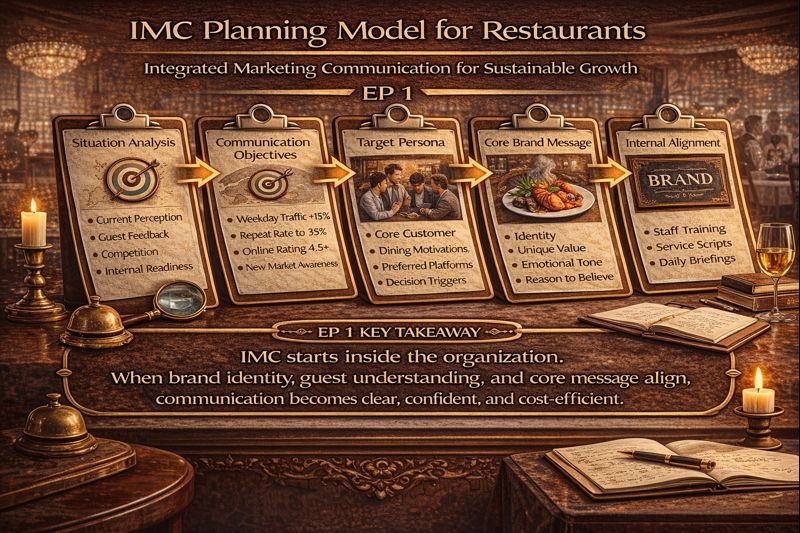
- Situation Analysis – Knowing Where You Stand
Every effective IMC plan begins with clarity.
Restaurants must assess:
- Current brand perception
- Guest feedback and online reviews
- Competitive landscape
- Internal operational readiness
Practical Action:
Conduct a quarterly Brand Health Check by comparing:
- What guests experience
- What staff believe the brand is
- What marketing communicates
Alignment here prevents wasted marketing investment.
- Defining Clear Communication Objectives
IMC turns marketing into measurable business performance.
Examples:
- Increase weekday guest traffic by 15%
- Raise repeat visitation rate to 35%
- Improve online rating to 4.5+
- Expand awareness in a new market segment
Without objectives, communication becomes activity — not strategy.
- Target Audience & Customer Personas
Strong IMC is guest-centric.
Define:
- Primary guest persona
- Dining motivations
- Preferred platforms
- Decision-making triggers
When personas are clear, communication becomes precise — saving time, budget, and effort.
- Crafting the Core Brand Message
Every restaurant needs one unifying message that expresses:
- Brand identity
- Unique value proposition
- Emotional personality
- Reason to believe
This core message becomes the reference point for:
- Social content
- Website copy
- Menu language
- PR storytelling
- Staff communication tone
- Internal Alignment — The Hidden IMC Power
No external communication can succeed if internal teams are misaligned.
IMC requires:
- Staff training on brand values
- Service scripts aligned with tone
- Daily briefings reinforcing messaging
When teams live the message, guests believe the message.
EP 1 Key Takeaway
IMC starts inside the organization.
When brand identity, guest understanding, and core message align,
communication becomes clear, confident, and cost-efficient.