By Charles Tan
The COVID-19 pandemic, a global crisis that forced industries to a standstill, inadvertently became the catalyst for one of the most significant workplace transformations of our time: the mass shift to remote work. For the hospitality industry—an ecosystem built on human presence and face-to-face service—this presented both an immense challenge and an unexpected revelation. Hotels discovered that **continuity was possible beyond their physical walls**, and what began as an emergency measure has evolved into a permanent, cost-effective operating model.
## The Pandemic Pivot: From Crisis to Strategic Reinvention
When lockdowns emptied offices and hotels, the industry faced a critical question: how to keep the business running when staff couldn’t be on-site? The answer emerged through necessity and innovation. While front-line, guest-facing roles remained anchored to the property, a substantial portion of hotel operations—particularly in **revenue management, marketing, and administrative offices**—successfully transitioned to fully remote models.
This shift revealed a fundamental truth: **Productivity in hospitality is not tethered to a physical desk, but to systems, data, and strategic thinking.** The departments that could detach from the physical property did so, ensuring business continuity and discovering newfound efficiencies along the way.
## The Permanent Remote-Work Blueprint: Which Hotel Departments Thrive from Anywhere?
### 1. **Revenue Management & Analytics – The Strategic Brain Trust**
* **Pre-COVID:** Analysts worked in back offices, tethered to on-premise systems.
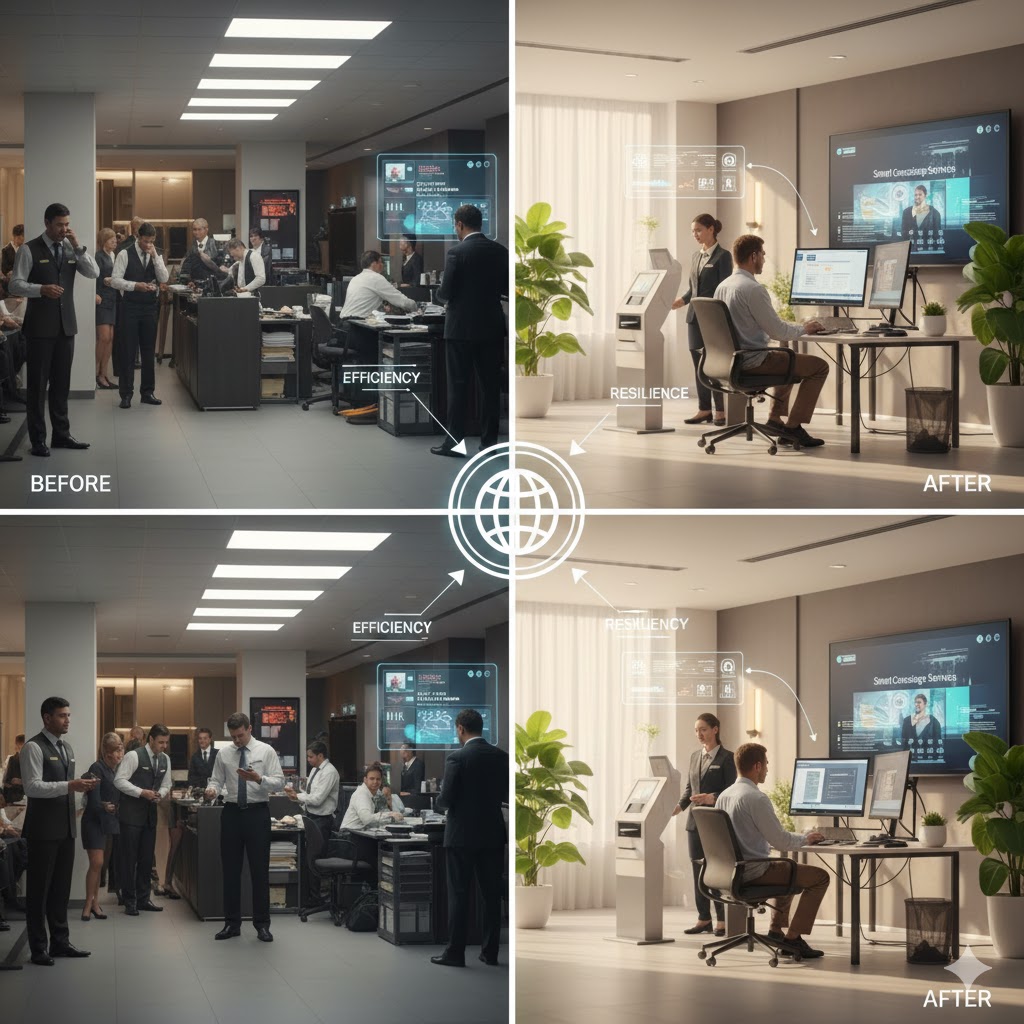
* **Post-COVID Transformation:** 100% remote capability via cloud-based Property Management (PMS) and Revenue Management Systems (RMS). Analysts now optimize pricing, forecast demand, and develop strategies from home offices, often with greater focus and flexibility.
* **Case in Point:** A luxury hotel group in Southeast Asia reported a **12% improvement in rate optimization accuracy** after its revenue team shifted to a remote-first model, attributing success to deeper analytical focus without office interruptions.
### 2. **Marketing, Sales & Digital – The Storytellers and Deal-Makers**
* **Digital Marketing & Content Creation:** Social media management, campaign design, and video production for virtual tours are inherently location-agnostic.
* **Group & Corporate Sales:** Relationship management and contract negotiations for MICE (Meetings, Incentives, Conferences, Exhibitions) business now flourish via video conferencing and digital collaboration tools.
* **E-Commerce & CRM:** Managing online distribution channels and guest loyalty programs are digital by nature.
### 3. **Core Support Functions – The Operational Backbone**
* **Finance & Accounting:** Payroll, accounts payable/receivable, and financial reporting are managed through secure, cloud-based platforms.
* **Human Resources:** Talent acquisition, onboarding, training, and employee relations are effectively conducted virtually.
* **Procurement & Supply Chain:** Vendor management, sourcing, and inventory analysis can be performed remotely with digital catalogs and communication tools.
**The On-Site Imperative:** Roles requiring physical interaction remain irreplaceably present:
* Front Office & Guest Services
* Food & Beverage Service
* Housekeeping & Laundry
* Engineering & Maintenance
* Culinary Teams
## The Tangible Bottom-Line Impact: A New Era of Hotel Economics
A 2023 study of hotel operators revealed compelling financial benefits from adopting hybrid/remote models for eligible roles:
| Cost-Saving Area | Average Monthly Saving (per property) | Key Driver |
| :— | :— | :— |
| **Office Space Reduction** | $1,200 – $3,000 | Downsizing or eliminating dedicated back-office space. |
| **Utilities & Overheads** | $600 – $1,500 | Lower electricity, water, and office supply consumption. |
| **Operational Efficiency** | **+5-15% Productivity Gain** | Measured in output per FTE in departments like marketing and revenue. |
**Beyond Cost Savings: The Strategic Advantages**
* **Talent Access & Retention:** Geographic barriers vanish. A hotel in London can hire a niche revenue strategist from Madrid. Flexibility also boosts employee satisfaction and reduces turnover.
* **Business Continuity Resilience:** Decentralized teams ensure operations are not halted by local disruptions.
* **Enhanced Focus:** Many report fewer distractions and more dedicated time for deep, strategic work.
## The Evolutionary Path: Three Stages of Transformation
- **The Reactive Pivot (2020-2021):** An urgent, makeshift shift to basic tools (Zoom, shared drives) for survival.
- **The Intentional Adaptation (2021-2023):** Recognizing remote work’s potential, hotels invested in cloud infrastructure (PMS, CRM), cybersecurity (VPNs, MFA), and defined hybrid policies.
- **The Optimized Model (2024 & Beyond):** Remote and hybrid work is strategically embedded into the organizational design. Performance is measured by outcomes, not presence. The workplace is redefined as an ecosystem, not just a location.
## A Vision for 2030: The Hotel of the Future
The legacy of the pandemic will be a fundamentally reshaped industry:
* **The “Hub-and-Spoke” Workforce:** A smaller, core on-site team is supported by a distributed network of specialized remote experts.
* **AI as a Co-Pilot:** Remote teams are augmented by AI for data analysis, routine reporting, and personalized marketing, elevating their strategic role.
* **Real Estate Reimagined:** Valuable hotel square footage is repurposed from back offices into revenue-generating guest amenities or coworking spaces.
* **The Culture of Trust & Output:** Leadership evolves to manage based on clear goals, deliverables, and trust, fostering a culture of accountability and innovation.
## Conclusion: Not Just a Response, But a Renaissance
COVID-19 did not merely force a temporary work-from-home experiment for hotels; it triggered a **strategic renaissance**. It proved that a significant segment of hotel operations is powered by intellect, data, and creativity—assets that are not confined to a physical address.
For hotel leaders, the mandate is clear: cling not to the pre-2020 model of presence, but boldly architect a **blended future**. This future leverages remote expertise for strategic functions while doubling down on the irreplaceable human warmth and service excellence delivered on-site.
For professionals within the industry, this shift represents an unprecedented opportunity: to build more sustainable careers, contribute from anywhere, and focus on high-value work that truly drives the business forward.
The most resilient hotels of tomorrow are not those that simply survived the pandemic, but those that learned its most crucial lesson: **In a world forever changed, agility and intelligent resource allocation—including where and how your team works—are the ultimate competitive advantages.** ationships.*