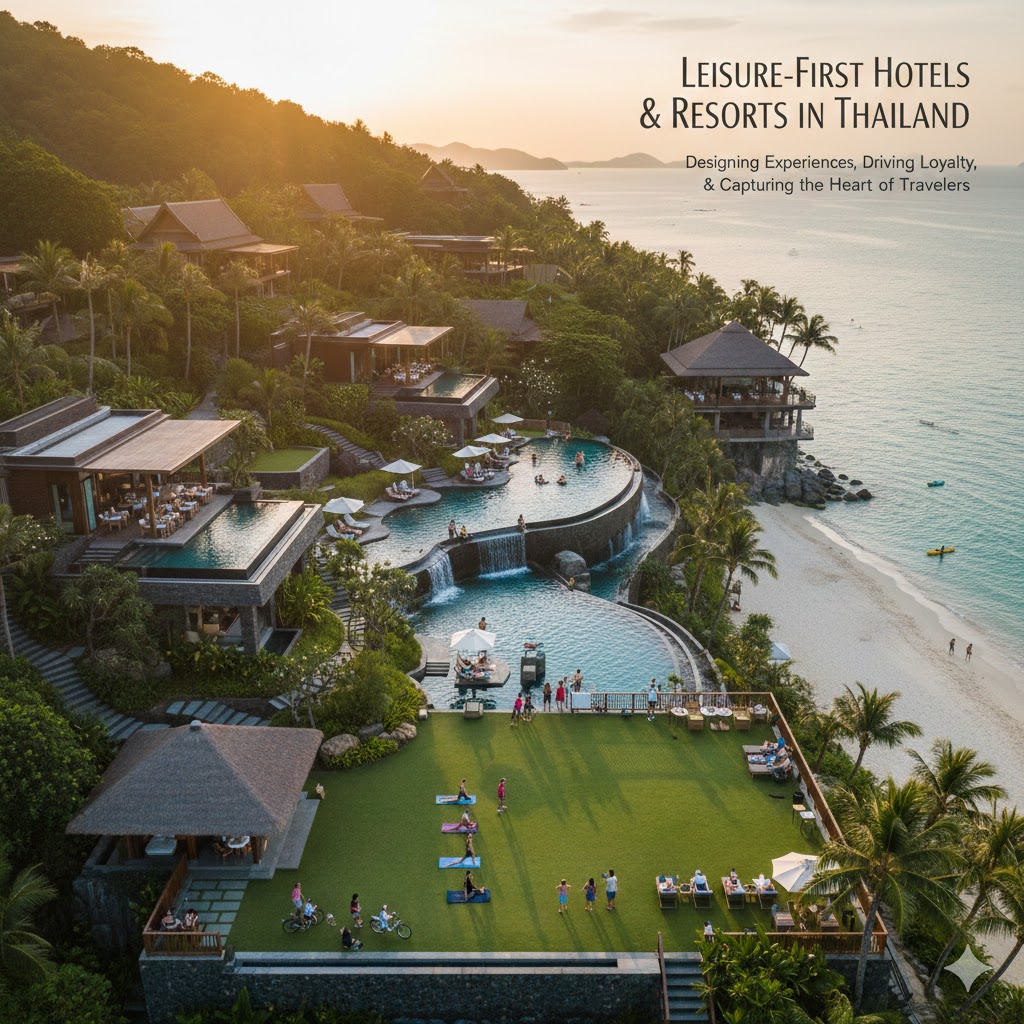
**Designing Experiences, Driving Loyalty, and Capturing the Heart of Travelers**
By Charles Tan
In the ever-evolving landscape of Thai hospitality, one segment consistently commands both attention and revenue potential: leisure travelers. These guests—ranging from families seeking an unforgettable weekend escape, to couples craving romance, groups of friends, or solo travelers pursuing wellness and adventure—are the pulse of many resorts across the country.
A property that embraces a leisure-first philosophy does more than sell a room; it crafts memorable experiences, nurtures brand loyalty, and amplifies its visibility through social proof and storytelling.
This article provides a comprehensive exploration of principles, strengths, weaknesses, strategies, and operational insights for hotels and resorts targeting leisure guests, along with strategic nuances that most operators overlook.
- Core Principles of Leisure-Focused Hotels
- Experience as the Currency
Every touchpoint—from check-in to departure—should be an orchestrated moment of delight. Rooms, views, dining, activities, and guest services must collectively tell a story. - Deep Understanding of Segments
Leisure travelers are not homogeneous. Hotels must consider sub-segments:- Couples / Romance Seekers
- Families with children or multi-generational groups
- Groups of friends / long-weekend travelers
- Solo travelers seeking work-life balance or digital nomad experiences
- Wellness, yoga, and retreat enthusiasts
- Clear Positioning and Unique Selling Proposition (USP)
Differentiation is critical. A property may distinguish itself through: beachfront intimacy, eco-conscious retreats, boutique heritage appeal, or adventure hubs. - Flexible Product Design
Packages should be modular, allowing guests to combine accommodation, dining, and experiences in ways that match personal preferences and seasonal demand. - Operational Excellence
Service delivery must be standardized yet adaptable. SOPs covering check-in/out, guest interaction, safety, activities, and personalized touches are essential. - Data-Driven Marketing
CRM, PMS, and OTA insights must guide promotions, segmented campaigns, and remarketing efforts to maximize engagement and loyalty.
- Strengths of Leisure-Focused Hotels
- Premium Pricing Potential
Guests are willing to pay more for memorable experiences, particularly during weekends and peak seasons. - Upselling Opportunities
F&B, excursions, spa services, and personalized experiences provide additional revenue streams. - Organic Branding Power
Leisure guests generate social media content, increasing organic visibility and credibility. - High Guest Satisfaction Potential
Personalization and immersive experiences often translate into repeat bookings and positive reviews. - Enhanced F&B Contribution
Carefully designed menus, theme nights, and family-friendly options can significantly lift revenue per guest.
- Weaknesses and Challenges
- Seasonality
Demand fluctuates dramatically between high and low seasons, affecting staffing and revenue. - High Operational Costs
Personalized services, activity programming, and premium amenities increase operating expenses. - Expectation Management
Social media-driven standards create high guest expectations. Failure to meet these can quickly result in negative reviews. - Competitive Pressure
Popular destinations are saturated; unique positioning is critical. - Logistical Complexity
Outdoor activities, excursions, and safety measures require meticulous planning and management.
- Marketing and Distribution Strategies
- Segmented Content Marketing
Targeted content (videos, blogs, and social media campaigns) tailored to each guest segment increases engagement and conversion. - Optimized Channel Mix
- Direct Booking: Exclusive offers for direct guests
- OTA Presence: Controlled inventory for spontaneous bookings
- Local Influencers: Micro-influencers to reach niche audiences
- DMCs and Local Agents: For family packages and tour groups
- Package & Experience Selling
- Family Packages: Kids club, special menus, family activities
- Romance Packages: Private dining, turndown service, surprise gestures
- Adventure Packages: Guided treks, water sports, sunrise experiences
- Workation Packages: Stable Wi-Fi, workspace, extended stay discounts
- Dynamic Pricing and Seasonal Strategies
- Weekend and holiday premiums
- Minimum stay requirements during peak periods
- Advance purchase vs. flexible rate management
- Local Partnerships
Collaborate with tour operators, restaurants, transport providers, and experience curators for mutually beneficial cross-selling. - CRM and Loyalty Programs
- Segment guests by behavior: repeaters, high spenders, families, influencers
- Triggered campaigns: pre-arrival upsells, on-stay experiences, post-stay engagement
- Designing the Guest Experience
- Arrival Experience: Smooth check-in, welcome amenities, personalized greetings.
- Room Design: Flexible layouts for families, couples, and digital nomads; curated amenities.
- F&B Experience: Family-friendly menus, sharing platters, healthy options, themed culinary events.
- Activity Programming: Curated daily schedule with wellness, adventure, and leisure options.
- Kids & Family Services: Supervised play areas, meal timing flexibility, child safety protocols.
- Wellness & Relaxation: Spa, meditation, yoga, and nature-based retreats.
- Personalization: Guest preference tracking for birthday surprises, dietary needs, and special requests.
- Operational Excellence
- Staffing Model: Core team + seasonal trained staff
- Training: Service standards, children handling, upselling, safety, languages
- SOPs: Check-in/out, excursion management, emergency response
- Quality Control: Daily briefings, guest feedback loops, secret shopper programs
- Safety & Compliance: Life-saving measures, permits, insurance for activities
- Financial Considerations
- F&B Cost Control: Menu engineering, portion management, local sourcing
- Labor Management: Cross-trained staff for flexible operations
- CapEx vs OpEx: Invest in experience-generating assets rather than ornamental luxury
- Key KPIs: ADR, RevPAR, Occupancy, TRevPAR, F&B contribution, LOS, repeat guest rate, NPS, cancellation rate
- Seasonality and Risk Mitigation
- Diversify Demand Sources: Mix OTA, direct, local agencies, corporate leisure tie-ins
- Creative Off-Peak Programming: Workshops, retreats, culinary weekends, festival tie-ins
- Flexible Pricing & Minimum Stays: Adjust dynamically to demand
- Insurance & Contingency Planning: Cover excursions, natural events, and operational disruptions
- Sustainability and Community Integration
- Local Sourcing: Food, materials, and activities reduce logistics costs and enhance authenticity
- Community Engagement: Hiring local guides, artisans, and service providers
- Eco-Friendly Practices: Solar, water saving, waste management, refillable amenities — increasingly influential for modern leisure travelers
- Sample Room Mix and Product Portfolio
- 40% Standard/Superior Rooms: Couples, solo travelers
- 30% Family/Interconnecting Rooms: 2–4 pax families
- 15% Premium Suites / Private Villas: High spenders, special occasions
- 10% Workation / Long-Stay Units: Kitchenettes, desks
- 5% Accessible Rooms
Sample Packages: Weekend Family Package, Romance Escape, Adventure Day Pass, Wellness 3-Day Retreat, 7-Day Workation Offer
- Success Metrics
- Occupancy by segment
- ADR & RevPAR trends
- Length of stay (target 1.8+ nights for weekend-driven properties)
- Booking window & channel mix
- Conversion rate of package offers
- Upsell attach rate (spa, dining, excursions)
- Guest Satisfaction (NPS) and online review scores
- Repeat guest rate (target 15–25% within 18 months)
- Strategic Quick Wins (90-Day Implementation)
Days 0–30 (Assess & Organize): Audit guest data, define core packages, train FO & reservations, reserve rooms for last-minute leisure bookings
Days 31–60 (Launch & Market): Launch digital campaigns, collaborate with influencers, initiate themed weekend programming
Days 61–90 (Optimize & Scale): Monitor KPIs, adjust pricing and packages, formalize partnerships with local experiences and transport providers
Conclusion: The Leisure-First Philosophy
Leisure-focused hotels succeed when experience design, market segmentation, operational excellence, and community engagement are seamlessly integrated.
By combining data-driven marketing, personalized guest experiences, strategic partnerships, and sustainability practices, a property can transform transient guests into loyal advocates, converting reviews into a self-propagating marketing engine.
A well-executed Leisure-first strategy does more than increase occupancy: it creates stories, memories, and relationships that endure far beyond a single stay—the true measure of hospitality excellence.