The Future of Hotel Marketing Beyond Promotions, Platforms, and Price Wars**
“A strategy that no longer sells rooms—but sells emotional frequency.”
By Charles Tan
**Introduction:
Why Beautiful Photos and Discounts No Longer Win Guests**
In the post-pandemic era, Thailand’s hotel industry is experiencing the most profound shift in two decades. The challenge is not the number of new hotels, the growth of OTAs, or even global economic patterns.
The real challenge is oversaturation of identical marketing.
Almost every hotel now has:
- Beautiful photos
- Stylish room designs
- Seasonal promotions
- Presence on every digital platform
When everything looks the same, guests default to choosing by price.
This traps hotels—large and small—in silent price wars that drain profit, exhaust teams, and weaken the brand.
Hotels are not lacking guests.
Hotels are lacking emotional alignment with the guests they want.
And from 40 years of hotel and F&B leadership, spanning pre-openings, turnarounds, training systems, and multi-property operations, I developed a concept that reframes how hotels can win the next decade:
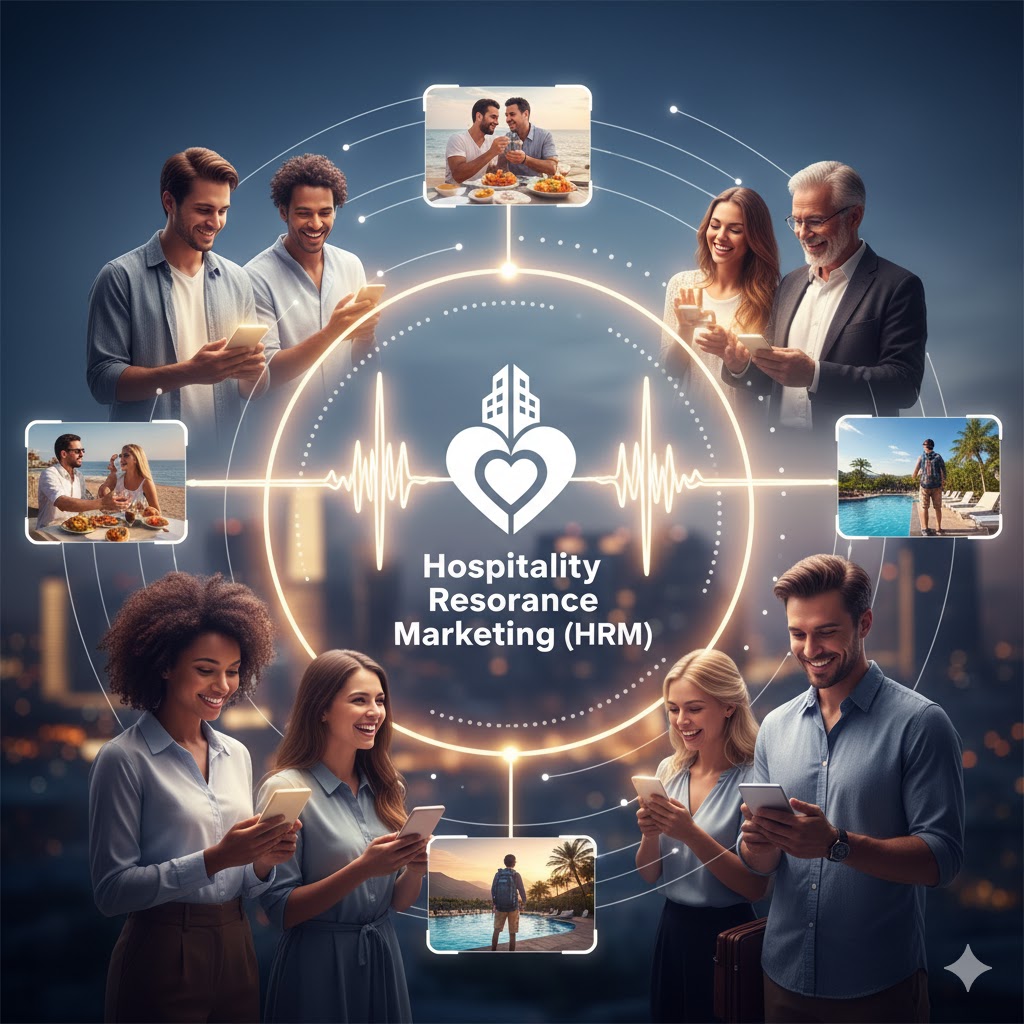
Hospitality Resonance Marketing (HRM)
A new marketing philosophy that connects brand frequency with emotional frequency.
HRM is a shift away from transactional marketing (booking, discount, conversion)
toward resonance marketing—a deeper connection between the hotel and the traveler.
Today’s travelers choose hotels based on one thing:
Not convenience. Not luxury.
But emotional resonance.
People book the place that feels right—even if it’s not the cheapest or most luxurious.
**PART I:
Guests Now Choose Hotels by “Frequency,” Not Features**
Emerging behavioral travel insights reveal a pattern:
- Guests evaluate Vibe before Brand
Travelers now decide based on:
- calmness
- adventure
- nostalgia
- minimalistic healing
- cultural warmth
- urban efficiency
They are not selecting the best design.
They are selecting the emotion that matches their internal state.
- “Being on-brand” matters less than “being on-feeling.”
This is why:
- small boutique stays go viral
- homestays remain fully booked
- large resorts with perfect facilities struggle to differentiate
Hotels are selling “beautiful spaces,”
while guests are buying “emotional spaces.”
- Aesthetic content no longer converts—emotive content does
The hotel industry invests heavily in:
- drone videos
- sunset shots
- perfectly-styled rooms
But they no longer perform unless they match the emotional frequency guests seek.
**PART II:
The Core of HRM — Three Resonance Layers**
Layer 1: Brand Frequency
What emotional vibration does your hotel naturally create?
If your hotel were a person, what would their personality be?
Not as a marketing slogan, but as a genuine emotional identity.
Examples of Brand Frequencies:
- Soft Healing
- Riverside Serenity
- Understated Luxury
- Adventure Escape
- Warm Family Connection
- Cultural Authenticity
- Modern City Rhythm
Hotels that understand their frequency attract guests who are already aligned with it—naturally, and without discounting.
Layer 2: Emotional Frequency
Segmenting guests by emotion, not demographics
Traditional segmentation is outdated:
- nationality
- age
- income
The new segmentation is based on emotional intention:
- People who want silence
- People who want reconnection
- People who want inspiration
- People who want a creative reset
- People who want nature without artificial enhancements
- People who want to feel “home again”
This method is 100% more accurate in predicting bookings.
Layer 3: Resonance Content
Content that hits the heart—not just the algorithm
Resonance Content makes the viewer say:
“This place feels like me.”
Examples:
- Real ambient sounds from the property
- Slow, intimate shots of natural moments (not staged)
- Local human stories
- Memory-trigger visuals (childhood, culture, routines)
- Music that mirrors the brand’s frequency
This content creates emotional pull—without paid ads.
**PART III:
Applying HRM to Three Property Types**
- Riverside Resort
Brand Frequency: Calmness, Healing, Natural Softness
Resonance Content:
- Morning river soundscapes
- Barefoot walks on soft soil
- Sunlight shimmering on water
- Stories of “the quietest night I’ve had in years”
Aligned Guests:
Urban professionals, couples, nature-seekers, emotional reset travelers
- City Business Hotel
Brand Frequency: Urban Rhythm, Efficiency, Smart Movement
Resonance Content:
- 15-second “From bed to meeting room” clips
- Insider shortcuts
- Night city rhythms
Aligned Guests:
Executives, creators, digital nomads, business travelers
- Boutique Homestay / Community Stay
Brand Frequency: Heartfelt Warmth, Home, Cultural Soul
Resonance Content:
- Grandmother cooking
- Local traditions
- Children running in fields
- Quiet moments of real life
Aligned Guests:
Families, slow travelers, culture lovers, sentimental guests
**PART IV:
How HRM Drives Revenue and Profitability**
- Eliminates price-based competition
Guests willingly pay more for emotional alignment.
- Increases ADR and per-head spending
Aligned guests buy experiences—not discounts.
- Reduces marketing cost by 30–60%
Resonance content earns organic engagement naturally.
- Multiplies repeat guests
When guests feel emotionally understood, they return—without promotion.
**PART V:
How Hotels Can Implement HRM in 7 Days**
Day 1–2: Define Brand Frequency
Give the hotel a “human personality.”
Day 3: Identify Guest Emotional Frequencies
List 3–5 emotional groups.
Day 4–5: Produce HRM Content
Focus on emotion-driven narrative.
Day 6: Align All Touchpoints
Visual, tone, sound, messaging.
Day 7: Measure Emotional Interaction
Success indicators include:
- “I really want to stay here.”
- “This feels like me.”
- “This place is calling me.”
These signals matter more than likes or views.
**Conclusion:
The Next Era of Hospitality Is an Era of Human Emotion**
Hospitality Resonance Marketing is not a trend.
It is a return to the essence of hospitality—human connection.
Hotels that adopt HRM will:
- Stand out without shouting
- Attract guests who truly fit
- Build powerful brand loyalty
- Command higher rates
- Reduce dependency on promotions
- Create meaningful experiences that guests remember for life
In the coming decade, the winning hotels won’t be the biggest, newest, or grandest.
They will be the hotels that vibrate at the same emotional frequency as their guests.
And those hotels will never need to compete on price again.