By Charles Tan – VIGOR Hotel Solutions – Precision with Soul
Introduction
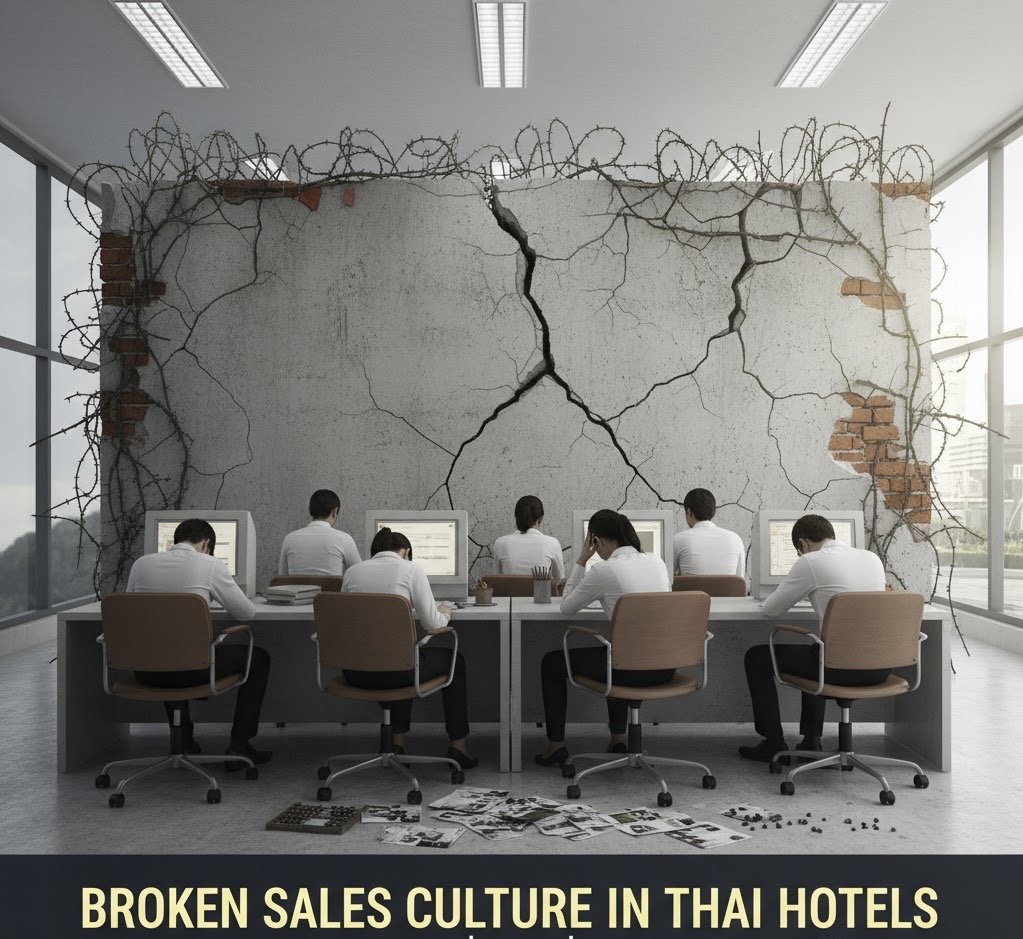
Many Thai hotels struggle not because of location or facilities, but because of a broken sales culture. The symptoms are familiar: sales staff afraid to sell, constant price wars, overreliance on OTAs, and management that undervalues sales development.
Fixing this culture requires mindset changes, structure, training, and leadership commitment — not just incentives or software.
1. Recognize the Symptoms of a Broken Sales Culture
-
Fear of selling: Staff worry about rejection or losing guests, leading to low conversion.
-
Price-centered thinking: Teams rely on discounts rather than value selling.
-
No accountability: Sales targets are vague or ignored.
-
Siloed departments: Front office, reservations, and F&B teams operate independently, missing cross-selling opportunities.
-
Reactive rather than proactive: Staff wait for inquiries instead of seeking leads or building relationships.
2. Understand Why It Happens
-
Management neglect: Owners often prioritize marketing over sales, ignoring the need to invest in training and systems.
-
Rapid growth without training: Hotels expand or open new properties without developing experienced sales staff.
-
Limited career path for sales roles: Staff see no future, so motivation is low.
-
Lack of standardized processes: Without SOPs, each staff member improvises, creating inconsistency.
3. Step-by-Step Approach to Fix the Sales Culture
Step 1: Leadership Commitment
-
Define clear sales goals.
-
Allocate budget for training and tools.
-
Model proactive selling behavior.
Step 2: Develop Standard Sales SOPs
-
Define daily, weekly, and monthly sales activities.
-
Include lead follow-up, room upselling, and group/corporate account management.
-
Ensure clear reporting structure and accountability.
Step 3: Train and Coach Your Team
-
Provide structured sales training on:
-
Consultative selling (selling value, not price)
-
Handling objections professionally
-
Cross-selling F&B and spa
-
CRM and lead management
-
-
Conduct regular role-play and coaching sessions.
Step 4: Align Incentives to Behavior, Not Just Revenue
-
Reward proactive sales activity, not just achieved bookings.
-
Examples:
-
Following up 10 leads daily
-
Upselling to higher room categories
-
Securing corporate accounts or repeat guests
-
Step 5: Break Department Silos
-
Encourage collaboration between front office, reservations, F&B, and events.
-
Share guest information for upselling opportunities.
-
Use weekly sales huddles to review pipeline and share best practices.
Step 6: Leverage Technology Wisely
-
CRM tools can track leads, guest profiles, and upsell opportunities.
-
AI can help identify patterns in booking behavior for targeted offers.
-
Tools are only as effective as the culture that uses them consistently.
Step 7: Monitor, Measure, and Adjust
-
Track KPIs beyond revenue:
-
Lead follow-up rate
-
Upsell success rate
-
Guest satisfaction from sales interactions
-
-
Review regularly, celebrate wins, and identify gaps.
4. Case Study: Turning Fear into Confidence
A 120-room resort in Pattaya noticed reservations staff never attempted upsells due to fear of rejection. Steps taken:
-
Introduced daily micro-training on upselling.
-
Set small achievable targets (e.g., 3 room upgrades per day).
-
Recognized and rewarded success publicly. Results: Within three months:
-
Upsell revenue increased by 35%
-
Staff confidence improved
-
Guest satisfaction scores rose due to smoother and more attentive service
5. Key Takeaways
-
Culture drives behavior, behavior drives revenue. Without a proactive sales culture, technology and marketing alone cannot sustain growth.
-
Invest in people first, processes second, tools third.
-
Consistency is key: Daily actions, accountability, and coaching create lasting change.
-
Sales is a service: Staff who sell confidently and ethically provide value, enhancing guest satisfaction and loyalty.
Conclusion
Fixing the broken sales culture in Thai hotels is not about quick fixes — it’s about rebuilding mindsets, systems, and leadership support. By investing in people, implementing clear SOPs, and creating accountability, hotels can transform their sales from a reactive cost center into a strategic growth engine.
By Charles Tan VIGOR Hotel Solutions – Precision with Soul Helping hotels achieve operational excellence, profitable growth, and a culture of proactive sales.