By Charles Tan
Introduction
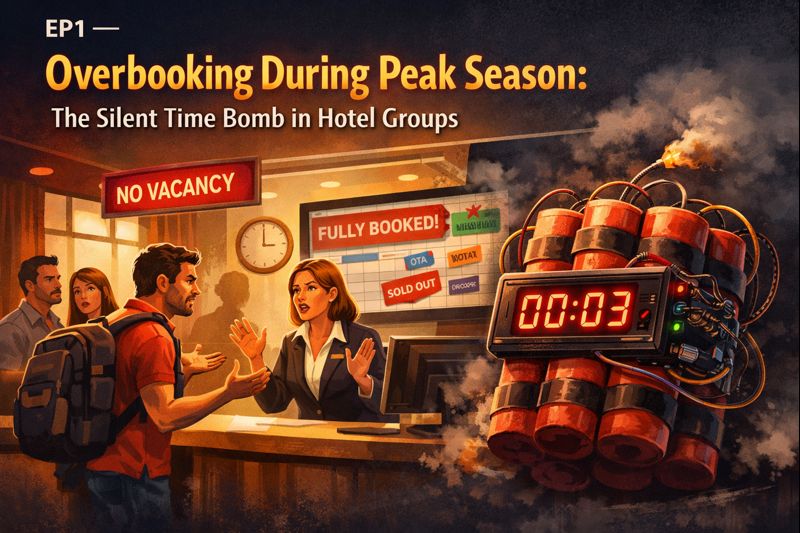
Overbooking is the practice of selling more rooms than physically available.
In controlled situations, limited overbooking can be part of revenue optimization to compensate for no-shows.
However, during peak seasons, festivals, and long weekends, overbooking becomes a high-risk operational threat — particularly in hotel group environments.
When unmanaged, it leads to guest displacement, reputational damage, staff stress, and long-term revenue loss.
Why Overbooking Happens More Frequently in Hotel Groups
- Multiple Sales Channels Sharing the Same Inventory
Website, OTAs, corporate sales, group sales, travel agents, and head office reservation centers often draw from the same room inventory.
If real-time synchronization is imperfect, rooms are sold twice — sometimes unknowingly. - Head Office Commitments Without Real-Time Property Visibility
Central sales teams may confirm group contracts without live property-level inventory confirmation. - Aggressive Sales Targets During Peak Periods
Sales teams accept tentative group requests without final inventory clearance, assuming rooms will remain available. - Incorrect No-Show Forecasting
Historical no-show assumptions fail during festivals — when nearly all guests arrive.
The Real Root Cause
Overbooking is rarely a system failure alone.
It is primarily a lack of disciplined inventory governance.
Common weaknesses include:
- No clear inventory ownership
- Inconsistent system integration
- Absence of standardized approval procedures
- Uncontrolled head office overrides
- No daily inventory reconciliation
Business Impact
- Walked guests and public complaints
- OTA ranking penalties
- Lost corporate contracts
- Damaged brand reputation
- Operational chaos during high season
The cost of reputational damage far exceeds the revenue gained from overselling.
EP1 Conclusion
Overbooking is not accidental.
It is the outcome of weak governance, not weak technology.
Modern tools exist — but only disciplined management prevents failure.